
LEXNOIR ATLAS
Black communities in Spain are often discussed as if they were exclusively the product of recent migration. The history is much older. African-descended people have lived on the Iberian Peninsula for centuries, while today’s Afro-Spanish population also reflects migration and family ties connecting Spain to Equatorial Guinea, West and Central Africa, the Caribbean, Latin America and other parts of the global diaspora. Their experience sits at the intersection of citizenship, race, migration, colonial memory and the continuing challenge of translating formal equality into lived equality.
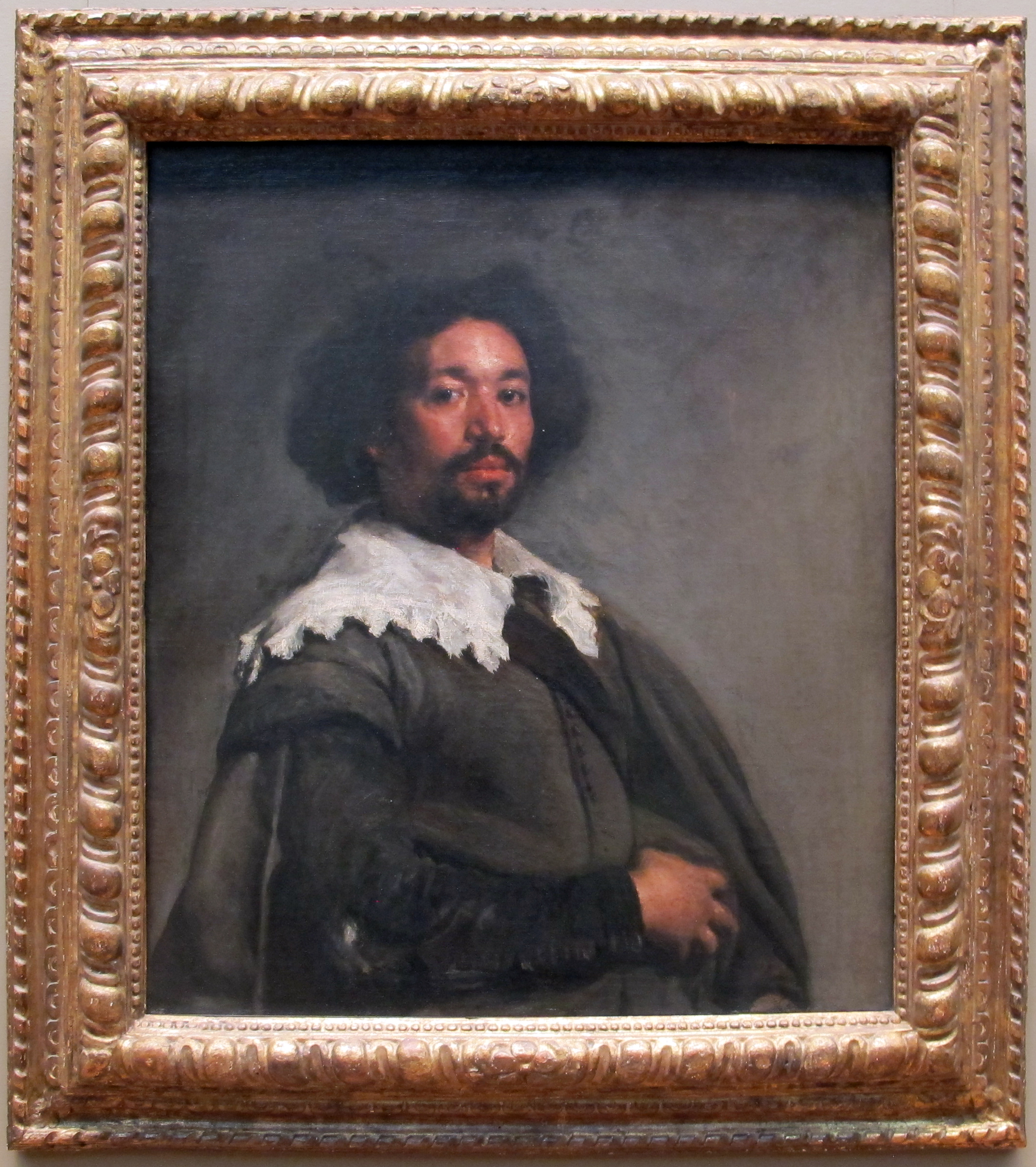
\n\n\nFeatured image: Juan de Pareja, the Afro-Hispanic painter, portrayed by Diego Velázquez in 1650. The Metropolitan Museum of Art / Wikimedia Commons; public domain.
\nWho Are Afro-Spaniards?
Afro-Spaniard is a broad social and cultural term rather than an official census category. It can encompass Spanish citizens and residents of African descent whose family histories reach Spain through many different routes: longstanding Afro-Iberian ancestry, Equatorial Guinea, continental Africa, the Caribbean, Latin America and later-generation diaspora communities born in Spain.
The term overlaps with—but is not identical to—labels such as Black Spaniard, Afrodescendant and African-descended person in Spain. Identity may also be shaped by nationality, region, language, religion or family origin. A person may identify simultaneously as Spanish, Catalan, Andalusian, Equatoguinean-Spanish, Dominican-Spanish, Senegalese-Spanish, Afro-Spanish or simply Black.
A Black Presence Older Than Modern Immigration
Black presence in Spain is not new. Historical scholarship documents substantial populations of African and Afro-descended people in Iberian cities during the late medieval and early modern periods. From the fifteenth through seventeenth centuries, enslaved and free Black people lived in cities including Seville, Valencia, Granada, Málaga and Madrid.
Seville became one of the most important centers of slavery in the Iberian Peninsula during the sixteenth and early seventeenth centuries and was deeply connected to the Atlantic slave trade. Valencia likewise had a significant Black and enslaved population. Black residents worked in households, workshops, ports, markets and other sectors of urban life, while freed people formed families, religious brotherhoods and mutual-aid institutions.
This history complicates the common assumption that Blackness is inherently foreign to Spain. Afro-Iberian communities existed within Spanish society centuries before the modern immigration era.
\n\n\n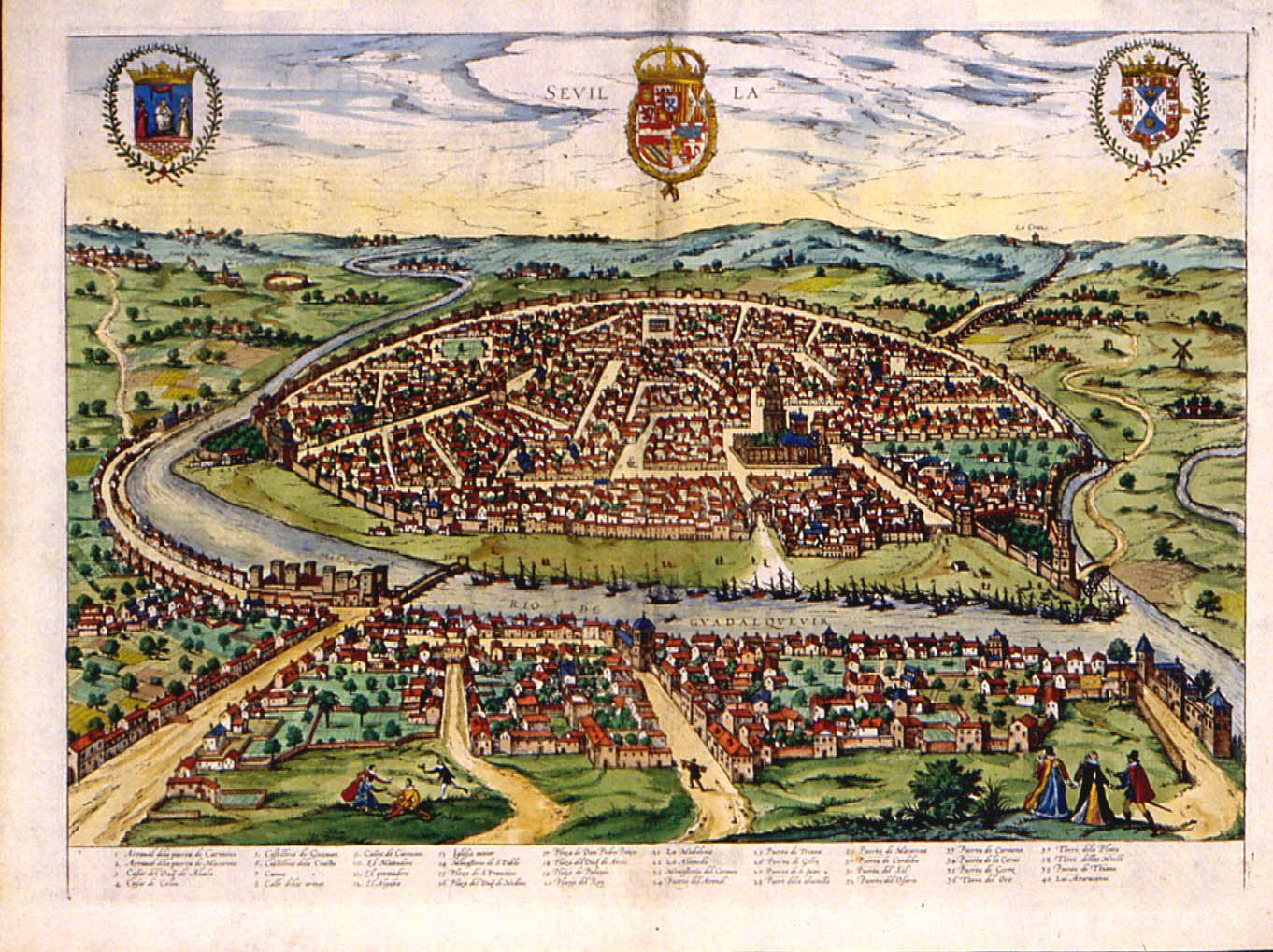
Slavery, Empire and Colonial Connections
Spain’s relationship to the African diaspora also developed through empire. Spanish commercial and political institutions participated in Atlantic slavery, while Spanish colonial rule in Africa created later political and migratory ties.
Equatorial Guinea is particularly important to the contemporary Afro-Spanish story. Spain exercised colonial rule over the territories that became Equatorial Guinea until independence in 1968. That relationship produced enduring linguistic, educational, family and migration connections. Equatoguinean communities and their descendants therefore occupy a distinctive place in Spain’s Black population: they are linked to Spain not only through immigration, but through a shared colonial history conducted in the Spanish language.
The Demographic Challenge: Who Counts?
Spain does not publish a simple national census count of its Black or Afro-descendant population. Official demographic statistics are generally organized around nationality, place of birth and other variables rather than a comprehensive racial category comparable to those used in some countries in the Americas.
This creates a measurement problem. A Black person born in Spain with Spanish nationality may disappear statistically into the general Spanish population, while nationality data can capture recent migration but not race, mixed heritage or later generations.
The Spanish Ministry of Equality acknowledged this gap when it commissioned a pioneering study of African and Afro-descendant people in Spain. Published in 2021, the study gathered 1,369 questionnaires and input from 42 African and Afro-descendant organizations. It was designed as a first effort to understand identity, access to rights and experiences of discrimination within a population that official statistics do not otherwise measure neatly.
Constitutional Equality
Spain’s constitutional framework begins with a broad equality principle. Article 14 of the Spanish Constitution provides that Spaniards are equal before the law and prohibits discrimination on grounds including birth, race, sex, religion and opinion, as well as other personal or social conditions or circumstances.
The Constitution also requires public authorities to promote conditions in which equality is real and effective. That principle has supported the development of a broader statutory framework addressing racial and ethnic discrimination.
The 2022 Equality Law
A major modern development is Law 15/2022 on Equal Treatment and Non-Discrimination. The law protects every person, regardless of nationality or immigration status, against discrimination based on grounds including racial or ethnic origin.
The law applies across public and private spheres and addresses both direct and indirect discrimination. Its structure reflects an important shift: racial discrimination is treated not only as a matter of constitutional principle, but as a practical issue affecting areas such as employment, education, health, housing, goods and services, and interaction with public authorities.
From Formal Equality to Lived Experience
Spain’s legal framework is comparatively strong on paper, but government research continues to document significant racial discrimination.
The Ministry of Equality’s studies have found that people from non-Mediterranean African backgrounds report especially high levels of discrimination associated with physical features and skin color. Afro-descendant respondents have also identified discrimination in employment, housing, education, public spaces and interactions with institutions.
CEDRE—the Council for the Elimination of Racial or Ethnic Discrimination—maintains a national network offering assistance and guidance to people who experience racial discrimination. In 2025, the service handled thousands of cases and assisted more than three thousand people, illustrating that the legal prohibition on racial discrimination remains an active enforcement issue rather than a purely historical concern.
Employment, Housing and Everyday Discrimination
Black Spaniards and African-descended residents may encounter discrimination at several points in economic and social life. Studies and civil-society reporting have documented barriers in hiring, workplace advancement, housing access and customer-facing employment, as well as racialized assumptions about nationality, education and social status.
Housing can be particularly revealing because discrimination is often informal. A landlord or agent may reject an applicant without explicitly stating a racial reason, making enforcement difficult even when unequal treatment is strongly suspected.
Policing, Profiling and Public Space
Racial profiling has also been a recurring concern in Spain’s equality debate. Black and other racialized communities have reported disproportionate identity checks and police stops, particularly where race is perceived as a proxy for foreignness or irregular immigration status.
The issue demonstrates a recurring tension in contemporary Spain: Black Spanish citizens and long-term residents may be treated socially as outsiders even when their legal status and family histories are unquestionably Spanish.
Citizenship, Belonging and the Question “Where Are You From?”
For many Afro-Spaniards born or raised in Spain, one of the defining experiences is what might be called racialized foreignness—the assumption that visible Blackness must indicate foreign origin.
This can make citizenship socially conditional. A person may possess Spanish nationality, speak Spanish or another Spanish language as a first language, and have family roots in the country, while still repeatedly being asked where they are “really” from.
The problem is not simply interpersonal. It is connected to historical memory. When centuries of Black presence are absent from school curricula, museums and public narratives, the idea that Black Spaniards are newcomers becomes easier to reproduce.
Recovering Spain’s Black History
In recent years, historians, cultural organizations and community leaders have increasingly worked to recover Spain’s Black past. Research has highlighted Afro-Iberian communities in Seville and Valencia, Black religious brotherhoods, enslaved and freed families, and individuals such as the sixteenth-century humanist Juan Latino and the seventeenth-century painter Juan de Pareja.
Walking tours and public-history projects in cities including Madrid and Valencia are also drawing attention to slavery, colonialism and Black presence embedded in the urban landscape but largely absent from mainstream historical narratives.
Institutions and Community Infrastructure
Spain’s contemporary Afro-descendant civic landscape includes cultural associations, migrant organizations, anti-racism groups, academics, writers, artists and advocacy networks. Government institutions such as the Ministry of Equality and CEDRE increasingly engage explicitly with anti-Black racism and afrofobia.
The Spanish government has itself used the term afrophobia in official anti-racism declarations, an important sign that anti-Black discrimination is increasingly recognized as a distinct phenomenon rather than being treated only as a general immigration issue.
Why Afro-Spain Matters to the Global Diaspora
Afro-Spain offers a particularly useful bridge between several parts of the global diaspora. Its history connects Europe to the early Atlantic slave trade, Africa to Iberia, Spain to Equatorial Guinea, and contemporary migration to the Caribbean and Latin America.
Spain also presents an important comparative legal question. Its Constitution and modern equality law expressly prohibit racial discrimination, yet the country does not routinely count race in a way that makes the size and socioeconomic experience of the Black population easy to measure.
That creates a broader policy dilemma familiar across Europe: how can a state identify and remedy racial inequality if race is legally relevant to discrimination but statistically difficult to see?
Atlas Perspective
Spain’s Black history is both older and more deeply rooted than contemporary discussions of immigration often suggest. The modern legal framework recognizes racial discrimination clearly, but the country still faces a visibility problem: Afro-Spaniards can be protected by equality law while remaining difficult to identify in national statistics and underrepresented in public memory.
The next stage of recognition may therefore require connecting three things that have often been treated separately—history, data and enforcement. Recovering the Black past helps establish belonging; better data can reveal inequality; and effective enforcement determines whether legal equality is experienced in daily life.
Further Reading and Primary Sources
Spanish Constitution — Article 14
Law 15/2022 on Equal Treatment and Non-Discrimination
Ministry of Equality — African and Afro-descendant Population in Spain: Identity and Access to Rights
Ministry of Equality — The Impact of Racism in Spain, 2024
CEDRE — Council for the Elimination of Racial or Ethnic Discrimination
Council of Europe ECRI — Spain
University of Seville — Atlantic Slave Trade and Slavery in Seville, ca. 1500–1650