
LEXNOIR ATLAS
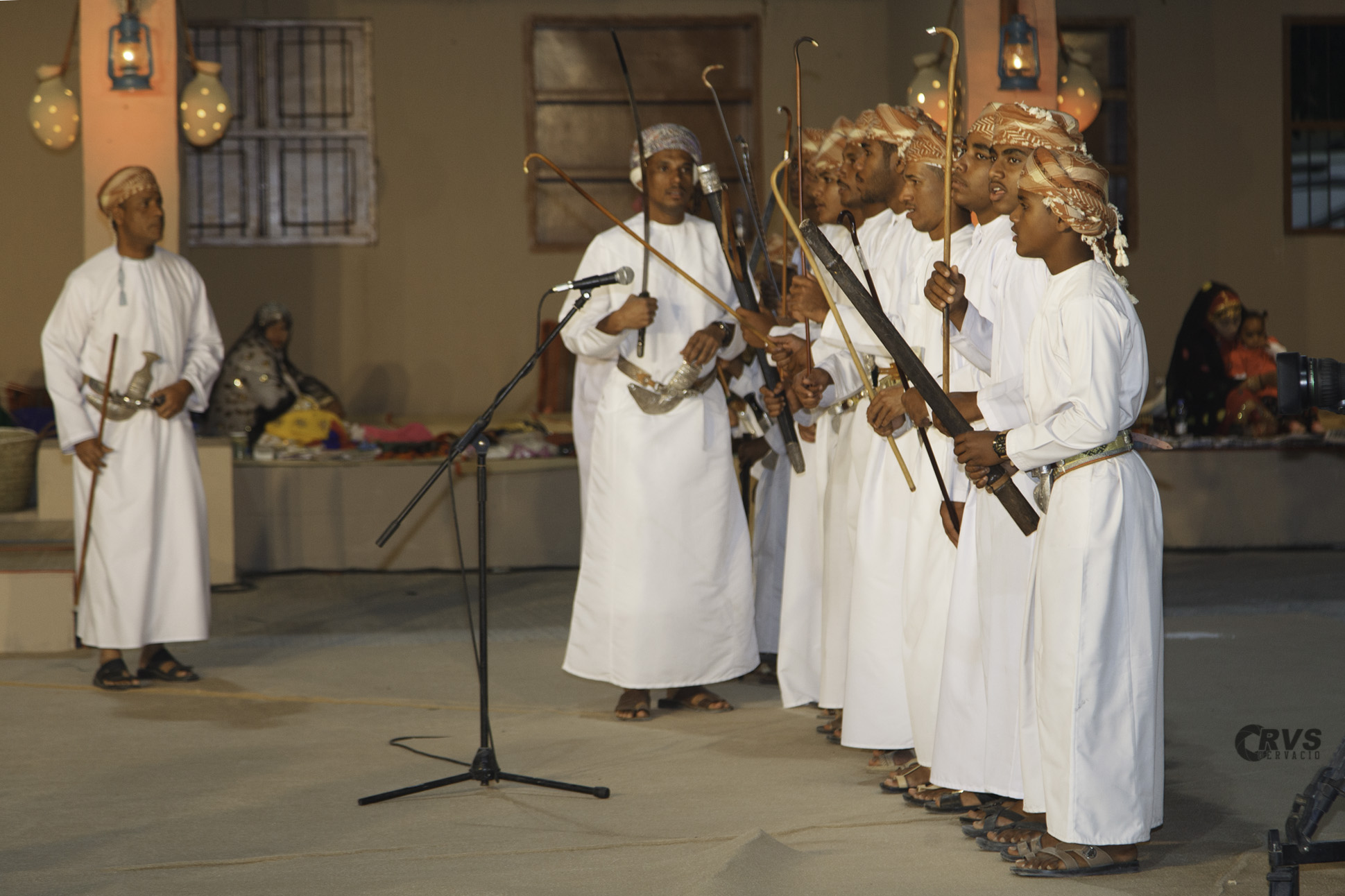
Featured photograph: Traditional dance performance, Muscat Festival (2018). Photograph by Orvs, Wikimedia Commons, CC BY 2.0. No intentional alterations. The event is not independently identified as a liwa performance.

Across the Arabian Sea from East Africa lies Oman, a country whose history is inseparable from the African continent.
For centuries, Omani merchants, sailors, rulers, and families traveled between the Arabian Peninsula and the East African coast. These connections created trading networks, political relationships, marriages, cultural exchanges, and communities whose identities spanned both shores of the Indian Ocean.
They also facilitated the enslavement and forced movement of Africans, leaving a difficult legacy alongside the cultural and commercial achievements of the maritime world.
Today, Oman is home to people of African ancestry, including families whose roots extend to Zanzibar and the wider Swahili coast.
Some trace their ancestry to Africans brought to Arabia during earlier periods of enslavement. Others descend from generations of families whose lives unfolded between East Africa and Oman. Still others belong to communities that migrated to Oman following political upheaval in Zanzibar during the twentieth century.
These different histories complicate conventional definitions of African identity.
In Oman, African heritage is not merely a distant ancestral connection. It remains visible in language, family relationships, music, and cultural traditions that continue to link the country to East Africa.
When Zanzibar Was Part of the Omani World
Oman’s relationship with East Africa developed over many centuries, but it became particularly significant during the seventeenth and nineteenth centuries.
Omani maritime power expanded after struggles with Portuguese forces for control of strategic ports and trading routes along the Indian Ocean.
By the nineteenth century, the Omani ruling dynasty had established substantial political and commercial interests along the East African coast.
Under Sultan Said bin Sultan, who ruled from 1806 to 1856, Zanzibar became a central part of the Omani political world.


During the 1830s, Said increasingly based his administration in Zanzibar, which developed into a major commercial center linking Africa, Arabia, India, and international markets.
Zanzibar’s economy included the production and export of cloves, ivory, and other commodities. It was also deeply implicated in the East African slave trade.
Enslaved Africans were forced to work on plantations, in households, and in other sectors of the regional economy.
Omani merchants and plantation owners benefited from these systems, although the wider trading networks also involved participants from several other regions.
The concentration of political and economic power in Zanzibar created enduring social relationships between the Arabian Peninsula and East Africa.
Omani families settled along the coast. Intermarriage and cultural exchange contributed to communities whose ancestry and identities could not be described simply as Arab or African.
The Swahili coast itself had developed a distinctive civilization long before the expansion of Omani political authority. Its language, urban culture, commercial institutions, and Islamic traditions emerged through centuries of African initiative and interaction with the broader Indian Ocean world.
Oman’s role therefore became one important chapter within a much longer East African history.
When Said bin Sultan died in 1856, succession disputes ultimately produced the political division of Oman and Zanzibar, formalized in 1861.
The Omani ruling dynasty nevertheless continued to govern Zanzibar until the revolution of January 1964.
These centuries of interaction left an enduring legacy on both sides of the Indian Ocean.
The African Presence Within Oman
African-descended communities in Oman do not share a single history.
Some families descend from Africans who entered Oman through historical systems of slavery. Others have more complex family histories involving movement between the Arabian Peninsula, Zanzibar, the Comoros, and mainland East Africa.
Some have maintained recognizable East African linguistic or cultural traditions, while others have become deeply integrated into Arabic-speaking Omani society over many generations.
This diversity makes it difficult to establish a precise Afro-Omani population.
Official demographic categories do not provide a reliable count of every Omani with African ancestry, and outward appearance alone cannot establish an individual’s family history or identity.
The distinction between African ancestry and Swahili-speaking Omani identity is especially important.
Many Omanis whose families lived in Zanzibar have mixed African and Arab ancestry. Others trace their ancestry primarily to Arab families established in East Africa.
Their shared experience of living in the Swahili-speaking world does not erase these differences.
Yet these populations contributed to the development of a recognizably transregional society in which African and Arabian cultural influences interacted.
Today, evidence of this history can be found in family networks, multilingual households, oral traditions, music, and the continuing relationships between Oman and East Africa.
These connections reveal a form of African diaspora identity that does not always correspond to the racial and ethnic classifications familiar in the Americas.
For some Afro-Omanis, African ancestry may be an important aspect of personal and family identity. For others, Omani nationality, regional heritage, or religious affiliation may be more central.
Their history is best understood by recognizing this diversity rather than attempting to impose a single identity on all communities with African connections.
Swahili: A Language That Crossed the Ocean
One of the clearest expressions of Oman’s enduring relationship with Africa is the continuing use of Swahili.
Swahili is a Bantu language that developed along the East African coast, incorporating vocabulary from Arabic and other languages through centuries of trade and cultural interaction.
Its presence in Oman reflects the movement of families, merchants, workers, and political migrants between the two regions.
Some Omani families continue to speak Swahili at home, particularly within communities whose members were born in East Africa or whose parents and grandparents lived there.
In these households, Swahili serves as more than a practical means of communication.
It connects generations to family histories that extend across the Indian Ocean.
Researchers have documented how Swahili-speaking Omanis have maintained elements of East African social life while participating in modern Omani institutions.
The relationship between language and belonging has not always been straightforward.
For some return migrants, limited Arabic fluency became a source of social distinction, even when their Omani ancestry and citizenship were recognized.
The experience illustrates a broader question familiar to diaspora communities around the world: what does it mean to return to a country regarded as an ancestral homeland when one’s language, upbringing, and cultural expectations were formed elsewhere?
In Oman, the answer has emerged through the gradual creation of identities that combine Omani citizenship with living connections to East Africa.
Swahili remains one of the most visible expressions of that process.
Zanzibar’s Revolution and the Return to Oman
The Zanzibar Revolution of January 1964 transformed the relationship between Oman and East Africa.
The revolution overthrew the sultanate and brought an end to the political rule of the Omani-descended dynasty.
It also produced extensive violence, political upheaval, displacement, and the departure of many people associated with the former political and social order.
Among those who left were families of Omani ancestry whose members had lived in East Africa for generations.
Some migrated directly to Oman. Others initially sought refuge elsewhere.
The movement accelerated after Sultan Qaboos bin Said came to power in Oman in 1970 and encouraged Omanis abroad to participate in the country’s development.
The timing was significant.
Oman was entering a period of substantial modernization, including the expansion of public administration, education, infrastructure, and government services.
Many people returning from East Africa brought professional training, international experience, and knowledge of English and Swahili.
These skills became valuable during the construction of modern Omani institutions.
Swahili-speaking Omanis contributed to government administration, education, business, and other sectors.
Their experiences, however, were not uniform.
Some returnees encountered prejudice connected to their language, perceived foreignness, or East African upbringing.
Even when formally recognized as Omanis, they sometimes had to establish their social belonging among people whose families had remained in Arabia.
The migration experience also differed by family, gender, wealth, and access to relatives able to facilitate relocation.
Some families were separated for years. Others maintained close relationships with relatives who remained in Zanzibar or mainland East Africa.
Recent scholarship demonstrates that these movements were not simply an orderly return to an ancestral homeland.
They involved difficult decisions about safety, property, employment, citizenship, family obligations, and competing ideas of home.
The resulting communities helped create a modern Omani identity that was simultaneously Arabian and connected to Africa.
African Rhythms in Omani Culture
African influences are also evident in musical and performance traditions found in Oman and the wider Arabian Gulf.
Among the most recognizable is liwa, a collective musical and dance tradition involving percussion, a prominent reed instrument, and coordinated group movement.
Liwa is associated with cultural influences that traveled through the western Indian Ocean, including East African and Baloch maritime networks.
Its performances commonly involve circular movement and repeated rhythmic patterns.
The tradition provides an example of how music travels through migration and cultural interaction.
However, liwa should not be treated as an exclusively African practice or as a tradition belonging only to Afro-Omanis.
Its development involved multiple communities and influences, reflecting the broader cultural environment of the Indian Ocean.
That complexity is central to its significance.
African musical elements did not simply survive unchanged in Oman. They became part of new cultural forms shaped by generations of exchange among African, Arab, and South Asian populations.
The preservation of such traditions demonstrates how cultural heritage may remain recognizable even when the identities of performers and audiences change.
Music offers one connection to this history, but it is not the only one.
Family histories, language, maritime traditions, religious networks, and oral memory also testify to the longstanding presence of Africa within Omani society.
These connections are especially important because they broaden the historical record beyond the experience of enslavement.
They document African-descended individuals and families as participants in the creation of Oman’s contemporary social and cultural life.
Identity, Citizenship, and Recognition
Oman’s legal framework provides a formal principle of equality applicable to its citizens.
Article 21 of the 2021 Basic Statute of the State establishes equality before the law and prohibits discrimination on grounds including origin, color, language, religion, and social status.
These provisions provide an important legal reference point for considering the position of African-descended Omanis.
Nevertheless, there is a distinction between general constitutional protection and the recognition of a specific historically marginalized community.
Unlike certain Latin American countries, Oman does not establish a distinct constitutional category of Afro-descended people with specifically enumerated collective cultural rights.
It would therefore be inaccurate to compare its legal framework directly with those of countries such as Bolivia or Ecuador without acknowledging these differences.
Questions of racial identity also operate within a different social context.
Historical slavery, family ancestry, language, and regional origin all inform the ways Omani communities understand social distinction and belonging.
Scholarly research has documented prejudices experienced by some East African returnees, even as many successfully entered public service and professional life.
These findings should not be generalized to every Afro-Omani family or treated as proof of identical experiences across generations.
Nor should cultural integration be assumed to resolve every question concerning discrimination or historical recognition.
The larger challenge is ensuring that Oman’s national story adequately reflects its connections to Africa, including the experiences of enslaved people, their descendants, migrants, and communities whose identities developed across both sides of the Indian Ocean.
LexNoir Perspective
Oman offers a particularly important example of how the African diaspora developed through movement in multiple directions.
The historical relationship between Oman and East Africa included maritime trade, political authority, enslavement, settlement, marriage, and cultural exchange.
It also produced communities whose members cannot always be placed within simple racial or national categories.
Three dimensions of this history are especially significant.
First, the experience of Afro-Omanis demonstrates that the Indian Ocean was not merely a route through which Africans were transported. It was also a region in which African-descended people and their descendants helped create new societies.
Second, the history of Omani Zanzibaris illustrates the complexities of return migration.
Families who had lived in East Africa for generations sometimes arrived in Oman as citizens or descendants of Omanis, yet retained linguistic and cultural ties to the places they had left.
Their experiences show that legal nationality, ancestry, and cultural belonging do not always align neatly.
Third, the continued presence of Swahili and African-influenced musical traditions reveals how cultural identity can persist and evolve across national boundaries.
For LexNoir, Oman offers an especially compelling example of a diaspora history that cannot be understood exclusively through victimhood or displacement.
The historical record includes profound exploitation, but it also encompasses cultural achievement, family resilience, political participation, and the formation of enduring communities.
The recognition of this history requires acknowledging both the injustices associated with slavery and the contributions made by African-descended people to modern Omani society.
The African diaspora is not simply a history of people leaving Africa. It is also a history of relationships that continued across oceans, connecting families, languages, and communities long after the original journeys were made.
Sources and Further Reading
- Nathaniel Mathews, Zanzibar Was a Country: Exile and Citizenship between East Africa and the Gulf (University of California Press, 2024)
- Marc Valeri, “Nation-building and Communities in Oman since 1970: The Swahili-speaking Omani in Search of Identity” (African Affairs, 2007)
- Mayuko Okawa, “The Semantics of Arabness in Oman and Zanzibar: An Analysis of African Omanis’ Ethnicity” (2008)
- Jodie Kay Marshall, “Staying and Moving after Revolution: A Microhistory of the Social Worlds of Zanzibar-Oman Migration, 1964–1985” (2025)
- Valerie J. Hoffman, “Muscat and Zanzibar, Sultanate of,” The Encyclopedia of Empire (2016)
- Jeremy Jones and Nicholas Ridout, “Oman, Zanzibar and Empire,” A History of Modern Oman (2015)
- “The Forging of Musical Festivity in Baloch Muscat,” Ethnomusicology Review
- Basic Statute of the State, Royal Decree 6/2021, Article 21