
LEXNOIR ATLAS
Black British history is not merely the story of immigration after 1948. It spans centuries of African presence, Britain’s imperial and slave-trading past, the creation and restriction of Commonwealth citizenship, civil-rights activism, and the cultural and political transformation of the United Kingdom. Today, Black Britons are a diverse population whose experiences raise a central question: what does belonging mean when legal citizenship, national memory and equal treatment do not always coincide?
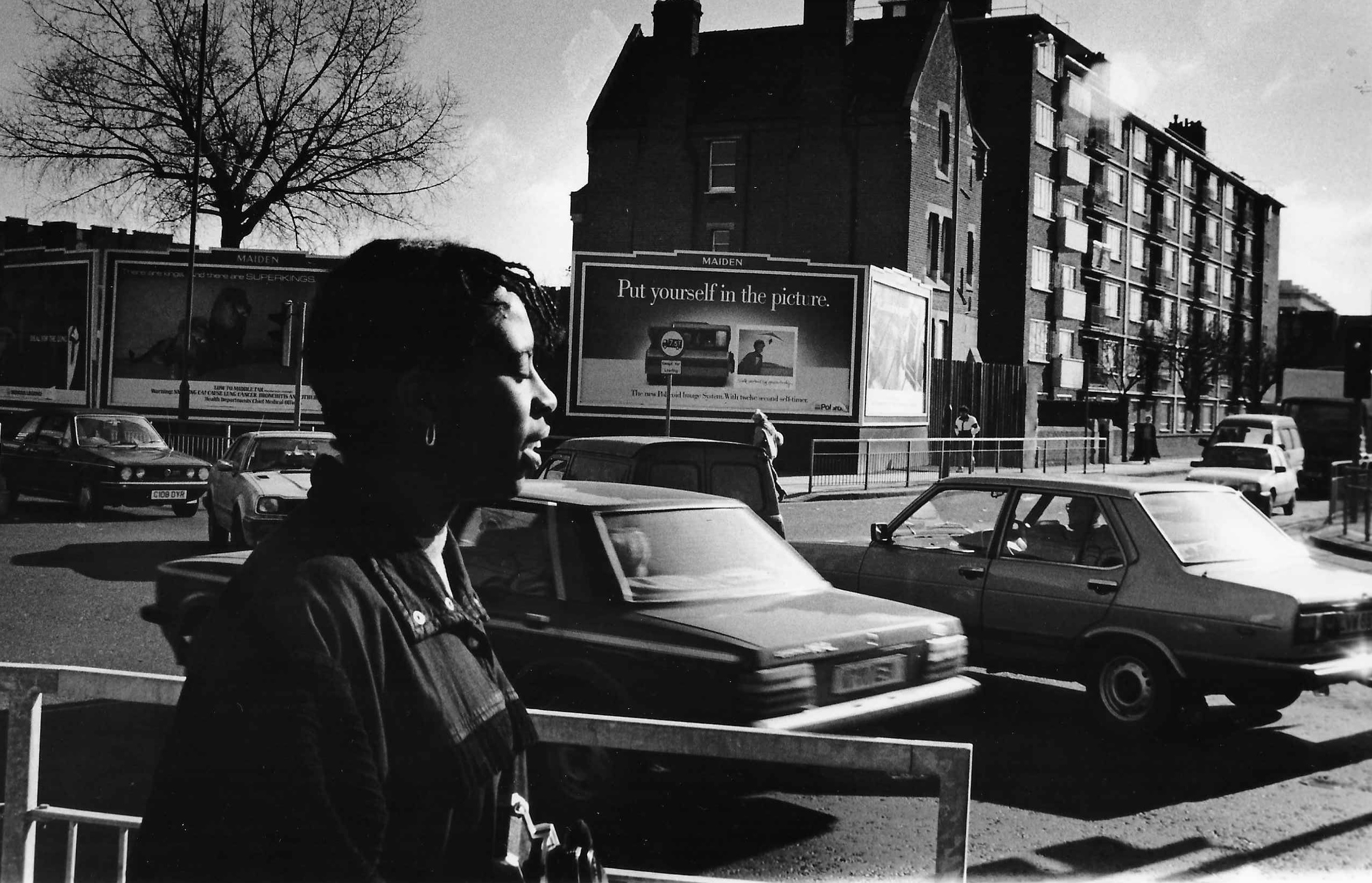
Featured image: Black British photographer Brenda Agard leading a street photography workshop, London, 1987. Wikimedia Commons, CC BY-SA 4.0.

Who Are Black Britons?
“Black British” describes a diverse population rather than a single ethnic origin. It includes people whose families have lived in Britain for centuries, descendants of Caribbean Commonwealth migration, communities with roots in Nigeria, Ghana, Somalia, Sierra Leone and other African countries, and people of mixed heritage. Some identify principally as Black British, others as Black Caribbean, Black African, Black Welsh, Black Scottish, or through a more specific national or ethnic identity. The terms are overlapping, not interchangeable.
This profile uses the United Kingdom as its geographical scope, including England, Scotland, Wales and Northern Ireland. That matters because population statistics and aspects of equality law differ across its constituent nations.
Population and Contemporary Geography
The 2021 Census recorded approximately 2.4 million people in England and Wales identifying in the “Black, Black British, Black Welsh, Caribbean or African” broad ethnic category, about 4.0% of the population. In England, the figure was approximately 2.4 million (4.2%); in Wales, approximately 28,000 (0.9%). These figures exclude some people of Black heritage recorded in mixed-ethnicity categories and do not constitute a whole-UK total.
London is an important centre of Black British life, but substantial communities are also found in Birmingham, Manchester, Bristol, Leeds, Liverpool, Nottingham, Cardiff, Glasgow and elsewhere. Census results for Scotland and Northern Ireland should be examined separately rather than silently added to England-and-Wales figures.
Black Presence Before Windrush
Black history in Britain long predates the arrival of the Empire Windrush in 1948. Evidence of people with African origins exists in Roman Britain, while later records document Black individuals in Tudor and Stuart society, including John Blanke, a trumpeter at the court of Henry VIII.
By the eighteenth century, Black Londoners, sailors, servants, artisans, writers and activists were part of British urban life. Figures such as Olaudah Equiano and Ottobah Cugoano contributed to public debate about slavery and freedom. The familiar story that Black Britain began after the Second World War therefore obscures centuries of presence.
Empire, the Slave Trade and Abolition
Britain was a major participant in the transatlantic slave trade and the plantation economies of the Caribbean and the Americas. British merchants, financiers, shipowners and institutions benefited from enslaved African labor.
Parliament abolished the British slave trade in 1807 and enacted the Slavery Abolition Act in 1833, with emancipation implemented from 1834 and a further period of coerced “apprenticeship” in much of the Caribbean. The abolition settlement compensated slave owners, not formerly enslaved people. These facts remain central to contemporary discussions of historical responsibility and reparatory justice.
Black Britain and the World Wars
People from Africa and the Caribbean served the British Empire in both world wars, including in military, maritime, industrial and medical roles. Their service challenged racial assumptions while also exposing discrimination in recruitment, promotion, accommodation and civilian life.
The postwar period created opportunities for migration and reconstruction, but it did not automatically produce equal treatment for Black veterans or workers.
Windrush and Postwar Commonwealth Migration
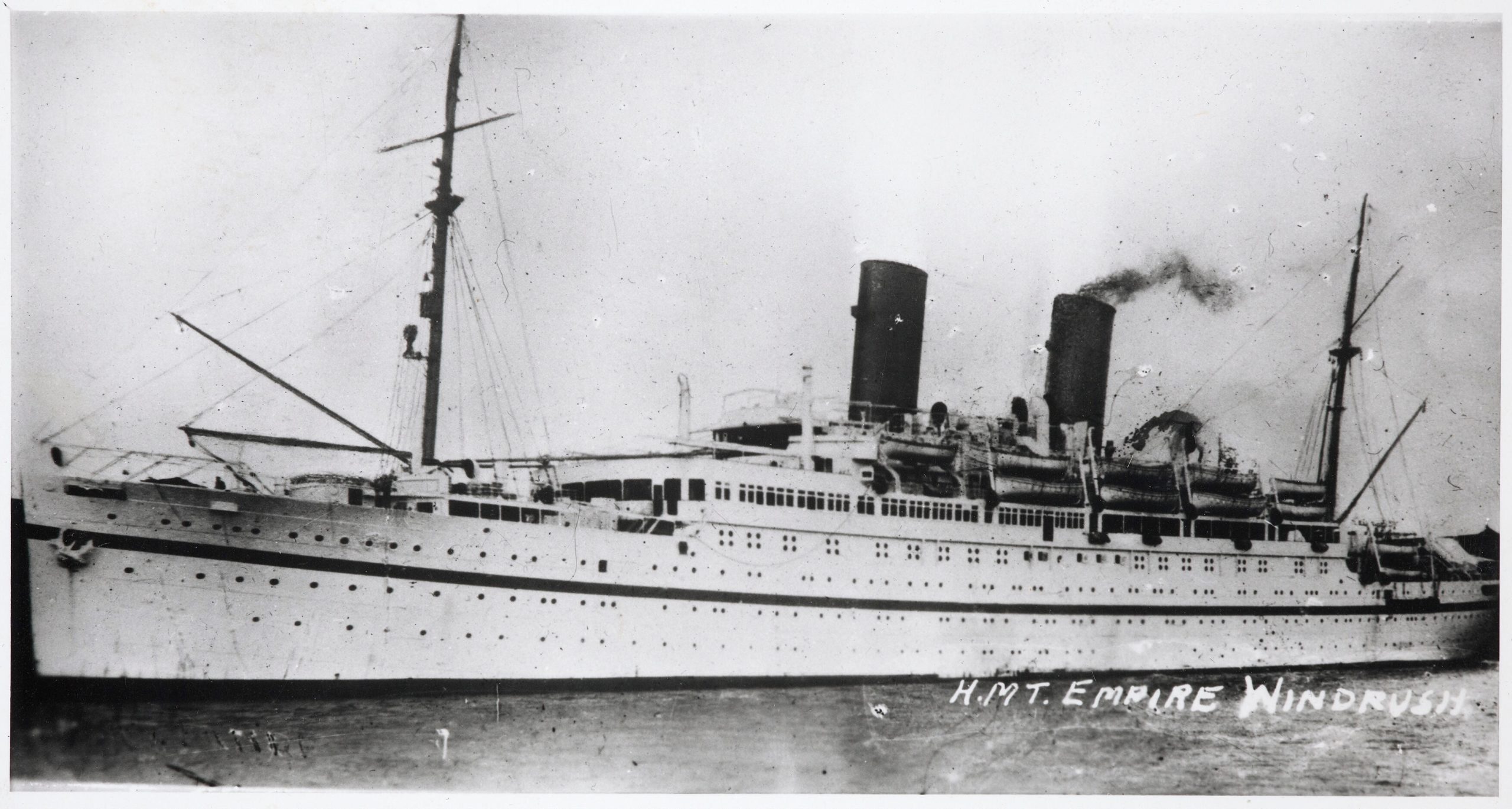
The arrival of HMT Empire Windrush at Tilbury in June 1948 became a defining symbol of postwar Caribbean migration, although Caribbean and African migration occurred before and after that voyage. The British Nationality Act 1948 helped frame the citizenship status of people connected to the United Kingdom and its colonies.
Migrants contributed to the National Health Service, London Transport, manufacturing, public services and cultural life. Many encountered housing exclusion, employment discrimination and hostility despite their lawful status and contributions to Britain.

Immigration Control and the Meaning of Citizenship
Successive immigration and nationality laws changed the relationship between Commonwealth identity and the right to enter, reside in or belong to the United Kingdom. The Commonwealth Immigrants Acts of 1962 and 1968 restricted entry; the Immigration Act 1971 further restructured rights of abode; and the British Nationality Act 1981 recast nationality categories.
These changes are critical to Black British legal history because nationality, documentation and belonging did not always align. People who had lived in Britain lawfully for decades could later face demands to prove rights that had long existed.
The Windrush Scandal
The Windrush scandal exposed the consequences of documentation failures and restrictive immigration enforcement. Long-term lawful residents, many from Caribbean backgrounds, were wrongly denied employment, housing, health care or benefits; some were detained or removed.
Wendy Williams’s 2020 Windrush Lessons Learned Review described serious institutional failures and made 30 recommendations. The government created schemes to confirm lawful status and provide compensation, but the episode remains a major test of administrative justice, accountability and effective remedies.
The scandal is especially significant because it reveals how a person may possess a legal right in principle yet be unable to exercise it when the state imposes documentary barriers or acts on erroneous assumptions.
From Race Relations Acts to the Equality Act
The Race Relations Acts of 1965, 1968 and 1976 progressively addressed racial discrimination, including in public places, employment, housing and services, and developed the institutional framework for enforcement.
The Equality Act 2010 now provides the principal consolidated anti-discrimination framework for Great Britain. Section 9 defines race to include colour, nationality, and ethnic or national origins. The Act addresses direct and indirect discrimination, harassment, victimisation and the public sector equality duty, subject to the applicable provisions and exceptions.
Northern Ireland has a separate statutory equality framework, including the Race Relations (Northern Ireland) Order 1997. A UK-wide Atlas must not imply that the Equality Act 2010 applies identically across all four nations.
Policing, Criminal Justice and Institutional Accountability
Policing and criminal justice remain central issues in Black British civic life. The 1999 Macpherson Inquiry into the murder of Stephen Lawrence became a landmark in public discussion of institutional racism and police accountability.
Official Home Office data for the year ending March 2026 show that Black people in England and Wales were stopped and searched at 4.1 times the rate of White people, using the self-defined ethnicity measure. Such figures require careful interpretation, but they demonstrate why scrutiny of police powers, use of force, charging, sentencing and detention remains important.
Education and Opportunity
Black British families and organisations have long challenged unequal schooling, stereotyping and barriers to professional advancement. The historical practice of disproportionately placing some Black Caribbean children in schools for the “educationally subnormal” illustrates how educational institutions could reproduce racial hierarchy.
Contemporary concerns include exclusions, attainment differences among distinct Black ethnic groups, access to universities and professional careers, and representation in senior academic and institutional leadership. Aggregate “Black” statistics can conceal important differences among communities.
Work, Housing and Economic Life
Black Britons have shaped the workforce, professions, public services, trade unions and business life of the United Kingdom. Yet discrimination, unequal promotion, housing barriers and wealth disparities remain recurring issues.
Black entrepreneurship, creative industries, professional networks and community enterprises have developed alongside these barriers. For legal and policy analysis, the key distinction is between formal equality of access and the distribution of actual opportunity.
Politics, Civil Rights and Community Organisations
Black British political organising has included anti-colonial activism, community associations, trade union campaigns, anti-racist mobilisation, legal advocacy and parliamentary representation. The Bristol Bus Boycott of 1963 is an important example of community action against employment discrimination.
Institutions such as the Black Cultural Archives, the Black Solicitors Network, Operation Black Vote and local community organisations have contributed in different ways to historical preservation, professional networks, political participation and equality advocacy. Their roles should not be treated as identical.
Culture, Language and Global Influence
Black British cultural life reflects Caribbean, African and wider Atlantic connections. Sound-system culture, reggae, lovers rock, grime, UK garage, drill, jazz, literature, visual arts, theatre, fashion and sport have shaped national identity and influenced audiences worldwide.
Writers and artists including Andrea Levy, Bernardine Evaristo, Stuart Hall and Steve McQueen have examined race, migration, empire and belonging through distinct intellectual and creative approaches. Black British culture is not simply an imported extension of another diaspora; it has developed its own institutions, debates and forms.
Scotland, Wales and Northern Ireland
Black experiences across the UK are not reducible to London or England. Black Scottish and Black Welsh communities have histories tied to ports, maritime work, empire, education and contemporary migration. In Northern Ireland, Black communities encounter a distinct political history and equality-law environment.
Devolution affects public policy, education, policing and some legal remedies. This Atlas treats the United Kingdom as a connected but legally and historically differentiated space.
Reparations, Museums and Historical Memory
Public debates over Britain’s imperial past now extend to museum collections, contested monuments, university and corporate links to slavery, restitution of cultural objects, and demands for reparatory justice.
These debates raise legal questions about ownership, state responsibility, institutional commitments and the distinction between symbolic recognition and material remedy. They also connect Black British history directly to the Caribbean, Africa and the wider diaspora.
Why Black Britain Matters to the Global Diaspora
Black Britain is a meeting point of several histories: an early African presence, the British Empire and Atlantic slavery, postwar Commonwealth migration, contemporary African migration and evolving citizenship law.
Its experience illustrates that belonging can be simultaneously historical, legal and contested. The law may recognise citizenship and prohibit racial discrimination while institutions continue to demand proof, distribute opportunity unequally or reproduce inherited assumptions about who is “really” British.
Atlas Perspective
The defining tension in Black British history is between formal belonging and practical recognition. Britain’s Black population helped build the country and its institutions across centuries, yet the boundaries of citizenship and equal treatment have repeatedly shifted.
The Windrush scandal offers a particularly sharp illustration: rights already held in law became precarious when documentary requirements and administrative practices overrode lived reality. The broader challenge is to ensure that anti-discrimination law, historical recognition and institutional accountability translate into security, opportunity and genuine membership in the national community.
Further Reading and Primary Sources
Office for National Statistics — Ethnic group, England and Wales: Census 2021
Equality Act 2010 — legislation.gov.uk
Equality Act 2010, Section 9 (Race)
Windrush Lessons Learned Review — Home Office
Home Office — Stop and search, year ending March 2026
British Nationality Act 1948
Race Relations (Northern Ireland) Order 1997
Black Cultural Archives