
LEXNOIR ATLAS
Colombia is home to one of Latin America’s largest and most historically significant Afro-descendant populations. From the self-governing traditions of San Basilio de Palenque to the collective territories of the Pacific coast, Afro-Colombian communities have defended cultural identity, ancestral lands and the right to participate in the nation on equal terms. Their experience poses a fundamental question: what does legal recognition mean when communities still struggle to exercise their rights safely and effectively?
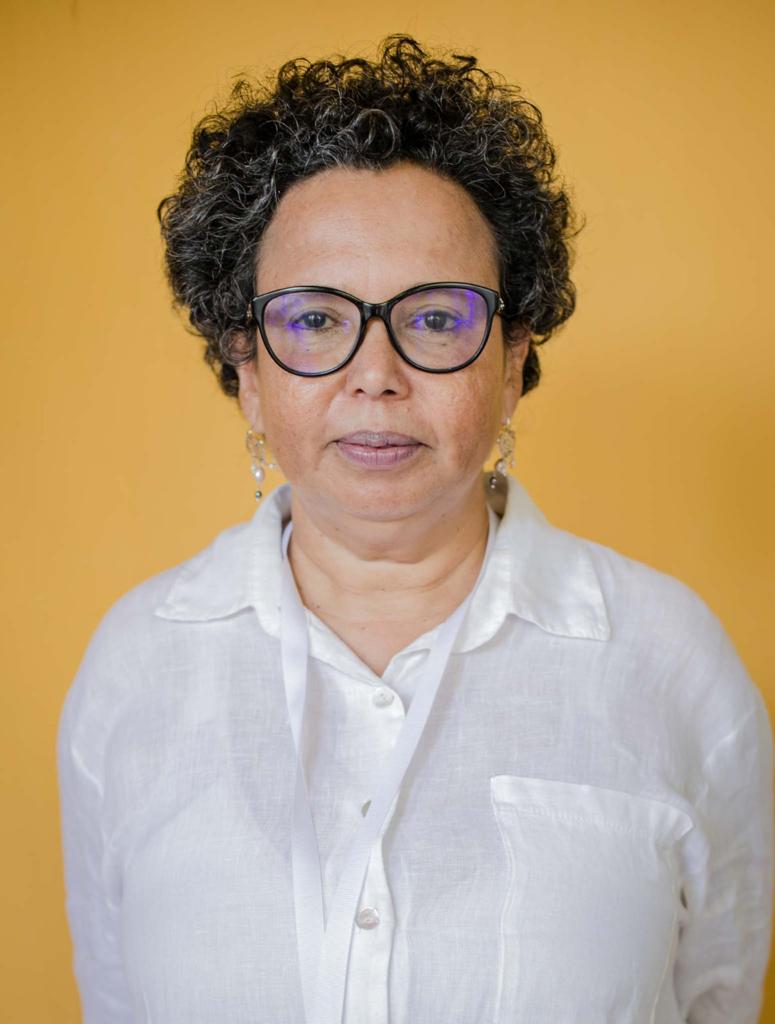
Featured image: Afro-Colombian scholar and feminist Claudia Mosquera Rosero-Labbé. Photograph by Antropuj, 2023. Wikimedia Commons, CC BY-SA 4.0.

Community and Identity
Afro-Colombians are not a single, uniform community. Colombia’s public institutions commonly refer to comunidades negras, afrocolombianas, raizales y palenqueras (NARP). These related identities reflect different histories, languages, geographies and forms of organization. Afro-Colombian identities include descendants of enslaved Africans, longstanding Pacific and Caribbean communities, urban populations and people with varied African and other ancestries.
Raizal communities are especially associated with the Caribbean archipelago of San Andrés, Providencia and Santa Catalina, with their own cultural and linguistic traditions. Palenquero identity is associated with historic communities formed by people who escaped slavery, most notably San Basilio de Palenque. These distinctions matter: neither legal protections nor cultural practices should be assumed to operate identically across the NARP population.
Population and Geography
Colombia’s national statistical agency, DANE, officially estimated 4,671,160 people in the Black, Afro-Colombian, Raizal and Palenquero population for 2018 using the Quality of Life Survey. This estimate represented approximately 9.34% of the national population. The direct 2018 census count was lower; DANE identified difficulties with the ethnic self-identification question and adopted the survey-based estimate for population size. These figures are from 2018, not a current population count.
Major Afro-Colombian communities are found along the Pacific coast in Chocó, Valle del Cauca, Cauca and Nariño, and in Caribbean departments including Bolívar and Atlántico. Cali, Buenaventura, Cartagena, Barranquilla, Medellín and Bogotá are important urban centers. The Pacific region is particularly important to the history of collective territorial rights, while the Caribbean is central to the history of Cartagena, palenques and maritime connections.
Slavery, Resistance and Emancipation
During Spanish colonial rule, enslaved Africans were brought through ports including Cartagena and forced to labor in mining, agriculture, domestic service and other sectors. African-descended people also built families, religious and social institutions, trading networks and communities of resistance.
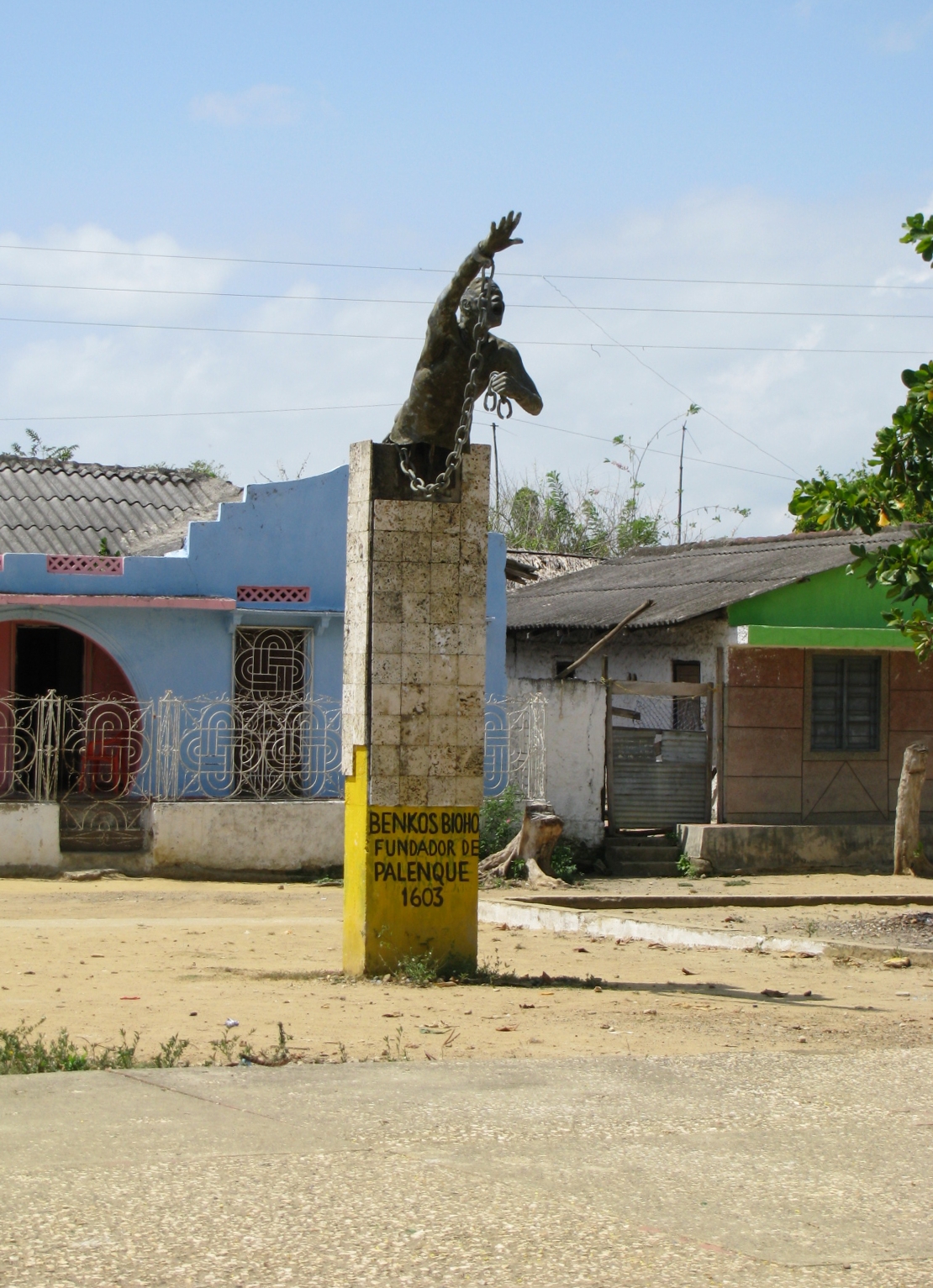
Palenques were settlements founded by people escaping enslavement. The best-known surviving example, San Basilio de Palenque near Cartagena, represents a history of self-government and cultural continuity. Colombia enacted legislation abolishing slavery in 1851, with emancipation taking effect in 1852; freedom did not end racial hierarchy or unequal access to land and opportunity.
San Basilio de Palenque: A Living Cultural Institution
San Basilio de Palenque is more than a historical monument. Its distinctive cultural life includes the Palenquero language, extended family and age-group associations known as kuagro, music, oral traditions and ritual practices. UNESCO inscribed the Cultural Space of Palenque de San Basilio on its Representative List of the Intangible Cultural Heritage of Humanity in 2008, following an earlier 2005 proclamation.
Palenquero is a Spanish-lexifier creole with grammatical features associated with Bantu languages. Preserving the language and its community institutions is a continuing issue of cultural rights, education and intergenerational transmission.

The 1991 Constitution and Recognition of Diversity
Colombia’s 1991 Constitution recognized and protected the nation’s ethnic and cultural diversity. Its Transitory Article 55 specifically directed legislation recognizing collective ownership for qualifying Black communities historically occupying rural riverine lands in the Pacific basin, with provision for certain other comparable areas.
The constitutional change is a watershed: it reframed the status of affected Black communities not only in terms of individual protection against discrimination but also through recognition of collective territory, cultural identity and participation in decisions affecting them.
Law 70 of 1993: Collective Land and Community Governance
Law 70 of 1993 implemented the constitutional mandate. It recognizes collective property rights for qualifying Black communities, protects cultural identity and provides for community participation and development. Under the law, eligible communities establish consejos comunitarios (community councils) to administer collectively titled territory and exercise specified governance responsibilities.
These rights are substantial but not unlimited. Eligibility, boundaries, natural-resource rules, pre-existing property interests and environmental protections are governed by the statute and its regulations. The legal significance of collective title is therefore best understood together with the practical difficulties of land demarcation, security and enforcement.
Decree 1745 of 1995 established procedures for recognition of collective ownership and the organization of community councils. The system offers an important comparative model for diaspora discussions of ancestral land, community autonomy and collective property.
Prior Consultation and Development
Projects affecting Afro-Colombian communities may engage legal duties of participation and, where applicable, prior consultation (consulta previa) under Colombia’s constitutional framework and international obligations, including ILO Convention No. 169 as incorporated into Colombian law. Whether consultation is required, and what it entails, depends on the affected community, measure and circumstances.
Mining, logging, ports, roads, energy projects and agricultural expansion can create tension between economic development and territorial, environmental and cultural rights. For investors and public authorities, the central issue is not simply obtaining land or environmental permits; it is understanding the rights and institutions of communities whose territories and ways of life may be affected.
Armed Conflict, Displacement and Territorial Security
Colombia’s long internal armed conflict has disproportionately harmed numerous Afro-Colombian communities, particularly where armed groups, illicit economies and competition over strategic territories intersect. Displacement, confinement, violence against community leaders and disruption of livelihoods threaten both individuals and the collective continuity of communities.
In Auto 005 of 2009, issued in the framework of its displacement jurisprudence following judgment T-025 of 2004, Colombia’s Constitutional Court addressed the heightened risks facing Afro-descendant people displaced by armed conflict, including loss of territory, destruction of social and cultural structures, and discrimination. This decision is central to understanding the relationship between territorial protection and fundamental rights.
Victims’ Rights and Collective Reparation
Decree-Law 4635 of 2011 established a special framework for assistance, attention, integral reparation and restitution of territorial rights for victims belonging to Black, Afro-Colombian, Raizal and Palenquero communities. It expressly recognizes collective as well as individual harms and the importance of culturally appropriate remedies.
The 2016 peace agreement between the Colombian government and the FARC-EP included an ethnic chapter intended to protect ethnic communities’ rights during implementation. The continued challenge is translating legal commitments into effective territorial security, participation, reparations and protection from renewed violence.
Political Representation and Civic Leadership
Afro-Colombian civic organizations, community councils, women’s groups, lawyers, scholars and political leaders have shaped debates over land, racial equality, public investment and peace. The election of Francia Márquez as vice president in 2022 was a nationally significant milestone for Afro-Colombian representation.
Representation at the national level, however, is not a substitute for local autonomy or effective access to justice. Community leadership and civil society remain essential where public services, security and economic opportunities are uneven.
Education, Employment and Economic Opportunity
Afro-Colombian communities contribute to agriculture, fisheries, trade, ports, tourism, education, public service, professional life and the arts. Persistent disparities in access to infrastructure, health care, quality schooling, formal employment and finance have especially affected some historically marginalized rural and urban communities.
Policy analysis should avoid treating the entire NARP population as economically or socially homogeneous. Conditions differ sharply between Pacific rural territories, Caribbean communities, island populations and large cities. Educational inclusion, recognition of community knowledge, professional advancement and entrepreneurship are important dimensions of equality.
Culture, Language and Global Influence
Afro-Colombian culture is central to Colombia’s national identity. Pacific marimba music, traditional chants and dances, currulao, Caribbean bullerengue, champeta, oral storytelling, cuisine, craft traditions and religious practices reflect multiple African and Colombian histories.
UNESCO recognized the marimba music, traditional chants and dances of Colombia’s South Pacific region and Ecuador’s Esmeraldas province on its Representative List in 2015. Such recognition is valuable, but meaningful preservation depends on community control, cultural transmission and viable livelihoods for the people who sustain these traditions.
Environment and Climate Resilience
Many Afro-Colombian territories overlap ecologically sensitive forests, rivers, mangroves and coastal environments. Collective territorial governance can be integral to conservation, but communities face pressures from deforestation, extractive activity, contamination, flooding, coastal erosion and other environmental changes.
Land tenure, environmental justice and community participation are therefore interconnected. An environmental intervention that disregards collective rights may reproduce the very exclusion it seeks to remedy.
Connections Across the African Diaspora
Afro-Colombian communities have strong historical and contemporary connections with Afro-Ecuadorian communities along the Pacific coast, the wider Caribbean, Brazil and other Afro-Latin American populations. Shared experiences include enslavement, maroon resistance, cultural preservation, struggles over land and political recognition.
Colombia’s legal recognition of collective Black territories offers a particularly useful comparative reference for discussions of land retention, cultural autonomy and reparatory justice elsewhere in the diaspora. At the same time, its distinctive constitutional and historical context should not be flattened into a universal model.
Atlas Perspective
The defining legal insight of the Afro-Colombian experience is that equality, territory and cultural survival cannot be separated. The 1991 Constitution and Law 70 of 1993 recognize rights that go beyond individual nondiscrimination, including collective land ownership and community governance. Yet armed conflict, displacement, environmental pressure and uneven institutional enforcement can undermine those rights in practice.
For LexNoir’s global audience, Colombia illustrates both the possibilities and the limitations of rights-based recognition: a legal title can protect a community’s relationship with its land, but meaningful justice also requires security, self-determination, effective remedies and the resources to sustain community life.
Further Reading and Primary Sources
DANE — Ethnic self-identification and official 2018 NARP estimate
Colombia’s 1991 Constitution, including Transitory Article 55
Law 70 of 1993 — Collective property and cultural rights
Decree 1745 of 1995 — Community councils and collective title
Constitutional Court Auto 005 of 2009 — Afro-descendant displacement
Decree-Law 4635 of 2011 — Victims and territorial restitution
2016 Final Peace Agreement — Official text
UNESCO — Cultural Space of Palenque de San Basilio
UNESCO — Marimba music and chants of the South Pacific