
LEXNOIR ATLAS
Quilombola communities are Afro-Brazilian communities whose identities are rooted in shared history, ancestry, territory, kinship and resistance to racial oppression. Their contemporary legal status reflects one of Brazil’s most important efforts to translate historical recognition into collective rights—especially rights to land, cultural continuity and public policy tailored to community needs.
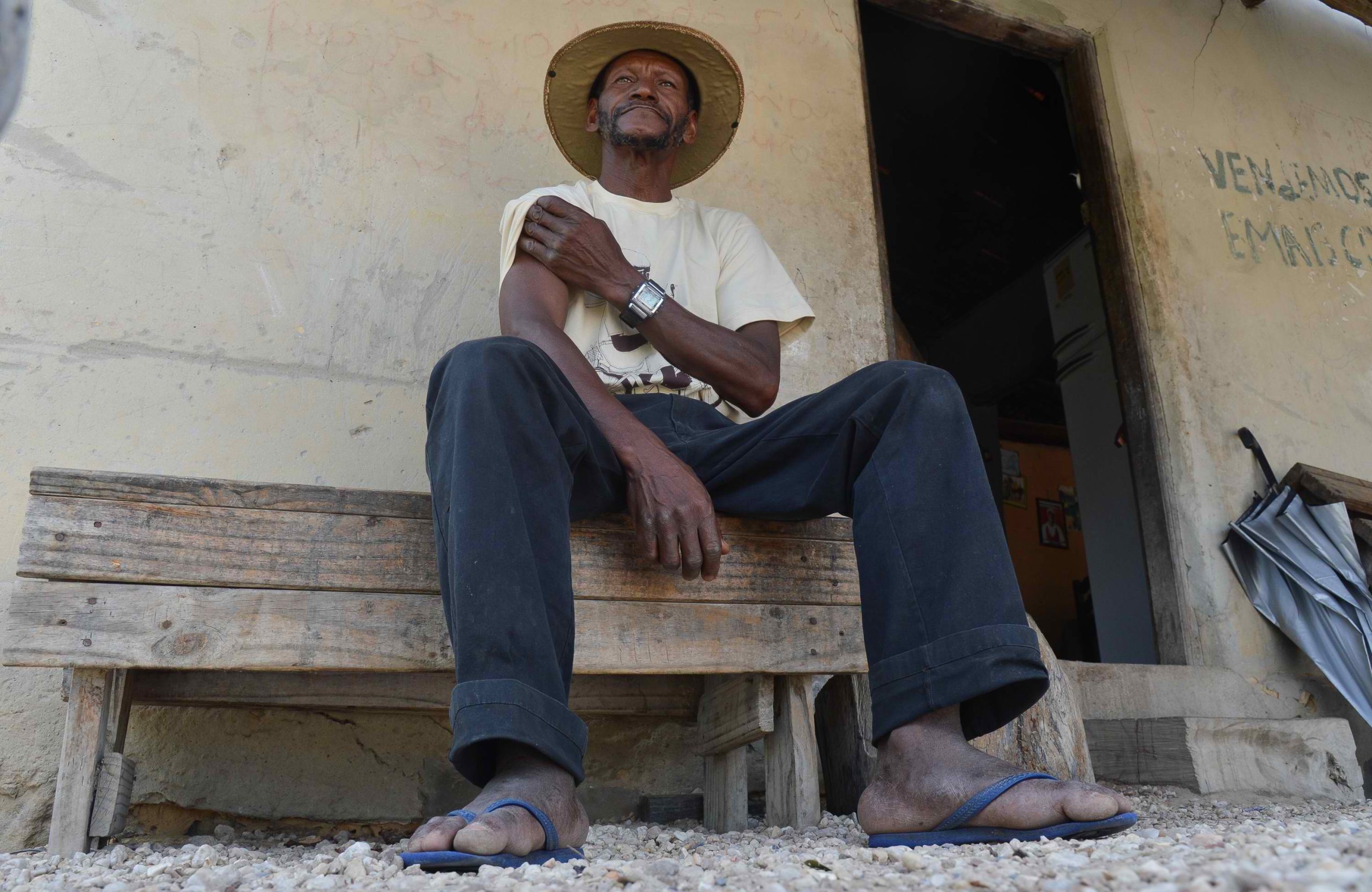
\n\n\nFeatured image: Sirilo dos Santos Rosa, president of the Associação Quilombo Kalunga, photographed in the Quilombo Kalunga community of Engenho II, Goiás. Photo: Wilson Dias/Agência Brasil via Wikimedia Commons, CC BY 3.0 BR.
\nWho Are Quilombola Communities?
Modern Brazilian law does not define quilombola identity solely by descent from people who escaped slavery. Under Decree No. 4,887 of 2003, quilombola communities are ethnic-racial groups that identify themselves through their own criteria, possess a distinct historical trajectory, maintain specific territorial relationships and are presumed to have Black ancestry related to resistance to historical oppression.
That emphasis on self-identification is central. The Fundação Cultural Palmares issues certificates of self-definition to communities that seek formal recognition, but the process is not designed as an external racial test of whether a community is “really” quilombola. The community’s own collective identification is the starting point.
A History of Resistance and Community Formation
The term quilombo has deep historical roots in Brazil. During slavery, quilombos included communities formed by escaped enslaved people and others who built autonomous settlements beyond the control of slaveholders and colonial authorities. Some became enduring centers of resistance, with Palmares the best-known historical example.
But contemporary quilombola identity is broader than a simple historical connection to a fugitive settlement. Many communities developed over generations through shared land use, kinship, labor, cultural practices, religious traditions and collective memory. Their identities are therefore both historical and living.
The Constitutional Land Right
Brazil’s 1988 Constitution transformed the legal position of quilombola communities. Article 68 of the Transitional Constitutional Provisions recognizes definitive ownership for remaining quilombo communities occupying their lands and directs the state to issue the corresponding titles.
The provision is unusually direct. It does not merely call for future policy or symbolic recognition; it recognizes a property right. The difficult legal and administrative questions arise in identifying the relevant community, defining the territory connected to its physical, social, economic and cultural reproduction, resolving competing claims and completing the titling process.
How Titling Works
Decree No. 4,887 of 2003 established the federal administrative process for identifying, recognizing, delimiting, demarcating and titling quilombola territories. At the federal level, the National Institute for Colonization and Agrarian Reform (INCRA) plays the principal role in land regularization and titling.
The process can involve certification, anthropological and technical studies, publication of territorial reports, challenges by third parties, expropriation or compensation where non-quilombola private interests exist, removal of irregular occupants and issuance of collective title.
In practice, titling can take years. That gap between constitutional recognition and completed title is one of the central legal and political issues facing quilombola communities. INCRA continues to issue titles and advance pending cases, including new titling actions in 2026, but a substantial implementation backlog remains.
The 2022 Census Changes the Picture
Brazil’s 2022 Census marked a major shift in public visibility because it was the first national census to identify the quilombola population as an ethnic group.
IBGE counted 1,330,186 quilombola people living in approximately 1,700 municipalities across 24 states and the Federal District. The largest concentrations are in the Northeast, particularly Bahia and Maranhão.
The census also underscored a critical point: quilombola identity is not confined to officially titled rural land. Many quilombola people live outside formally delimited territories, including in urban areas. The population is therefore broader than the universe captured by land-title records alone.
Land, Environment and Consultation
For many quilombola communities, land is not simply an economic asset. Territory can be integral to cultural identity, subsistence, family networks, religious practice, community governance and intergenerational continuity.
This makes infrastructure, mining, agribusiness, environmental licensing and conservation policy especially significant. Projects affecting quilombola communities increasingly raise questions about free, prior and informed consultation, including under principles associated with International Labour Organization Convention No. 169.
Brazilian agencies have continued to develop consultation practices in 2026, including in regulatory discussions involving mining and traditional communities. The central question is whether consultation occurs early enough and meaningfully enough to affect decisions—not merely after the essential terms have already been set.
Health and Public Services
Quilombola communities also face disparities in access to health care, sanitation, infrastructure and other public services. Geographic isolation can be one factor, but inequality is not limited to remote rural areas.
In September 2026, Brazil formally instituted a new National Policy for Comprehensive Health of the Quilombola Population within the national health system. The policy is designed to address structural barriers, racism and ethnic-racial inequities while incorporating quilombola territory, culture and identity into health planning.
The policy is notable for another reason: it recognizes that quilombola people may live in urban areas and outside formally titled territories. Eligibility for culturally appropriate public policy therefore does not depend entirely on land-title status.
Culture and Collective Identity
Quilombola communities are highly diverse. There is no single quilombola culture, religion, economy or social organization. Communities differ across Bahia, Maranhão, Pará, Minas Gerais, Goiás, Rio Grande do Sul and other parts of Brazil.
What connects them is less a uniform set of customs than a combination of collective self-identification, Black ancestry, historical experience, community ties and a relationship to territory and resistance. Local traditions may include particular forms of agriculture, foodways, music, religious practice, festivals, oral history and community governance.
\n\n\n
Contemporary Legal and Policy Issues
Several issues define the current quilombola rights agenda. The first is the pace of land titling and whether administrative processes can deliver the constitutional promise of Article 68 within a reasonable period.
The second is protection of communities whose territories are affected by mining, infrastructure, environmental degradation or competing private claims. The third is ensuring that public policy reaches quilombola people who live outside officially recognized or titled territories.
Other concerns include access to health and education, sanitation, food security, violence against community leaders, preservation of cultural heritage and effective participation in government decisions.
Institutions and Community Infrastructure
Quilombola rights involve a network of institutions. The Fundação Cultural Palmares handles community certification. INCRA administers federal land-regularization processes. Federal ministries address racial equality, health, education and other policies, while states and municipalities also have roles in recognition and implementation.
Community organization is equally important. The National Coordination for the Articulation of Black Rural Quilombola Communities (CONAQ) and regional and local organizations have played major roles in land rights, health policy, consultation, public advocacy and national recognition.
Why Quilombola Rights Matter to the Global Diaspora
Quilombola rights represent one of the most distinctive legal models in the global African diaspora because they connect racial history to collective territorial rights.
The Brazilian model raises questions that extend far beyond Brazil: Can historical racial injustice support contemporary collective property rights? How should legal systems identify communities entitled to those rights? What role should self-identification play? And what does meaningful consultation require when development projects affect historically marginalized communities?
For diaspora communities elsewhere, the quilombola experience offers a comparative framework for thinking about reparative justice, land, cultural autonomy and the relationship between constitutional recognition and effective implementation.
Atlas Perspective
Brazil’s Constitution settled an important principle in 1988: quilombola communities can possess collective legal rights rooted in historical occupation and community continuity.
The unresolved issue is implementation. Nearly four decades later, the central challenge remains converting constitutional recognition into secure title, meaningful consultation, equitable public services and lasting institutional protection.
Further Reading and Primary Sources
Brazil — Constitution of 1988, Article 68 of the Transitional Constitutional Provisions
Brazil — Decree No. 4,887/2003
IBGE — O Brasil Quilombola, 2022 Census
Fundação Cultural Palmares — Quilombola Certification
INCRA — Quilombola Land Regularization
Ministry of Health — National Policy for Comprehensive Health of the Quilombola Population