
LEXNOIR ATLAS
The Gullah Geechee people are a distinct African American community rooted in the coastal Lowcountry and Sea Islands of the southeastern United States. Their history reflects unusually strong continuities with West and Central Africa, shaped by rice cultivation, geographic isolation, language, faith, foodways, music, craft traditions and extended family networks. Today, one of the community’s most urgent legal and cultural questions is whether Gullah Geechee people can remain on the land that made those traditions possible.
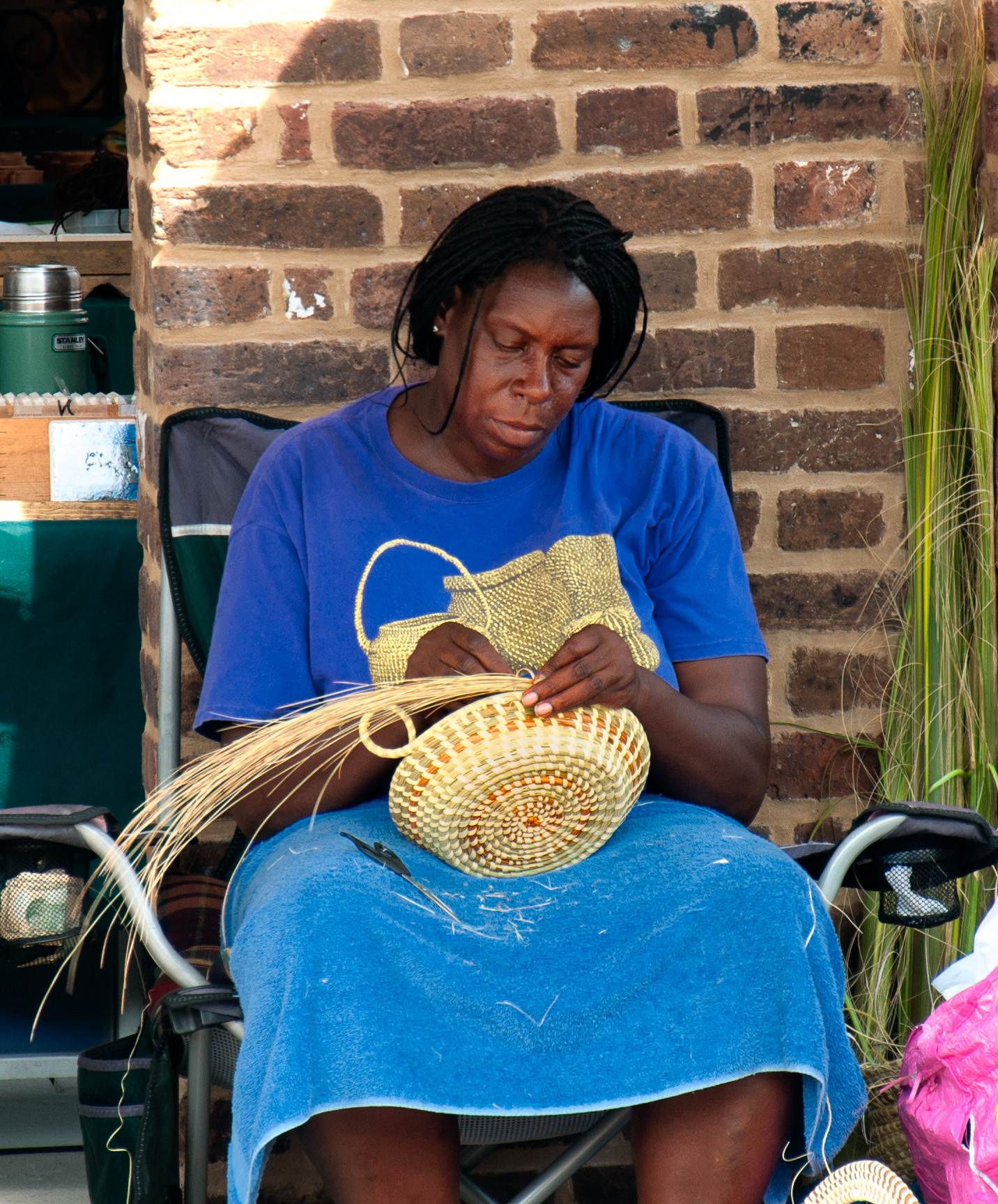
Featured image: Gullah sweetgrass basket maker in Charleston’s City Market, South Carolina, 2012. Photo by ProfReader/Wikimedia Commons, CC BY-SA 3.0.
Who Are the Gullah Geechee?
“Gullah Geechee” generally refers to African American communities historically concentrated along the Atlantic coastal plain and Sea Islands from North Carolina through South Carolina and Georgia into northern Florida. “Gullah” has often been associated more closely with the Sea Islands and Lowcountry of South Carolina, while “Geechee” has historically been used more often in Georgia and nearby areas, although the terms overlap.
The community is not defined by a single county or state. It is better understood as a cultural region linked by family, language, foodways, spiritual traditions, agriculture, fishing, crafts and a shared history of enslavement and post-emancipation landholding.
West and Central African Roots
Many enslaved Africans brought to the Carolina and Georgia Lowcountry came from the rice-growing regions of West Africa and from West Central Africa. Their agricultural knowledge was highly valuable to planters seeking to expand rice production.
Historians have long noted cultural continuities in language, rice cultivation, basketry, music, spirituality, food preparation and community organization. The Lowcountry’s geography—especially plantation isolation and the Sea Islands—helped some African-derived practices survive with unusual strength.
Rice, Indigo and Enslaved Labor
The wealth of the colonial Lowcountry depended heavily on enslaved labor. Rice and indigo plantations generated enormous profits, while enslaved Africans and their descendants performed the dangerous work of clearing swamps, constructing irrigation systems, planting, harvesting and processing crops.
The region’s plantation economy cannot be separated from African agricultural knowledge. Enslaved workers brought expertise in rice cultivation, tidal irrigation and related practices that planters often exploited without acknowledgment.
Language and Cultural Continuity
Gullah is an English-based creole language shaped by African languages and the historical conditions of slavery and plantation life. It developed as enslaved Africans from different linguistic backgrounds interacted with one another and with English speakers.
For generations, Gullah was stigmatized as “broken English.” Linguistic scholarship instead recognizes it as a fully developed creole language with its own grammar, vocabulary and history. Its survival is one of the clearest signs of the community’s cultural continuity.
Faith, Family and Community
Religion has long been central to Gullah Geechee life. Christian practice often incorporated African-derived approaches to worship, music, call-and-response, funerary traditions and spiritual understanding.
Extended family and community networks also became essential institutions, especially during slavery and Reconstruction. These networks supported childcare, mutual aid, land retention and the preservation of traditions across generations.
Emancipation and Land
The Civil War transformed the Lowcountry. As Union forces occupied parts of the Sea Islands and coastal South, formerly enslaved people began to establish schools, churches, farms and self-governing communities.
Land became central to freedom. Some freed families acquired property through purchase, wartime redistribution or later transactions. By the late nineteenth and early twentieth centuries, Black landownership in parts of the Lowcountry had become a foundation for economic independence and cultural survival.
Reconstruction-Era Institutions
Schools, churches and civic organizations expanded rapidly after emancipation. The Penn School on St. Helena Island, founded during the Civil War to educate formerly enslaved people, became one of the most important educational institutions in the region.
These institutions helped connect literacy, landownership, political participation and community leadership. They also preserved cultural practices that could have been lost through displacement or assimilation.
Heirs’ Property
One of the most important contemporary legal issues affecting Gullah Geechee communities is heirs’ property. This form of ownership can arise when land passes through generations without a will or formal probate, leaving multiple descendants with fractional interests in the same parcel.
Heirs’ property can make land difficult to manage, finance or develop and historically exposed families to partition sales in which one co-owner—or an outside purchaser of a small share—could force the sale of the entire property.
South Carolina, Georgia and other states have adopted versions of the Uniform Partition of Heirs Property Act, which provides additional procedural protections against forced sales. Yet title clearing, tax burdens and fragmented ownership remain major concerns.
Development Pressure and Displacement
Coastal land once considered economically marginal has become extremely valuable for tourism, retirement communities, luxury housing and commercial development. This change has placed significant pressure on historically Black communities in the Sea Islands and Lowcountry.
Rising property values can increase taxes and create incentives for speculative purchase. Families may face pressure to sell land that has been held for generations. Development can also alter access to fishing grounds, burial sites, churches and community gathering places.
For Gullah Geechee communities, displacement is therefore not simply a housing issue. It can sever the physical basis of a living culture.
The Gullah Geechee Cultural Heritage Corridor
In 2006, Congress established the Gullah Geechee Cultural Heritage Corridor, extending through coastal areas of North Carolina, South Carolina, Georgia and Florida. The Corridor is a federal National Heritage Area intended to preserve and interpret Gullah Geechee history, culture and associated historic resources.
The Corridor’s creation marked significant federal recognition of the community’s distinct history. It also linked cultural preservation to place by acknowledging that historic landscapes, settlements, churches, schools, burial grounds and working waterfronts are part of the heritage itself.
Sweetgrass Basketry
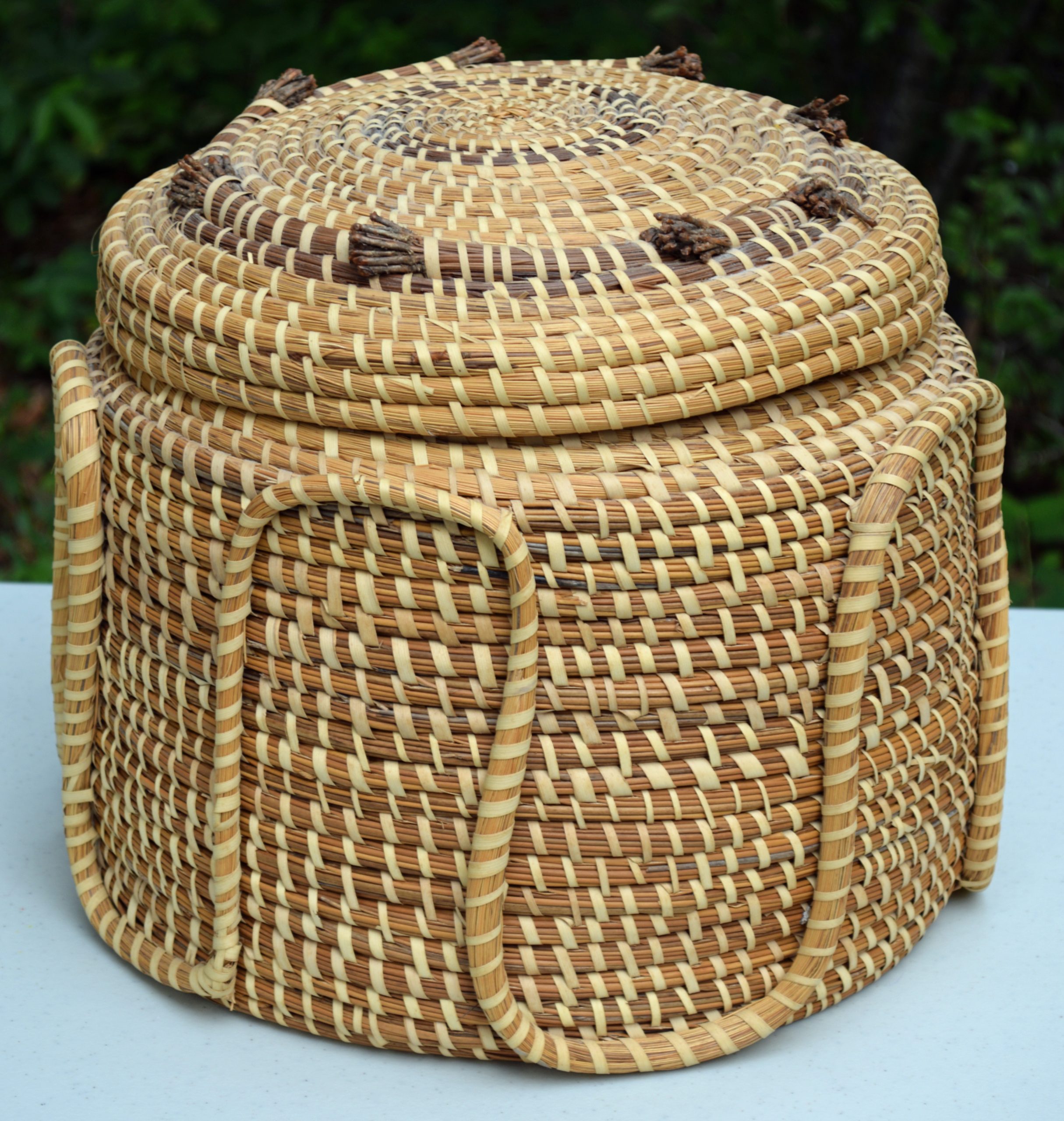
Sweetgrass basketry is one of the most visible Gullah Geechee traditions. The coiled basket technique reflects West African antecedents and has been passed down through generations, particularly around Mount Pleasant and Charleston, South Carolina.
The tradition depends not only on knowledge but also on access to sweetgrass and other natural materials. Urbanization and development can therefore threaten both the economic and ecological foundations of the craft.
Foodways and the African Atlantic
Gullah Geechee foodways preserve strong African Atlantic connections. Rice, okra, benne, peas, seafood and one-pot cooking traditions reflect ingredients and techniques carried across the Atlantic and adapted to the coastal South.
These traditions influenced the broader cuisine of South Carolina, Georgia and the American South, even as their African origins were often minimized.
Music, Storytelling and Memory
Gullah Geechee musical traditions include spirituals, ring shouts, work songs and call-and-response forms that preserve African rhythmic and communal patterns.
Oral storytelling has likewise carried family history, folklore, moral teaching and community memory across generations. Language, music and story function as cultural archives in communities where written records often reflect the perspective of slaveholders rather than the enslaved.
Civil Rights and St. Helena Island
The Lowcountry also played an important role in the modern civil-rights movement. The Penn Center on St. Helena Island became a meeting and retreat space for civil-rights leaders, including Martin Luther King Jr. and members of the Southern Christian Leadership Conference.
This history connects Gullah Geechee cultural preservation with the broader African American struggle for voting rights, education and political power.
Environmental Change and Cultural Survival
Sea-level rise, hurricanes, flooding and coastal erosion create additional risks for Gullah Geechee communities. Environmental vulnerability intersects with development pressure and land insecurity, making cultural preservation increasingly dependent on climate resilience and land-use policy.
Historic cemeteries, churches, homes and archaeological sites may be physically threatened by shoreline change, while higher insurance and infrastructure costs can make continued residence more difficult.
Why Land Is More Than Property
For Gullah Geechee communities, land holds economic value, but its cultural importance is deeper. Family land can contain ancestral homes, burial grounds, gardens, fishing access, churches and landscapes tied to oral history.
This makes land retention a form of cultural preservation. Losing the land can mean losing the physical network that supports language, foodways, worship, craft traditions and intergenerational memory.
Why the Gullah Geechee Matter to the Global Diaspora
The Gullah Geechee experience is one of the clearest examples in the United States of African cultural continuity across centuries of slavery, segregation, migration and economic change.
It also demonstrates that diaspora rights can be territorial. Cultural survival may depend not only on freedom from discrimination, but also on the ability of communities to remain on ancestral land and control the conditions under which that land is developed.
Atlas Perspective
The central Gullah Geechee legal question is unusually concrete: can a people remain culturally distinct if they cannot remain physically rooted in the places where that culture developed?
Heirs’ property reform, historic preservation, land-use policy and climate resilience may appear to belong to different areas of law, but in the Gullah Geechee context they converge on the same issue. Protecting culture requires protecting the land, institutions and community networks through which culture is transmitted.
Further Reading and Primary Sources
National Park Service — Gullah Geechee Cultural Heritage Corridor
National Park Service — Gullah Geechee History and Culture
National Park Service — Heirs’ Property
Library of Congress — Gullah Language and Cultural Materials
Uniform Law Commission — Uniform Partition of Heirs Property Act
Penn Center — St. Helena Island, South Carolina