
LEXNOIR ATLAS
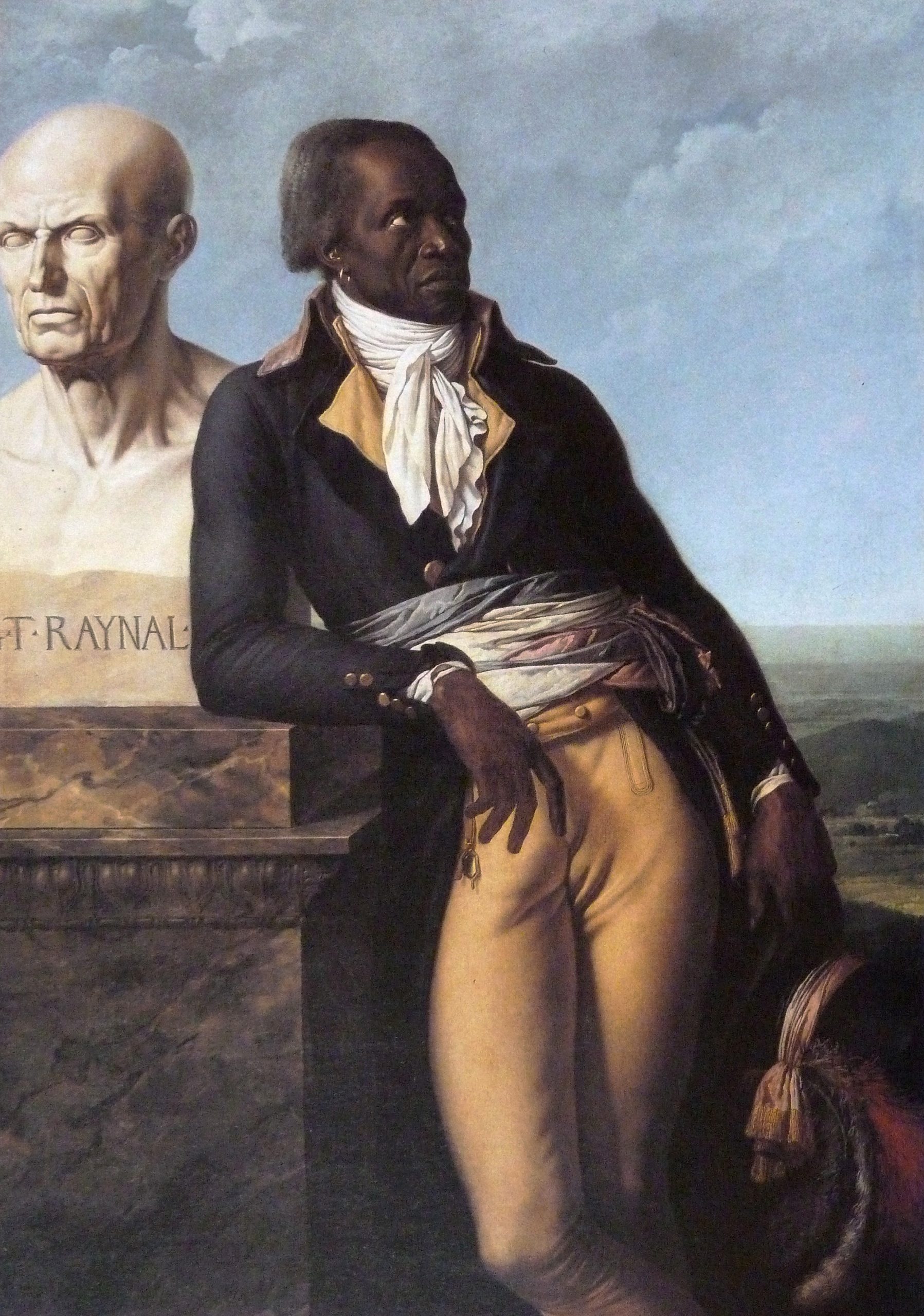
Featured image: Jean-Baptiste Belley, formerly enslaved and France’s first Black deputy, portrayed by Anne-Louis Girodet in 1797. Belley represented Saint-Domingue, now Haiti, in the National Convention. Painting: Château de Versailles collection. Digital reproduction: Wikimedia Commons, public domain in the United States. This is a historical painting.

Black France is part of the country’s history, institutions and everyday life. Its story connects the Caribbean, Africa, the Indian Ocean and Europe—and raises a question at the heart of the Republic: how can a nation committed to equality without racial distinctions identify and remedy inequalities shaped by race?
A French History Across Several Continents
Black France cannot be understood solely through immigration. It includes French people with roots in the country’s overseas territories, immigrants from African and Caribbean countries, their descendants, and families whose histories cross several of these worlds. Citizenship, ancestry, birthplace and personal identity overlap; none provides a complete definition of the others.
The country’s overseas history makes that distinction particularly important. In 1946, Martinique, Guadeloupe, French Guiana and Réunion became overseas departments. Movement from these places to mainland France is movement within a country, rather than immigration across a national border. Describing Black French people collectively as immigrants therefore misstates both their legal position and their history. [1]
That history also exposes a longstanding contradiction between universal rights and colonial power. The French Revolution proclaimed liberty and equality while slavery persisted in the colonial world. Enslaved people in Saint-Domingue, later Haiti, forced the question of whether those principles extended to them. France’s first abolition came in 1794; Napoleon restored or maintained slavery in parts of the colonial empire in 1802. Definitive abolition in the French colonies followed in 1848. These advances emerged through resistance by enslaved people and political struggles in the colonies and mainland France. [1]
Jean-Baptiste Belley, whose portrait accompanies this article, gives that struggle a human face. Formerly enslaved, he became France’s first Black deputy and represented Saint-Domingue in the National Convention. He and his fellow representatives were admitted on 3 February 1794; the following day, the Convention voted to abolish slavery. Girodet’s 1797 portrait presents Belley as a political representative, placing Black citizenship within the history of the Republic itself. [13–14]
Black intellectual life subsequently challenged who could define French culture and history. Between the world wars and the era of African independence, Paris became a meeting place for thinkers from Africa and the Caribbean. Paulette Nardal, Aimé Césaire, Lamine Senghor and Alioune Diop helped create networks and publications through which Black writers could speak in their own voices. Journals including La Revue du monde noir, L’Étudiant noir and Présence Africaine connected cultural expression with criticism of colonial domination. [2]
These networks make France an important chapter in the wider diaspora. The country was simultaneously a colonial power, a home for Black citizens and a place where people from different societies developed shared arguments about dignity and liberation. Its Black history belongs inside the national story.
Equal Citizenship—and the Difficulty of Measuring Inequality
Article 1 of France’s Constitution guarantees equality before the law without distinctions based on origin, race or religion. This expresses a central republican commitment: citizenship should not depend on membership in a racial community. French criminal law also defines discrimination by reference to grounds including origin, physical appearance and actual or supposed membership in an ethnicity or purported race. [3–4]
The difficulty lies in determining whether equal status produces equal treatment. If a qualified applicant encounters rejection because of skin color, formally identical rights do not remove the barrier. Institutions need evidence capable of identifying the conduct, testing explanations and supporting an effective response.
France’s approach to racial data is often simplified into the assertion that studying race is prohibited. The position is more nuanced. Data revealing racial or ethnic origin are sensitive and subject to stringent protections. Nevertheless, the data-protection authority, CNIL, has supported carefully designed research on discrimination, including confidential, voluntary surveys about people’s and parents’ nationalities and birthplaces, and respondents’ accounts of the characteristics on which discriminatory treatment was based. [5]
The Trajectoires et Origines 2 survey, conducted by INED and INSEE in 2019–2020, illustrates the possibilities. It examines how origins interact with education, housing, employment, health and other aspects of life. Its findings should not be treated as a racial census or as a count of all Black French people. They provide evidence about particular population groups and their experiences. [6]
INED’s presentation of the research, published in 2026, identifies continuing disadvantages affecting immigrants from sub-Saharan Africa and North Africa and their descendants, including discrimination in access to work, housing and health. It also describes discrimination experienced by French people from overseas regions and their descendants born in mainland France. These categories overlap with Black France but are not interchangeable with it. [7]
The research challenges the assumption that discrimination simply diminishes as families become more integrated. Strong feelings of French belonging and participation in French social life can coexist with unequal treatment based on origin or skin color. The question, then, extends beyond whether people identify with France: do institutions treat them as equal members of it?
When Equality Is Tested: Police Checks and Public Memory
Police identity checks offer a concrete example of the gap between a legal guarantee and daily experience. France’s independent Defender of Rights states that checks based on physical characteristics associated with actual or presumed origin are prohibited and can engage state liability. [8]
Its 2025 guidance, drawing on an access-to-rights survey conducted in 2024, reports that young men perceived as Black, Arab or North African had four times the risk of having been checked compared with the rest of the population, and twelve times the risk of an intrusive check involving measures such as searches or pat-downs. These figures concern a combined group, not Black men alone; the distinction matters when describing the evidence. [8]
Courts have acknowledged discriminatory treatment while differing over the remedies they can provide. In October 2023, the Conseil d’État found that discriminatory identity checks existed beyond isolated incidents, although it did not characterize the practice as systemic or generalized. It rejected the associations’ requested injunctions because they would require a broad redesign of public policy beyond the administrative judge’s powers. The rejection did not amount to a finding that the discrimination was lawful. [9]
In June 2025, the European Court of Human Rights reached a narrower, individual conclusion in Seydi and Others v. France. It found a violation of the prohibition of discrimination, read together with the right to private life, concerning Karim Touil’s three identity checks. The surrounding circumstances and contextual evidence established a presumption of discrimination that the government failed to rebut. The Court did not find the same violation for the other five applicants. [10]
The case illustrates why evidence is crucial. Repeated encounters, witness accounts, the legal basis for a check and broader research can help make unequal treatment demonstrable. A constitutional promise needs practical routes through which people can establish that it has been breached.
Recognition also involves how the country remembers its past. The law of 21 May 2001, associated with Christiane Taubira, recognized specified histories of slave trading and slavery as crimes against humanity and called for their proper treatment in education and research. Its twenty-fifth anniversary in 2026 marks an important stage in placing colonial slavery within France’s public memory. [11–12]
On November 2, 2026, France enacted a law expressly repealing the 1685 Code noir and the provisions that applied, adapted or extended it to other territories. The law recognized those texts as inseparable from the slave trade and slavery that the 2001 Taubira Law recognized as crimes against humanity. It also gave the government one year to report to Parliament on colonial-era provisions still in force in overseas territories and to examine the lasting effects of colonial law, including on descendants of enslaved people. [16]
Historical recognition and contemporary enforcement serve different purposes. Teaching the history of slavery cannot itself remedy a discriminatory police check or hiring decision. But a fuller national history can challenge the idea that Black citizens stand outside the French story—and clarify why their claims to equal treatment concern the Republic as a whole.
Atlas Perspective
Black France demonstrates that shared citizenship and distinct histories can coexist. A commitment to universal equality gains practical meaning when institutions can identify unequal treatment, provide remedies and recognize the people whose lives helped shape the nation.
For the global African diaspora, France poses a recurring question in a distinctive legal setting: how can public institutions confront racial disadvantage while protecting people from classifications that may themselves cause harm? Its experience points to the value of careful research, accountable institutions and historical recognition grounded in the voices of the people concerned.
Sources and Further Reading
- Fondation pour la mémoire de l’esclavage, “Oser la liberté”
- Musée national de l’histoire de l’immigration, “Voix panafricaines à Paris (1920–1950)”
- Constitution of 4 October 1958, Article 1
- French Criminal Code, Article 225-1
- CNIL, “Mesure de la diversité, statistiques ethniques, égalité des chances”
- INED–INSEE, Trajectoires et Origines 2
- INED, “Trajectoires et Origines 2: new survey,” 2026
- Défenseur des droits, “Quels sont mes droits pendant un contrôle d’identité?”, 20 June 2025
- Conseil d’État, decision no. 454836, 11 October 2023, official summary
- European Court of Human Rights, Seydi and Others v. France, 26 June 2025, official press release
- Law no. 2001-434 of 21 May 2001, Articles 1–2
- Fondation pour la mémoire de l’esclavage, “Pour comprendre la loi Taubira de 2001,” 2026
- Château de Versailles, Jean-Baptiste Belley and Girodet’s portrait
- Assemblée nationale, “1794 : la première abolition”
- Wikimedia Commons, exact selected Belley image and rights statement