
LEXNOIR ATLAS
Black people have been part of Canada for more than four centuries. Their histories include enslavement in New France and British North America, Black Loyalist migration after the American Revolution, the Underground Railroad, longstanding African Nova Scotian communities, Caribbean migration, more recent African immigration and a growing Canadian-born Black population. Today, Black Canadians are one of the country’s largest racialized populations, but their experience continues to expose the distance between formal equality and equal outcomes.
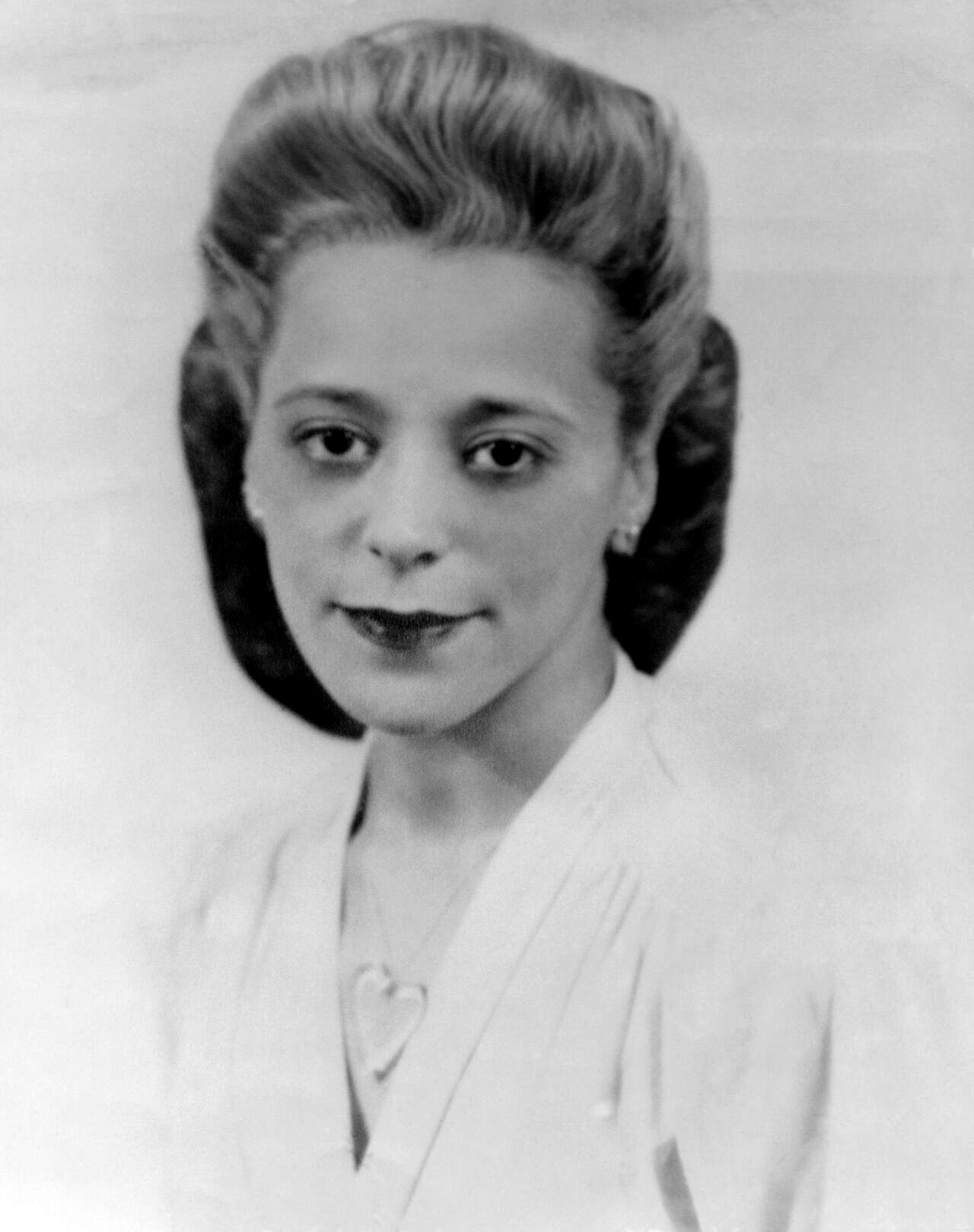
\n\n\nFeatured image: Viola Desmond, Halifax, Nova Scotia, circa 1940. Wikimedia Commons; public domain in Canada and the United States.
\nWho Are Black Canadians?
“Black Canadian” is an umbrella term covering communities with very different histories. Some trace their roots in Canada back centuries. Others arrived through Caribbean migration during the twentieth century, or through more recent migration from West, East and Central Africa. Many are Canadian-born and identify simultaneously through race, nationality, region, language, religion and ancestral origin.
Statistics Canada counted 1,547,870 Black people in the 2021 Census, representing 4.3% of Canada’s population. The Black population had grown to 2.7 times its 1996 size. Statistics Canada also projects that the Black population could exceed 3 million by 2041.
A Black Presence Older Than Confederation
Black history in Canada predates Confederation by centuries. Mathieu Da Costa, a free Black interpreter connected to early French exploration, was present in the early seventeenth-century Atlantic world. Black people later lived in New France and British North America as both free and enslaved persons.
Slavery existed in colonial Canada under both French and British rule. Enslaved people of African descent and Indigenous people were held in households, farms and businesses. The institution declined in the late eighteenth and early nineteenth centuries and was abolished throughout most of the British Empire in 1834.
Black Loyalists and African Nova Scotians
A foundational chapter came after the American Revolution. Thousands of Black Loyalists who had supported the British Crown migrated to British North America, many settling in Nova Scotia and New Brunswick. Communities such as Birchtown became important centers of Black settlement.
Some Black Loyalists later left Nova Scotia for Sierra Leone, but many remained. Their descendants, together with later Black Refugees from the War of 1812 and other migrations, helped form the historic African Nova Scotian population—one of Canada’s oldest distinct Black communities.
African Nova Scotian history is central to understanding that Blackness in Canada is not simply a story of recent immigration. It is also a story of multigenerational communities with deep territorial, cultural and institutional roots.
The Underground Railroad—and Its Limits
Canada occupies an important place in the history of the Underground Railroad. During the nineteenth century, thousands of formerly enslaved and free Black Americans moved north into British North America, particularly to what is now Ontario.
Canada therefore became associated with freedom from U.S. slavery. But that national memory can obscure another reality: Black migrants still encountered segregation, exclusion and anti-Black discrimination in schools, housing, employment and public accommodations. Freedom from slavery did not guarantee equality.
Caribbean Migration and a New Black Canada
Twentieth-century immigration reshaped Black Canada. Caribbean migration increased substantially after discriminatory immigration rules were gradually dismantled in the 1950s and 1960s. The West Indian Domestic Scheme brought Caribbean women to Canada as domestic workers beginning in 1955, while later reforms expanded broader family and skilled migration.
Jamaican, Trinidadian and Tobagonian, Barbadian, Haitian and other Caribbean communities became especially important in Toronto, Montreal and other metropolitan areas. Their institutions, churches, businesses, cultural organizations and political leadership transformed Canadian public life.
African Immigration and Growing Diversity
More recent decades have brought significant migration from Africa, including Nigeria, Ethiopia, Eritrea, Somalia, Ghana, the Democratic Republic of Congo and other countries. As a result, Black Canada today is increasingly diverse in language, religion, migration history and national origin.
This diversity matters legally and politically. “Black” can describe a shared experience of racialization while concealing major differences in migration status, class, language, religion, province, gender and generation.
Constitutional Equality
The modern legal framework begins with section 15 of the Canadian Charter of Rights and Freedoms. It guarantees every individual equality before and under the law and equal protection and benefit of the law without discrimination, including discrimination based on race, national or ethnic origin and colour.
Section 15 also expressly permits programs designed to ameliorate conditions of disadvantaged groups. That provides constitutional space for equity initiatives aimed at addressing entrenched racial disadvantage.
Human Rights Law Beyond the Charter
Canada’s equality architecture extends beyond the Charter. Federal, provincial and territorial human-rights statutes prohibit racial discrimination in fields such as employment, housing and services. The Canadian Human Rights Act applies in areas of federal jurisdiction, while provincial and territorial codes govern many day-to-day interactions.
This layered structure means anti-Black discrimination can be addressed through constitutional litigation, human-rights complaints, employment law, policing oversight, administrative processes and other remedies depending on the context.
Employment, Income and Economic Mobility
Black Canadians participate across every sector of the economy, yet racial disparities persist. Research has identified differences in employment outcomes, income, occupational mobility and representation in senior leadership.
Credential recognition can create additional barriers for immigrants, while Canadian-born Black workers may confront discrimination despite having equivalent education and domestic experience. These patterns have contributed to growing interest in employment-equity measures, corporate accountability and better race-based data.
Policing and Criminal Justice
Policing and criminal justice have become among the most prominent areas of Black civil-rights advocacy in Canada. Black communities have raised concerns about racial profiling, street checks, use of force, bail, sentencing, incarceration and treatment within correctional institutions.
Government data and reviews have documented Black overrepresentation in parts of the criminal justice system. In response, the federal government established Canada’s Black Justice Strategy, the first national strategy specifically designed to address anti-Black racism and systemic discrimination across policing, courts, corrections and re-entry.
The Strategy is now being implemented through a 10-year federal plan. Its development reflects a significant policy shift: anti-Black racism is being treated not merely as an individual discrimination problem but as a systemic justice issue requiring coordinated government action.
Education and the Legacy of Segregation
Canada’s education history also includes formal and informal racial segregation. Separate schools for Black children existed in parts of Ontario and Nova Scotia well into the twentieth century. The last segregated school in Ontario closed in 1965; Nova Scotia’s last segregated school closed in 1983.
Today, the debate has shifted from formal segregation to disparities in discipline, academic streaming, access to advanced programs and representation among teachers and administrators. Some school systems have adopted race-based data collection and targeted Black student achievement initiatives.
Africville and the Politics of Place
Africville, a historic Black community in Halifax, became one of the most powerful symbols of anti-Black displacement in Canada. Beginning in the 1960s, municipal authorities demolished the community and relocated its residents as part of an urban-renewal program.
The destruction of Africville remains significant because it connects racial inequality to land, municipal services, planning and property. It demonstrates that anti-Black discrimination can be embedded not only in interpersonal conduct but also in infrastructure and public policy.
\n\n\n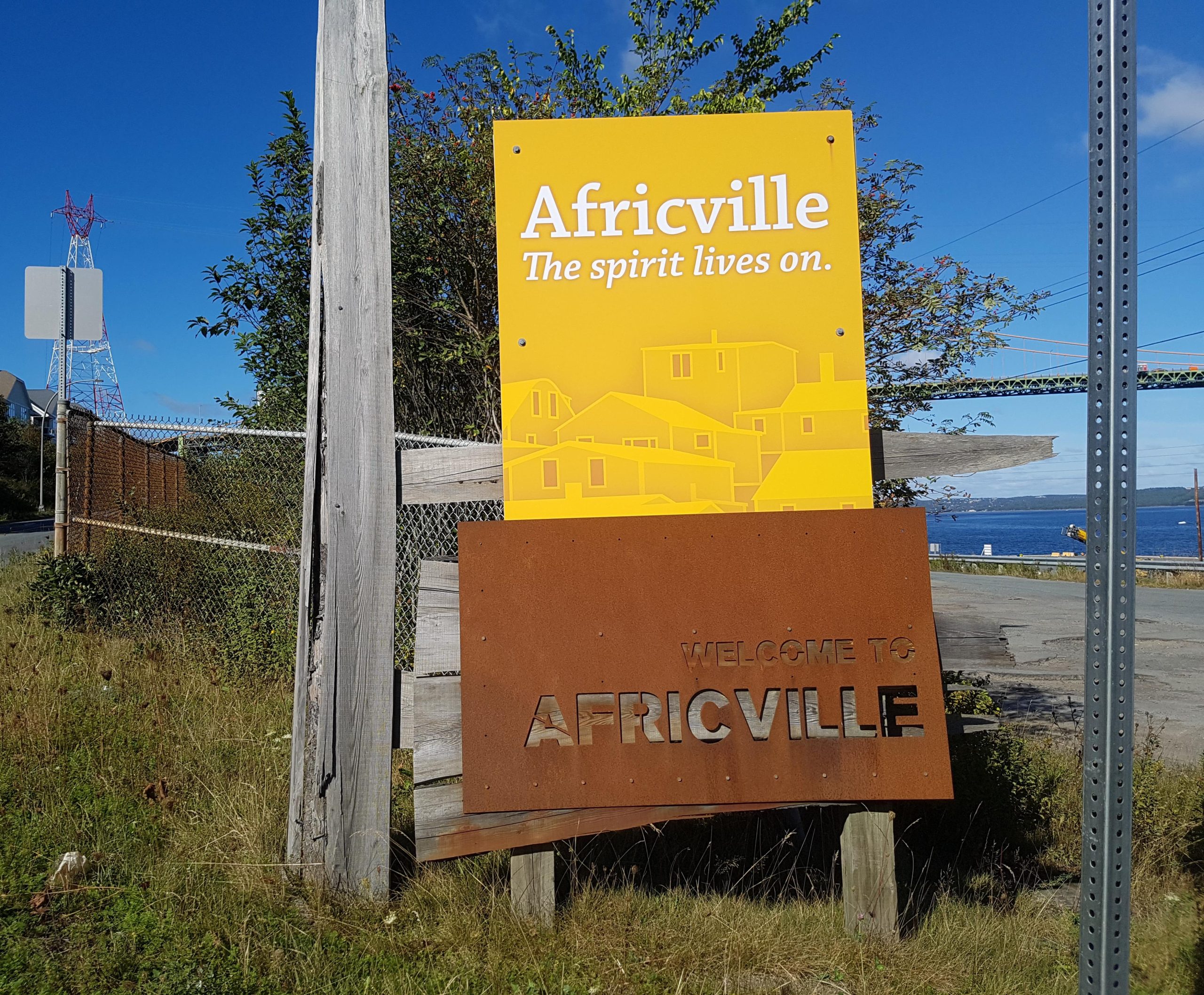
Recognition, Data and Public Memory
Canada’s census explicitly identifies Black as a racialized population category, making demographic visibility substantially stronger than in many European jurisdictions. That data supports analysis of education, employment, income, immigration and justice outcomes.
At the same time, census categories cannot fully capture the diversity of Black Canada. African Nova Scotian, Haitian, Jamaican, Somali, Nigerian, Ethiopian and other identities may carry distinct histories and policy concerns even where they share experiences of anti-Black racism.
Institutions and Community Infrastructure
Black Canadian civic life includes longstanding churches, community associations, legal organizations, cultural institutions, business networks, professional associations and advocacy groups. Institutions such as the Black Legal Action Centre, Canadian Association of Black Lawyers and numerous regional organizations have helped move anti-Black racism into mainstream legal and policy debate.
Government institutions have also expanded their engagement with Black communities through entrepreneurship programs, justice initiatives, anti-racism strategies and the federal recognition of the UN International Decade for People of African Descent.
Why Black Canada Matters to the Global Diaspora
Black Canada combines several major diaspora histories in one country: slavery within the British and French empires, Black Loyalist migration, flight from U.S. slavery, Caribbean migration, African immigration and a growing Canadian-born population.
It also offers a useful legal comparison. Canada combines constitutional equality, statutory human-rights law, affirmative-action authority, race-based census data and increasingly explicit anti-Black policy initiatives. Yet persistent disparities demonstrate that legal recognition alone does not produce substantive equality.
Atlas Perspective
Canada complicates two familiar national narratives: that Black Canadians are primarily recent immigrants, and that Canada’s role in the Underground Railroad makes its racial history fundamentally different from that of the United States.
The longer history shows something more complex. Black communities have deep roots in Canada, formal equality protections are extensive, and racial data are comparatively strong. Yet discrimination, economic disparities and overrepresentation in the justice system remain measurable. The central policy challenge is therefore no longer simply recognition—it is whether Canada can convert recognition, data and legal rights into consistently equal outcomes.
Further Reading and Primary Sources
Statistics Canada — The Diversity of the Black Populations in Canada, 2021
Department of Justice Canada — Charter Section 15 Equality Rights
Department of Justice Canada — Canada’s Black Justice Strategy
Government of Canada — Historic Black Communities in Canada
African Nova Scotian Affairs
Parks Canada — Black Loyalist History