
LEXNOIR ATLAS
Argentina is often imagined as one of Latin America’s “white” nations. That national story obscures a much longer and more complicated history. People of African descent were present from the colonial period, formed substantial shares of the population in parts of the country, fought in the wars of independence, shaped music, language, religion and urban life, and remained part of Argentine society even as official narratives increasingly rendered them invisible. The modern Afro-Argentine story is therefore as much about recognition as it is about ancestry.
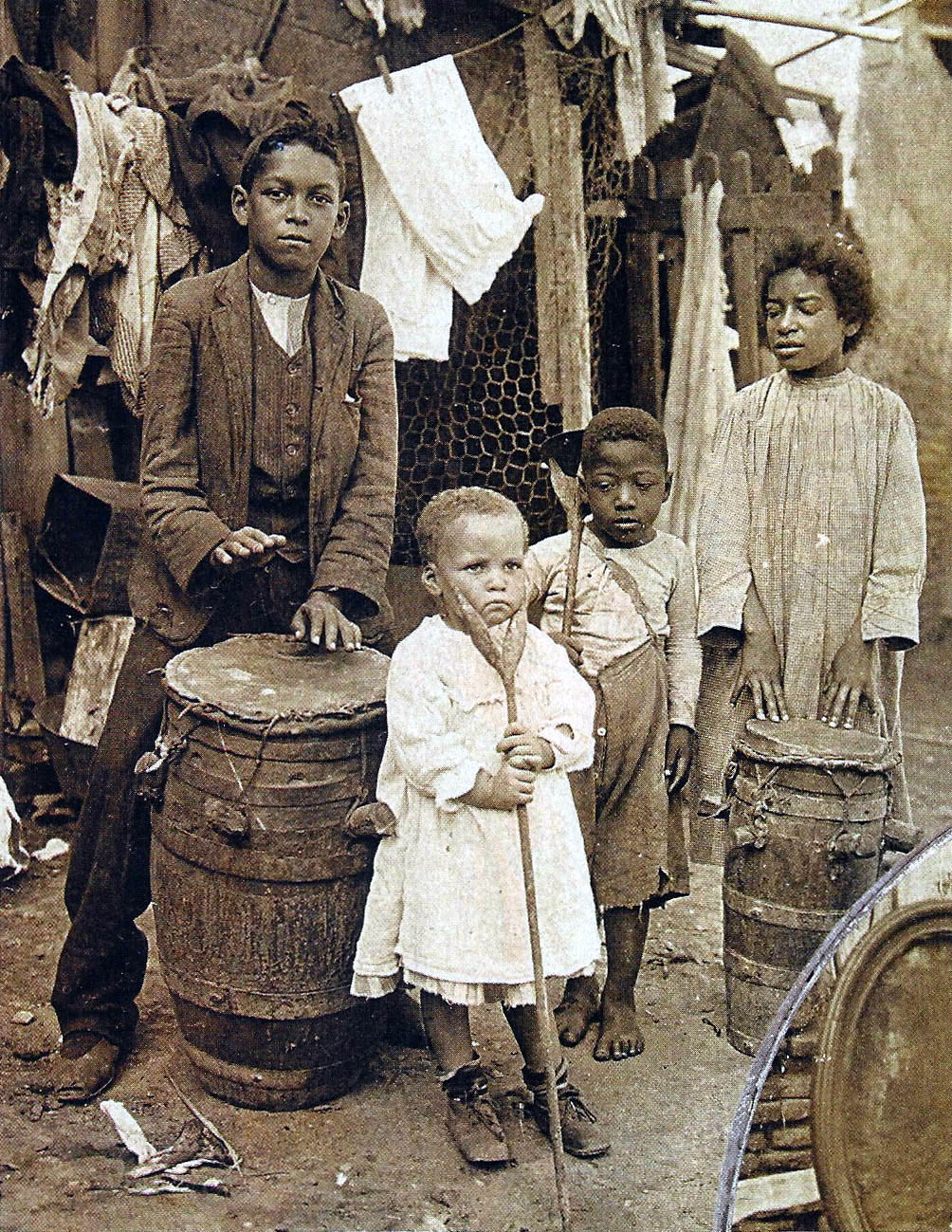
Featured image: Afro-Argentine family in Buenos Aires, 1908. Wikimedia Commons; public domain.
Who Are Afro-Argentines?
“Afro-Argentine” can refer to several overlapping populations: Argentines descended from Africans brought to the Río de la Plata during the colonial period; descendants of later Cape Verdean migration; Afro-Latin American migrants; more recent migrants from African countries; and people who identify through mixed or rediscovered African ancestry.
This diversity matters because Argentina’s Black population is not a single historical community. Some families trace their presence in the country back centuries; others arrived in the twentieth or twenty-first century. What connects them is the experience of African descent within a national culture that long minimized or denied its Black history.
A Large Colonial Black Population
African presence in the Río de la Plata expanded dramatically through the transatlantic slave trade. Between the late eighteenth and early nineteenth centuries, tens of thousands of enslaved Africans entered through Buenos Aires and Montevideo. Many came from West Central Africa, including areas linked to present-day Angola and Congo, while others arrived from eastern and southeastern Africa.
In colonial cities, Africans and their descendants worked in domestic service, crafts, transport, commerce, agriculture and military roles. Free Black people also formed religious brotherhoods, mutual-aid associations and social organizations that became important parts of urban life.
Official Argentine cultural sources note that the 1778 census recorded very high proportions of people of African origin in several regions. This historical record directly challenges the later idea that Argentina developed with little or no Black population.
Slavery, Gradual Emancipation and Freedom
Argentina did not end slavery in a single moment. The 1813 Assembly of the Year XIII adopted the principle of freedom of wombs, under which children born to enslaved women after the law’s enactment were legally free, although systems of tutelage and dependency remained.
Slavery was formally abolished in the Argentine Confederation by the Constitution of 1853, although Buenos Aires was not initially part of the Confederation and the process of abolition therefore unfolded unevenly. By the middle of the nineteenth century, legal slavery had ended, but racial hierarchy and economic marginalization persisted.
Afro-Argentines and Independence
Afro-Argentine men served in large numbers in military units during the revolutionary and independence wars. Military service became one of the most visible arenas in which Black Argentines contributed to the creation of the new nation.
One of the most important figures is María Remedios del Valle, an Afro-Argentine woman who participated in the independence campaigns associated with General Manuel Belgrano. Her service, courage and later poverty made her a powerful symbol of both Black participation in nation-building and the historical neglect of that contribution.
The Myth of “Disappearance”
For much of the twentieth century, a common national narrative held that Argentina’s Black population had effectively disappeared during the nineteenth century. Explanations often invoked war casualties, the 1871 yellow-fever epidemic, interracial marriage and demographic change.
Modern scholarship and Afro-Argentine activism have challenged this account. Those events affected Black communities, but they do not explain total disappearance. Instead, historians emphasize a broader process of statistical, political and cultural whitening: racial categories changed, mixed descendants were increasingly classified outside Black categories, European immigration transformed national demographics, and official narratives elevated Argentina’s European identity while minimizing African ancestry.
The result was less the disappearance of Afro-Argentines than the disappearance of Afro-Argentines from the national story.
Candombe, Tango and Cultural Survival
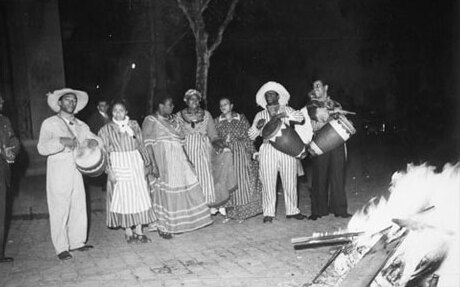
African influence remained visible even where Black identity was publicly obscured. Afro-Argentine communities maintained musical, religious and social traditions, including forms of candombe. African-derived rhythms, language and performance practices also contributed to the cultural environment from which tango and milonga developed.
Argentine government cultural materials acknowledge African influence in music, dance, food and everyday language. Words such as candombe, mandinga, mondongo and quilombo form part of a broader linguistic and cultural inheritance connected to African presence.
Cape Verdean Argentines
A second major chapter of Afro-Argentine history developed through migration from Cape Verde in the late nineteenth and twentieth centuries. Cape Verdeans arrived as free migrants, many seeking work and escaping poverty and Portuguese colonial conditions.
Communities developed particularly around port areas such as Ensenada and Dock Sud, where maritime employment was available. Cape Verdean Argentines became an important part of the country’s Black population while also developing a distinct identity shaped by language, maritime labor and Lusophone cultural connections.
New African and Afro-Latin American Migration
Argentina’s contemporary Afro-descendant population also includes migrants from Africa and other parts of Latin America. Since the late twentieth century, migrants from countries including Senegal, Nigeria, Ghana, Mali and the Democratic Republic of Congo have contributed to the country’s growing African presence.
Afro-Latin American migration from countries such as Brazil, Uruguay, Colombia, the Dominican Republic and Haiti has added another layer of diversity. These communities may share experiences of anti-Black discrimination while having very different languages, migration histories and relationships to Argentine identity.
The Census and the Return of Statistical Visibility
One of the most significant modern developments has been the return of Afro-descendant identity to Argentina’s national statistics.
The 2010 census included an Afro-descendant self-identification question on a sample basis and recorded 149,493 people who identified as Afro-descendant. The 2022 Census expanded the question to the population in private households nationwide and counted 302,936 people who identified as Afro-descendant or as having Black or African ancestors, representing approximately 0.7% of the population in private households.
The 2022 count does not settle the question of Argentina’s Black population. Identity, ancestry and willingness to self-identify are shaped by generations of racial invisibility. But the data represent an important institutional acknowledgment that Afro-descendants are a measurable part of contemporary Argentina.
Law 26.852 and María Remedios del Valle
In 2013, Argentina enacted Law 26.852, establishing November 8 as the National Day of Afro-Argentines and Afro Culture in honor of María Remedios del Valle.
The law does more than create a commemorative date. It directs the incorporation of the day into the school calendar and calls for the promotion and visibility of Afro culture in education and public policy. In legal and symbolic terms, the law represents an official rejection of the notion that Black history is peripheral to Argentine history.
Equality and Anti-Discrimination Law
Argentina’s constitutional framework is built around equality before the law, while international human-rights treaties incorporated into the constitutional order reinforce protections against racial discrimination.
Law 23.592, Argentina’s principal anti-discrimination statute, provides remedies where discriminatory acts obstruct or restrict the equal exercise of constitutional rights. The law expressly identifies race among the prohibited grounds and also increases criminal penalties for offenses motivated by racial hatred or persecution.
For Afro-Argentines, however, legal protection against discrimination operates within a society where racial categories historically were undercounted or denied. The practical challenge is not simply prohibiting explicit racism, but recognizing where racial inequality exists in the first place.
Recognition as a Human-Rights Issue
Argentina has increasingly treated Afro-descendant visibility as a human-rights issue. Government programs established during the UN International Decade for People of African Descent focused on recognition, historical memory, statistical visibility and access to rights.
The National Program on Afro-Descendants and Human Rights, created in 2022, was designed to promote public policies addressing Afro-Argentine, Afro-descendant and African populations from an ethnic-racial equity perspective. These initiatives reflect a broader change in state language: from treating Blackness as historically absent to recognizing Afro-descendants as a contemporary rights-bearing population.
Race, Class and Everyday Discrimination
Afro-Argentine and African-descended communities continue to report stereotyping, racial slurs, unequal treatment and assumptions of foreignness. Black migrants may experience discrimination that combines race, nationality, class and immigration status.
For Afro-Argentines of long-standing local ancestry, the experience can take a different form: being treated as if Blackness is incompatible with Argentine identity. The repeated question of where a Black Argentine is “really from” reflects the endurance of a national identity historically coded as European and white.
Education and Public Memory
Education is one of the principal arenas in which historical invisibility is being challenged. Law 26.852 requires the National Day of Afro-Argentines and Afro Culture to be incorporated into the school calendar and calls for the promotion of Afro culture within educational content.
Museums, cultural institutions and public-history initiatives have also begun to recover the presence of enslaved Africans, Afro-Argentine soldiers, Black religious organizations, candombe communities and Afro-descendant neighborhoods. This work matters because historical erasure can shape contemporary discrimination by making Black Argentines appear anomalous in their own country.
Why Afro-Argentina Matters to the Global Diaspora
Afro-Argentina presents one of the clearest examples of how a diaspora population can be made socially invisible without actually disappearing. Its history demonstrates that racial erasure can occur through census categories, immigration narratives, school curricula, public memory and assumptions about national identity.
Argentina also offers an important comparative lesson. The modern state increasingly recognizes Afro-descendants through census data, commemorative law and anti-discrimination protections, yet recognition follows more than a century in which Blackness was pushed to the margins of the national imagination.
Atlas Perspective
The defining issue in Afro-Argentine history is not whether people of African descent existed in Argentina. The historical record makes that clear. The more difficult question is how a nation with a substantial Black past came to imagine itself as having almost none.
Argentina’s recent census and legal reforms represent an important reversal of that process. Visibility is not merely symbolic: once a population can be named, counted and placed back into national history, inequality becomes easier to study, rights claims become harder to dismiss, and belonging becomes less conditional.
Further Reading and Primary Sources
INDEC — Censo 2022: Población afrodescendiente o con antepasados negros o africanos
Argentina — Law 26.852: National Day of Afro-Argentines and Afro Culture
Argentina — Law 23.592: Anti-Discrimination Law
Argentina — National Program on Afro-Descendants and Human Rights
Argentina — Demographic Profile and Spatial Distribution of Afro-Descendants
Argentina Ministry of Culture — The African Origin of Argentina
Argentina — Histories and Memories of Afro-Descendant Communities