
LEXNOIR ATLAS
The Garifuna are one of the most distinctive peoples of the global African diaspora: a community shaped by both African and Indigenous Caribbean ancestry, resistance to colonial conquest, forced exile from Saint Vincent, and more than two centuries of settlement along the Caribbean coast of Central America. Honduras is home to the largest Garifuna population. There, Garifuna identity is inseparable from territory, language, collective memory, migration and a continuing struggle to make formal recognition translate into effective rights.
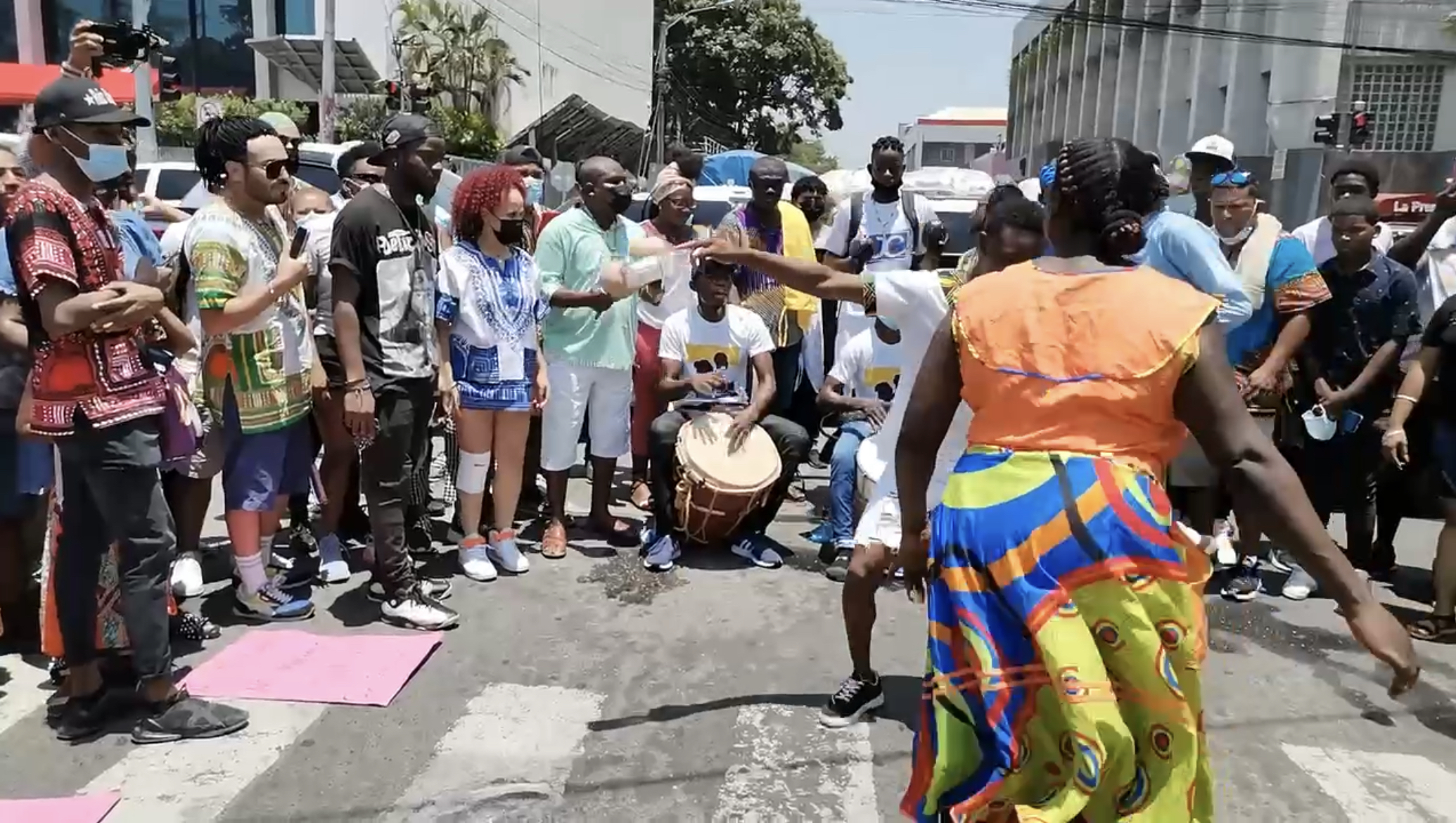
\n\n\nFeatured image: Garifuna community members dancing during a rights demonstration in San Pedro Sula, Honduras. Wikimedia Commons, CC BY-SA 4.0.
\nWho Are the Garifuna?
The Garifuna are an Afro-Indigenous people whose history emerged from the interaction of Africans and Indigenous Caribbean peoples, particularly on the island of Saint Vincent, known in Garifuna tradition as Yurumein. Their identity reflects both African and Indigenous Caribbean cultural inheritance rather than fitting neatly into either category alone.
Today, Garifuna communities are concentrated primarily in Honduras, Guatemala, Belize and Nicaragua, with substantial diaspora populations in the United States. Honduras has the largest national Garifuna population. A 2025 academic projection based on Honduran census data estimated approximately 132,204 Garifuna people in Honduras, while earlier census figures were lower and demographic estimates vary depending on methodology and self-identification.
From Saint Vincent to Honduras
The modern Garifuna story is rooted in Saint Vincent, where African-descended and Indigenous Caribbean communities resisted European conquest for generations. After British forces defeated Garifuna resistance in the late eighteenth century, thousands were forcibly removed from Saint Vincent.
The survivors were first confined on Balliceaux and then deported in 1797 to Roatán, off the coast of present-day Honduras. United Nations historical reporting notes that only about half of those deported survived the confinement and journey. From Roatán, many Garifuna moved to the Honduran mainland, especially around Trujillo, and later established communities along the Caribbean coast of Honduras and neighboring Central American countries.
This history of resistance, forced removal and resettlement remains foundational to Garifuna collective identity.
A Transnational Caribbean People
Although this Atlas profile focuses on Honduras, Garifuna identity has always been transnational. Communities in Belize, Guatemala and Nicaragua share language, cultural practices, family ties and historical memory with those in Honduras.
Migration later extended the Garifuna world to cities such as New York, Los Angeles, Houston and New Orleans. These diaspora communities maintain relationships with ancestral villages through remittances, festivals, religious observances, music, political advocacy and frequent return travel.
Territory and Collective Land Rights
Land is among the most important legal issues facing Garifuna communities in Honduras. Many Garifuna settlements developed along coastal areas that became increasingly valuable for tourism, real estate, infrastructure and agricultural investment.
For Garifuna communities, land is not merely an economic asset. Collective territory is tied to subsistence, fishing, agriculture, burial grounds, religious practice, family networks and the preservation of culture itself. Conflicts over title, unauthorized transfers, tourism projects and encroachment therefore implicate both property rights and cultural survival.
The Inter-American Court and Garifuna Land Rights
Garifuna land-rights claims have produced some of the most important Afro-descendant jurisprudence in the Inter-American human-rights system.
In Community Garifuna Triunfo de la Cruz and its Members v. Honduras and Garifuna Community of Punta Piedra and its Members v. Honduras, the Inter-American Court of Human Rights found Honduras internationally responsible for violations involving collective property, territorial protection and related state obligations.
The Triunfo de la Cruz case involved disputes over traditional territory, municipal expansion, land transfers, a protected area and tourism projects. The Punta Piedra case concerned titled territory that remained occupied by third parties despite state commitments to resolve the conflict.
These decisions are significant well beyond Honduras. They confirm that collective territorial rights can apply to Afro-descendant communities whose identity, culture and survival are closely tied to traditional lands.
ILO Convention No. 169
Honduras ratified the International Labour Organization’s Indigenous and Tribal Peoples Convention, 1989 (No. 169) in 1995. The Convention applies to indigenous and tribal peoples whose social, cultural and economic conditions distinguish them from other sectors of the national community.
ILO supervisory materials expressly include the Garifuna among the indigenous and Afro-Honduran peoples covered in the Honduran context. Convention No. 169 is therefore an important part of the legal framework governing consultation, participation, land and cultural rights.
Recognition Without Full Security
Honduras formally recognizes the country as culturally diverse and maintains institutions and policies directed toward Indigenous and Afro-Honduran peoples. Yet international and community organizations have repeatedly emphasized the gap between formal recognition and effective protection.
Land disputes, delayed titling or enforcement, development projects, weak consultation and threats against community leaders have made implementation the central question. The challenge is therefore not simply whether Garifuna identity is acknowledged, but whether that recognition constrains state and private action when collective territory is at stake.
Language as Living Heritage
The Garifuna language belongs to the Arawakan language family and carries centuries of historical memory. Its oral traditions preserve stories, songs, ritual knowledge, environmental knowledge and community history.
UNESCO inscribed the language, dance and music of the Garifuna on the Representative List of the Intangible Cultural Heritage of Humanity in 2008, following its original proclamation in 2001. The multinational inscription covers Belize, Guatemala, Honduras and Nicaragua.
UNESCO has also warned that migration, discrimination and declining intergenerational language transmission threaten the survival of Garifuna linguistic traditions.
Music, Dance and Cultural Memory
Garifuna music and dance combine African and Indigenous Caribbean elements and remain central to community identity. Drumming, call-and-response singing, dance and oral narrative accompany religious observances, wakes, celebrations and communal gatherings.
Forms such as punta have become internationally recognizable, while traditional repertoires preserve histories of migration, work, family and community life. Cultural expression therefore functions not merely as performance, but as an archive of collective memory.
\n\n\n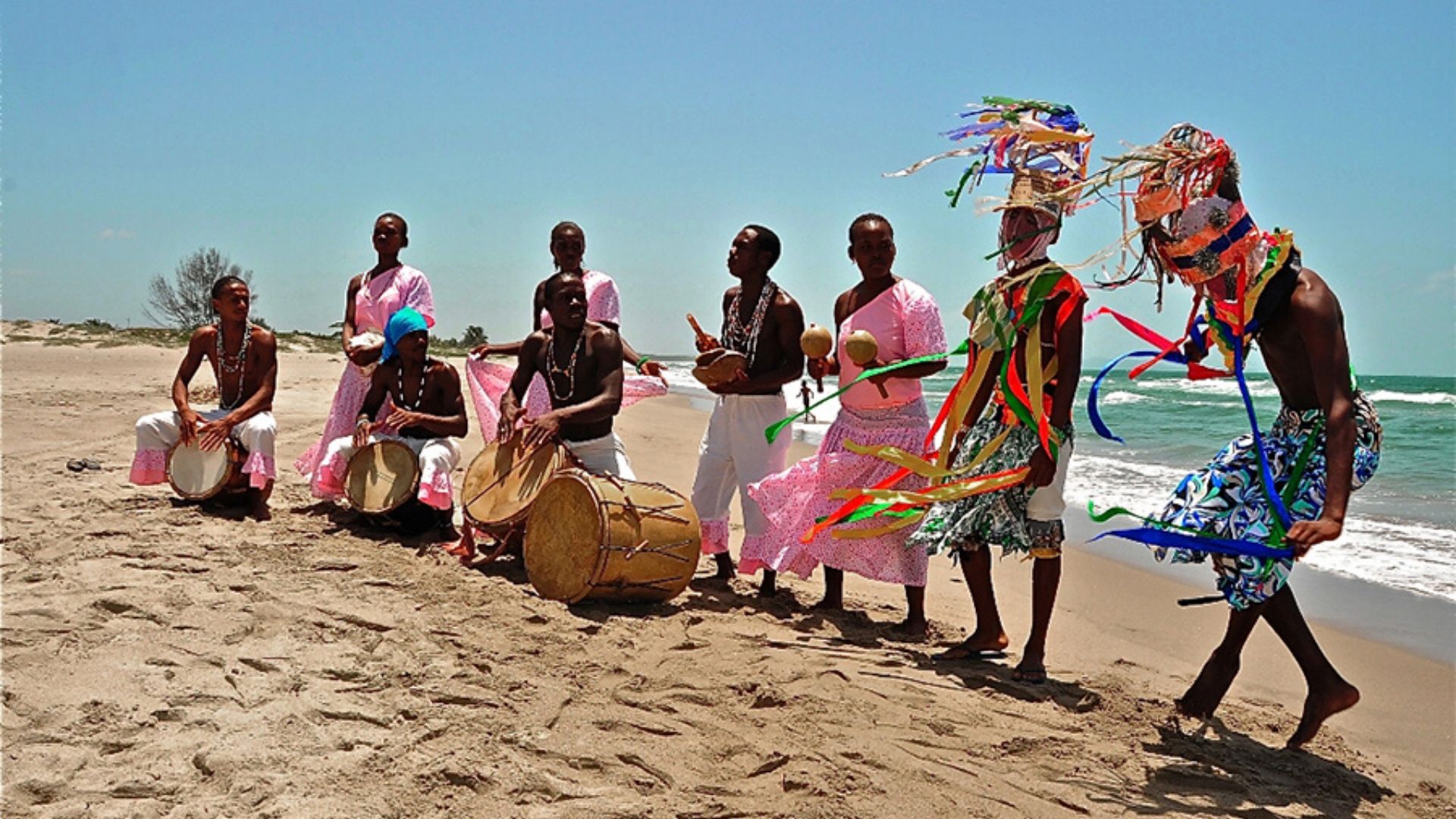
Cassava, Foodways and Cultural Continuity
Cassava cultivation and preparation are another important thread connecting Garifuna life to broader Indigenous Caribbean traditions. Knowledge associated with cassava bread, fishing, canoe-building and coastal subsistence is embedded in Garifuna oral culture.
In 2024, UNESCO also inscribed traditional knowledge and practices relating to the making and consumption of cassava bread on the Representative List of the Intangible Cultural Heritage of Humanity, with Honduras among the participating states.
Migration and the Garifuna Diaspora
Economic migration has transformed Garifuna communities. Many Honduran Garifuna families now live across borders, particularly between coastal Honduras and the United States.
Migration can strengthen communities through remittances and transnational advocacy, but it can also weaken language transmission and reduce the number of younger people living in ancestral settlements. The Garifuna experience therefore illustrates a recurring diaspora paradox: mobility can preserve communities economically while placing local cultural continuity under pressure.
Community Organizations and Advocacy
Garifuna civil society in Honduras has played a major role in land, cultural and human-rights advocacy. Organizations including the Organización Fraternal Negra Hondureña (OFRANEH) and the Organización de Desarrollo Étnico Comunitario (ODECO) have represented Garifuna concerns in national and international forums.
Community organizations have also participated in UNESCO safeguarding efforts and in international advocacy concerning territorial rights, discrimination, development policy and cultural preservation.
Development, Tourism and Consultation
Honduras’s Caribbean coast is attractive for tourism and real-estate development, creating opportunities but also recurring disputes over land and consultation. For Garifuna communities, projects affecting traditional territory raise questions about who decides how coastal land is used and who receives the benefits.
Under international human-rights standards and Convention No. 169, consultation must be more than notice after decisions have effectively been made. The continuing debate is about meaningful participation before development fundamentally changes community territory.
Why the Garifuna Matter to the Global Diaspora
The Garifuna challenge conventional maps of the African diaspora. Their history did not begin in a plantation society on the American mainland. It developed through African-Indigenous interaction in the Caribbean, armed resistance to British colonialism, forced exile and the reconstruction of community life along the Central American coast.
The Garifuna also demonstrate that Afro-descendant rights can be simultaneously racial, cultural and territorial. Their most important contemporary legal claims are not limited to discrimination in employment or public services; they concern collective land, consultation, cultural survival and the right of a people to maintain a distinct community across generations.
Atlas Perspective
The Garifuna experience shows why diaspora identity cannot be understood through race alone. In Honduras, African descent, Indigenous Caribbean heritage, collective territory, language and migration are inseparable.
The legal framework is unusually rich: collective titles, ILO Convention No. 169 and binding Inter-American Court decisions all recognize important protections. Yet the recurring disputes over land and consultation illustrate a familiar problem across the global diaspora—the difference between rights that exist on paper and rights that can be exercised in practice.
Further Reading and Primary Sources
Instituto Nacional de Estadística de Honduras — Garífuna, Censo 2001–2013
UNESCO — Language, Dance and Music of the Garifuna
Inter-American Court of Human Rights — Garifuna Community Triunfo de la Cruz v. Honduras
Inter-American Court of Human Rights — Garifuna Community Punta Piedra v. Honduras
ILO NORMLEX — Honduras Ratifications, Convention No. 169
UNESCO — Intangible Cultural Heritage in Honduras