
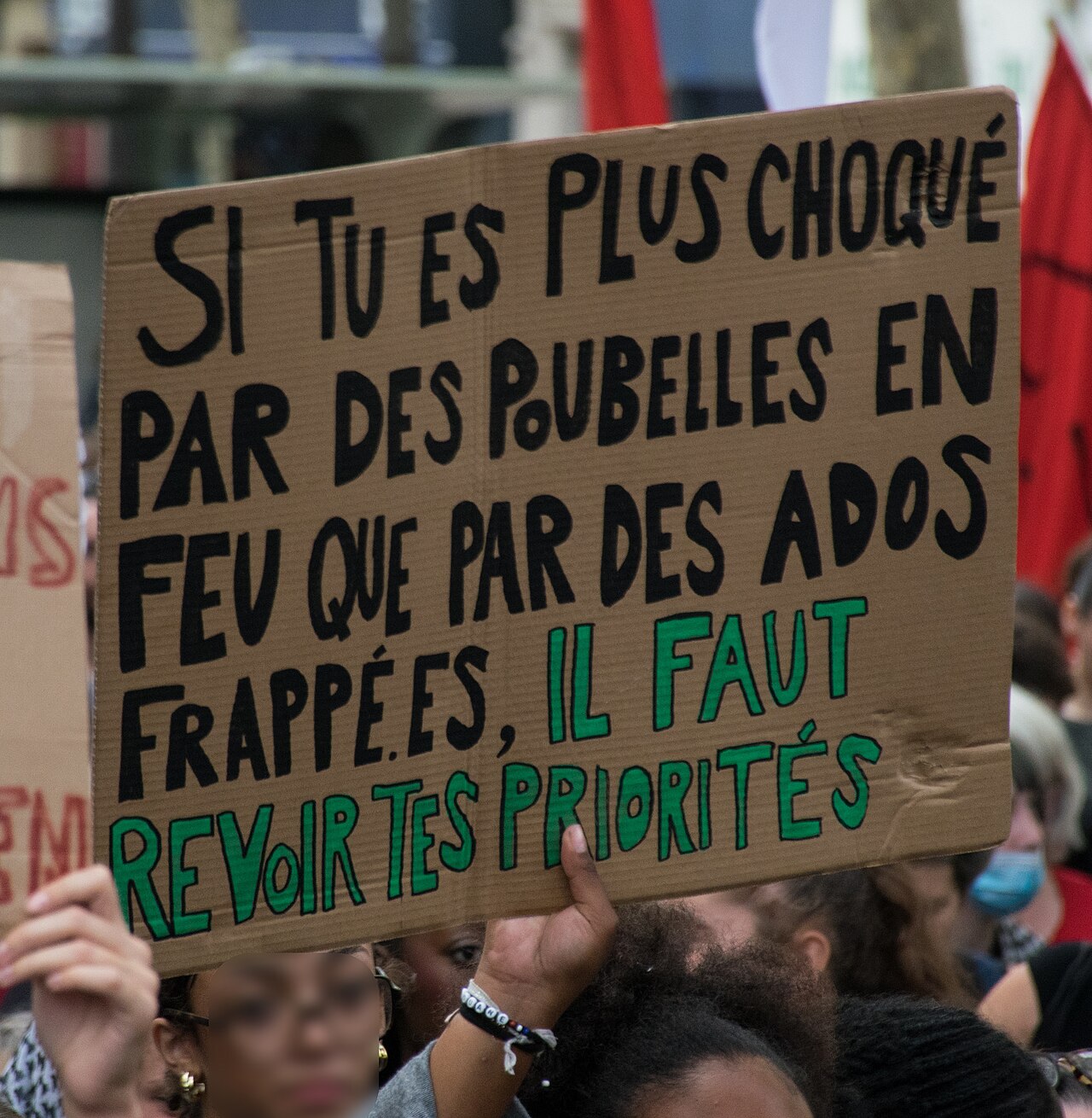
For Black French communities with roots in Africa and the Caribbean, student protests over school conditions raise connected questions about equal educational opportunity and accountable policing. The demonstrations involve students of many backgrounds, but their implications for historically disadvantaged communities deserve particular attention.
Since September 21, 2026, high school students have protested teacher shortages, overcrowded classrooms and inadequate facilities. Demonstrations that began in the Paris suburbs have spread to other French cities, drawing thousands of students into a confrontation with authorities.
The movement has attracted particular attention following reports of serious injuries to young demonstrators and allegations of excessive police force.
Why the Protests Resonate in Black France
Students say that persistent teacher shortages and deteriorating facilities are undermining their education. Their complaints have particular resonance in economically disadvantaged suburbs, including neighborhoods with substantial populations of African and Caribbean heritage, where poverty, residential segregation and unequal educational opportunities intersect.
These communities include substantial populations with family roots in Africa and the Caribbean, although the demonstrations themselves involve students from many backgrounds.
The police response has transformed the dispute.
Human Rights Watch reported in October that officers had used tear gas, stun grenades and other force against student demonstrators. Reported incidents include a 15-year-old who lost a hand following a grenade explosion and a 14-year-old who suffered serious facial injuries.
Human Rights Watch reported more than 6,800 detentions, approximately 86% involving minors. These figures do not establish that every detention was unlawful. French authorities have defended measures necessary to maintain public order, citing violence against officers and property destruction during some demonstrations.
The allegations nevertheless raise serious questions about whether police interventions have been necessary and proportionate, particularly when directed at children.
The Legal Questions
France’s response engages fundamental protections under domestic and international law.
Paragraph 13 of the preamble to France’s 1946 Constitution guarantees equal access to education. Freedom of peaceful assembly is protected under the European Convention on Human Rights, while the United Nations Convention on the Rights of the Child requires governments to safeguard children’s rights and welfare.
Authorities may restrict demonstrations and use lawful force when necessary to protect public safety. Those powers, however, remain subject to requirements of necessity, proportionality and accountability.
France’s independent rights authority, the Défenseur des droits, said on October 10 that it had opened an examination of the 14-year-old’s injury and received 28 individual complaints. The National Consultative Commission on Human Rights (CNCDH) called on October 6 for de-escalation, respect for peaceful assembly and particular protection of minors.
Investigations and any resulting judicial proceedings must distinguish allegations from established misconduct. The outcome could help determine whether particular police interventions violated applicable legal standards.
What Is at Stake for Black French Communities?
For many Black French citizens and residents with African or Caribbean backgrounds, the protests intersect with longstanding concerns about educational inequality, discriminatory policing and economic opportunity.
France’s republican model emphasizes equal citizenship without formal racial distinctions. Yet disparities affecting disadvantaged neighborhoods continue to raise questions about how equality operates in practice.
The protests are not exclusively an African-diaspora movement, nor do reports of injuries establish racial motivation in individual incidents. Their significance for Black French communities lies in the intersection of school inequality, young people’s rights and the standards governing police conduct.
Those questions resonate across the African diaspora, particularly in countries where educational opportunity and police accountability remain central civil-rights concerns.
The LexNoir Perspective
The French protests illustrate how demands for educational opportunity can become a broader test of democratic rights, with particular implications for Black families in disadvantaged communities.
A government’s responsibility to maintain public order does not diminish its obligation to protect peaceful assembly or investigate allegations of excessive force.
For France, the challenge is twofold: address the educational grievances that brought students into the streets and ensure that the response to their demonstrations respects the rights of the young people involved.
The measure of success will be not simply whether the protests end, but whether the underlying inequalities are addressed.
Featured photograph: Jules* / Wikimedia Commons, CC BY-SA 4.0. Cropped to fit the LexNoir article layout. Original photograph.

Sources
Human Rights Watch, October 14, 2026; Le Monde, October 6, 2026.