

The Maroons and Afro-Surinamese: A Legacy of Freedom, Resistance, and Cultural Survival
Suriname is home to one of the most remarkable chapters in the history of the African diaspora. In the rainforests of this small South American nation, Africans who escaped enslavement established independent communities, defended their freedom against European colonial forces, and developed institutions and cultural traditions that survive today.
Their descendants, known as Maroons, maintain distinct languages, systems of traditional leadership, religious practices, and ancestral ties to the land. Alongside Suriname’s broader Creole population, they represent a major part of the country’s African heritage.
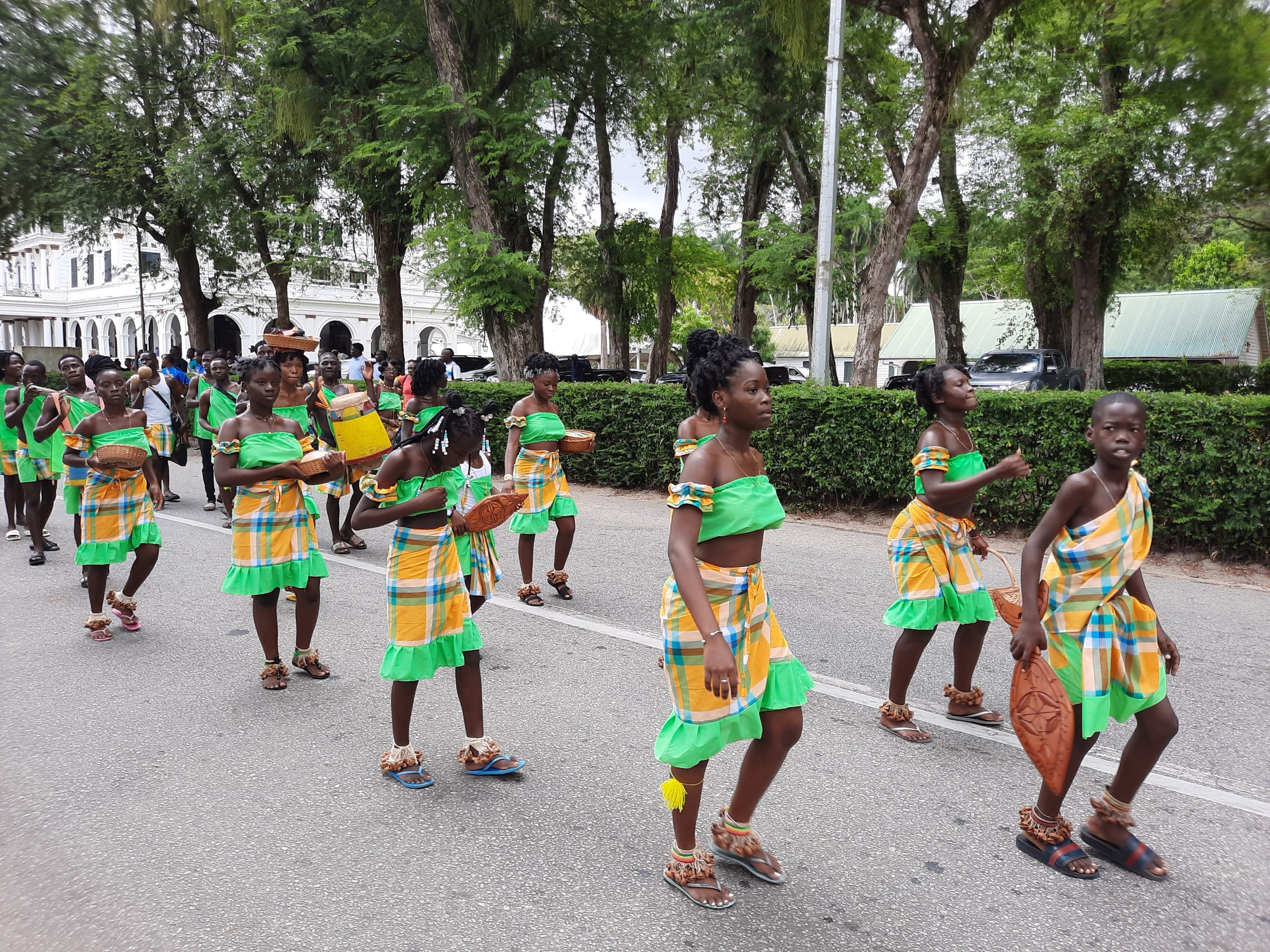
Featured photograph: Diana Pokie, Surinamese former minister and public leader (2016). StarNieuws Suriname / Wikimedia Commons, CC BY 3.0 (cropped version of source image). Secondary photograph: Maroon dancers during the Day of the Maroons celebration, Paramaribo, October 10, 2022. Ymnes / Wikimedia Commons, CC BY-SA 4.0. Images displayed resized without additional alterations.


Historical Background
Situated on the northeastern coast of South America, between Guyana and French Guiana, Suriname was colonized by European powers and became a center of plantation slavery.
During the seventeenth and eighteenth centuries, enslaved Africans worked on plantations producing sugar, coffee, and other commodities. Many escaped into the country’s vast interior, where difficult terrain and dense forests provided opportunities to establish autonomous settlements.
These communities developed into organized societies with their own political institutions, military defenses, languages, and cultural practices. Rather than simply surviving outside colonial control, Maroon communities forced colonial authorities to negotiate. Peace treaties concluded with several Maroon groups during the eighteenth century recognized important aspects of their autonomy.
Suriname remained under Dutch colonial rule until achieving independence on November 25, 1975.
The Maroon Communities
Six principal Maroon communities are associated with Suriname and neighboring French Guiana:
- Saamaka (Saramaka): Concentrated historically along the upper Suriname River and surrounding interior.
- Ndyuka (Okanisi or Aukan): Associated with the Tapanahoni, Marowijne, and other eastern river systems.
- Paamaka (Paramaka): Traditionally based along the Marowijne River.
- Matawai: Associated with the upper Saramacca River.
- Kwinti: A smaller community historically associated with the Coppename River.
- Aluku (Boni): A community with especially strong historical ties to the borderlands and French Guiana.
Although these communities share a history of African resistance to enslavement, each maintains a distinctive identity, history, and cultural inheritance.
Population and Identity
Suriname’s 2012 census recorded 117,567 Maroons (21.7%) and 84,933 Creoles (15.7%). Together these two census categories represented approximately 37.4% of the population in 2012. These figures are historical census data, not current population estimates. Source: Suriname General Bureau of Statistics, 2012 Census.
The Maroon and Creole classifications reflect different historical and social experiences. Maroon identity is particularly connected to communities formed by people who escaped plantation slavery, while Creole identity is associated more broadly with African-descended populations shaped by colonial society and subsequent urban development. Suriname also includes people of mixed ancestry and other African-descended identities that cannot simply be assigned to these two census categories.
Language, Culture, and Religion
The African influence in Suriname is evident in its languages, artistic traditions, food, music, and spiritual life. Sranan Tongo, a widely spoken creole language, developed through contact among African, European, and other populations. Maroon communities also maintain languages including Saamaka and Ndyuka, which preserve important elements of African linguistic heritage.
Music, drumming, dance, woodcarving, textile traditions, storytelling, and ancestral ceremonies remain important expressions of cultural identity. Religious practices include Christianity as well as African-derived spiritual traditions. Winti, for example, reflects beliefs and practices involving spirits, ancestors, and the relationship between spiritual and human life. Organizations such as NAKS have worked to preserve and transmit Afro-Surinamese cultural heritage across generations.
Land, Rights, and Self-Determination
For many Maroon communities, ancestral territory is not simply an economic resource. Rivers, forests, burial grounds, and historic settlements form part of their collective identity. Mining, logging, environmental degradation, and uncertainty over legal recognition of communal land rights have created significant challenges.
A landmark decision came in 2007, when the Inter-American Court of Human Rights ruled in Saramaka People v. Suriname that tribal communities enjoy protections for their communal property rights under the American Convention on Human Rights. The decision established important principles regarding collective territory, participation in decisions affecting ancestral lands, and safeguards against developments that threaten communities’ survival and way of life. The case remains a significant reference point in the international law of Indigenous and tribal peoples’ rights. Case source and summary.
The Surinamese Diaspora
Suriname’s African-descended communities extend beyond its borders. The Netherlands, in particular, is home to a substantial Surinamese diaspora shaped by centuries of colonial ties and migration around independence.
Afro-Surinamese writers, musicians, scholars, activists, and community organizations have contributed to cultural and political life in Suriname and abroad. These international connections have helped preserve Surinamese cultural traditions while giving them new expression in European and global diaspora communities.
Why Suriname Matters to the Global African Diaspora
Suriname challenges the assumption that freedom for Africans in the Americas was achieved exclusively through abolition or formal emancipation. Its Maroon communities demonstrate that enslaved Africans also created freedom through organized resistance, territorial control, diplomacy, and the development of independent institutions.
Their continuing struggles for recognition of ancestral territory connect the history of slavery and emancipation to contemporary questions of property rights, environmental justice, cultural preservation, and self-determination. Suriname’s experience is therefore not merely a historical account of resistance. It is a living example of African-descended communities maintaining collective identities and institutions across centuries.
LexNoir Atlas Perspective
Suriname occupies an exceptional place in the African diaspora. Its Maroon societies demonstrate that African communities in the Americas did more than resist enslavement: they built enduring systems of self-government and cultural continuity. Their experience offers a powerful perspective on freedom, sovereignty, and the meaning of collective rights.