
From the Maroon communities that resisted colonial rule to the worldwide influence of reggae and Rastafari, Jamaica occupies a distinctive place in the history of the African diaspora.
Jamaica is one of the Caribbean’s most influential centers of African-descended culture. Its history encompasses enslavement, organized resistance, emancipation, struggles for political and economic equality, and cultural traditions that have reshaped music, language, religion, and political consciousness around the world.
According to Jamaica’s 2011 census, approximately 92.1% of residents identified as Black and another 6.1% as mixed ethnicity. These figures reflect the island’s predominantly African-descended population while acknowledging its wider multicultural heritage. Jamaica’s national motto, Out of Many, One People, expresses that diversity.
African Origins and the Plantation Economy
Jamaica was inhabited by Indigenous Taíno peoples before European colonization. Spain established colonial control following Columbus’s arrival in 1494; England captured the island in 1655. Under British rule, sugar plantations relied on the forced labor of enslaved Africans transported across the Atlantic.
Enslaved people brought languages, spiritual beliefs, agricultural knowledge and traditions from West and Central Africa. Over generations, these combined with European and Caribbean influences to produce distinctly Jamaican cultural expressions. African Jamaicans were not simply victims of the plantation system: they were central participants in the struggle to dismantle it.
The Maroons: Communities of Resistance
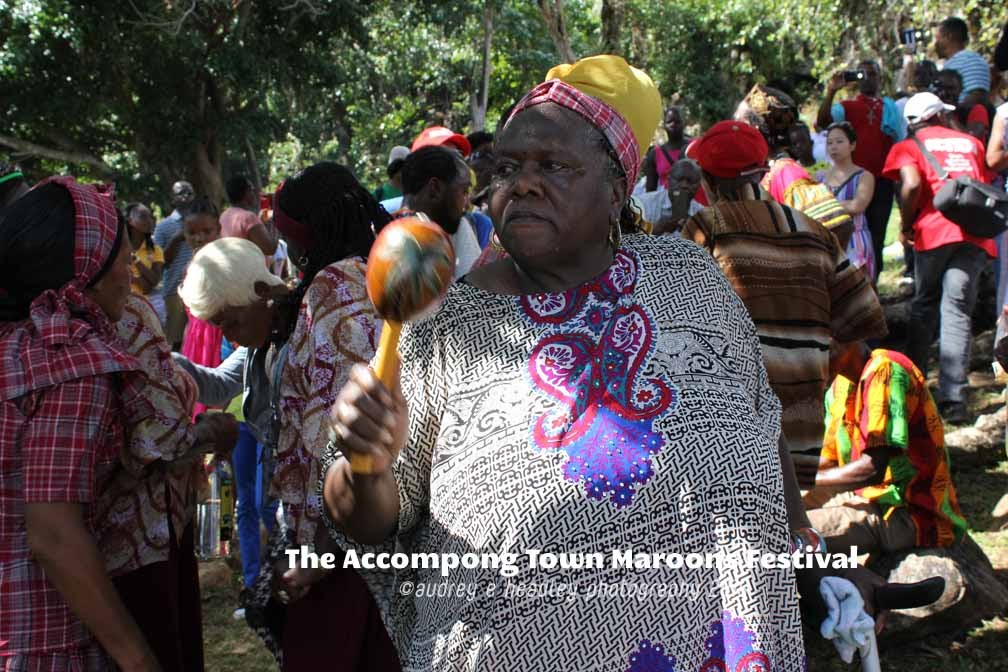
Maroon communities emerged from Africans and their descendants who escaped colonial domination and established settlements in Jamaica’s mountainous interior. They developed sophisticated military strategies and used their knowledge of the terrain to resist British forces.
Treaties signed in 1739 and 1740 recognized the freedom of certain Maroon communities and granted land, but also required Maroons to assist colonial authorities in returning other escaped enslaved people. This legacy embodies both remarkable self-determination and difficult compromises.
Surviving communities include Accompong, Moore Town, Charles Town and Scotts Hall. The cultural heritage of Moore Town was inscribed by UNESCO on its Representative List of the Intangible Cultural Heritage of Humanity in 2008.

Emancipation and the Struggle for Equality
Resistance took many forms, including escape, labor resistance and organized rebellion. Nanny of the Maroons is remembered for her leadership against British colonial forces; Tacky is associated with the uprising of 1760; and Samuel Sharpe helped inspire the 1831–1832 rebellion that accelerated the movement toward emancipation. Paul Bogle led the Morant Bay Rebellion in 1865, protesting injustice and the exclusion of Black Jamaicans from political and economic power. George William Gordon was executed in its aftermath.
British legislation ended slavery in 1834, followed by a transitional apprenticeship system; full emancipation came in 1838. Legal freedom did not eliminate inequalities in landownership, education or representation. Jamaica achieved independence from Britain on August 6, 1962.
Jamaican Culture and Global Influence
Reggae, ska, rocksteady and dancehall emerged from Jamaican cultural traditions and influenced audiences far beyond the island. Reggae became a powerful vehicle for resistance, spirituality and social criticism, gaining international recognition through artists including Bob Marley. UNESCO inscribed reggae music of Jamaica on its cultural heritage list in 2018.
Rastafari emerged during the 1930s, drawing on African identity, Ethiopian symbolism, biblical interpretation and anti-colonial thought. Jamaican Patwa, Revival religious practices, storytelling, foodways and traditional drumming further demonstrate the vitality of African-descended cultural heritage.
Jamaica and the Global African Diaspora
Migration established large Jamaican communities in the United Kingdom, United States, Canada and elsewhere. Jamaican members of the Windrush generation helped shape modern Black British identity following World War II. Jamaican cultural influence is also evident in global sound-system culture and the development of hip-hop, alongside achievements in business, literature, education, politics and sport.
Constitutional Reform, Reparations and Heritage
Although independent since 1962, Jamaica has retained the British monarch as its constitutional head of state. Proposals to establish a republic have made constitutional reform an important contemporary debate, but the process is not complete.
Jamaica has also been active in Caribbean discussions of reparatory justice for slavery and colonial exploitation. Questions of economic inequality, preservation of Maroon traditions and historic land rights continue to connect the island’s past with contemporary legal and policy challenges.
The LexNoir View
Jamaica demonstrates the capacity of African-descended communities to preserve identity, resist oppression and establish cultural institutions with global influence. The Maroon experience illustrates collective autonomy, while the struggles over emancipation, independence and contemporary constitutional change show both the achievements and limits of formal legal freedom.
For the global African diaspora, Jamaica’s history is one of resistance, reinvention and extraordinary international influence.
Sources and Further Reading
National Library of Jamaica · UNESCO Intangible Cultural Heritage: Jamaica · Jamaica Information Service · Statistical Institute of Jamaica · CARICOM