
LEXNOIR ATLAS
African heritage helped shape Cuba’s national identity. Across generations, Afro-Cubans have also pressed the nation to fulfill its promise of equal citizenship.
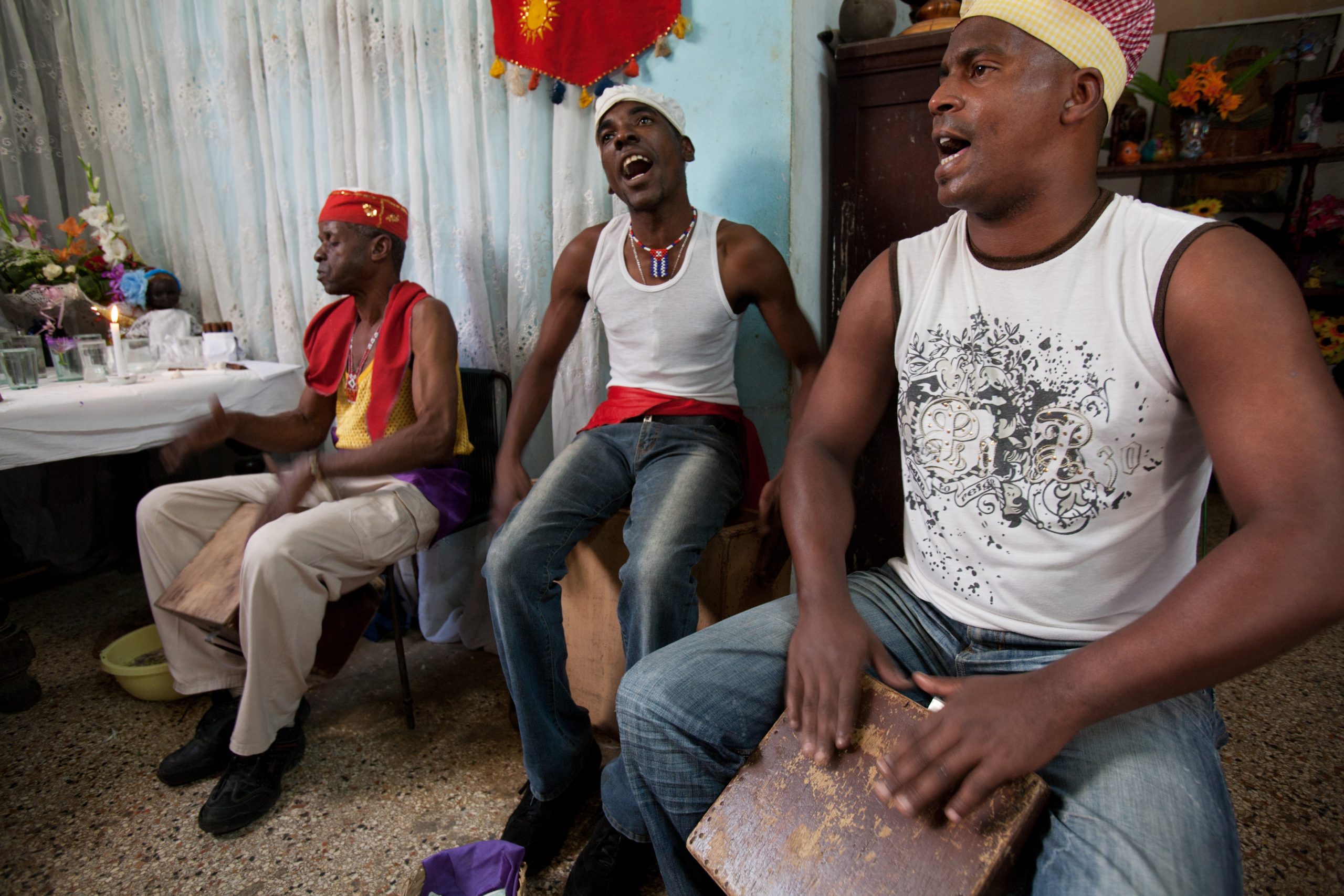
Featured photograph: Musicians at a Cajón de Muertos ceremony, Havana, January 2, 2011. © Jorge Royan / royan.com.ar, via Wikimedia Commons; CC BY-SA 3.0. Resized for display.

Cuba’s African heritage runs through its religious traditions, music, community institutions, and struggles for independence. Understanding that heritage means looking closely at the people who preserved it—and at their efforts to secure political voice and economic opportunity.
Three connected histories help explain Afro-Cuban life: the struggle to turn emancipation into equal citizenship; the community institutions through which African traditions endured; and the changing opportunities that followed the 1959 revolution.
From emancipation to equal citizenship
Cuba’s emergence as a major sugar producer depended on enslaved African labor. During the nineteenth century, plantation expansion embedded slavery deeply in the island’s economy and social order. Abolition came in 1886, leaving formerly enslaved people to pursue freedom in a society still shaped by racial hierarchy. [1, 2]
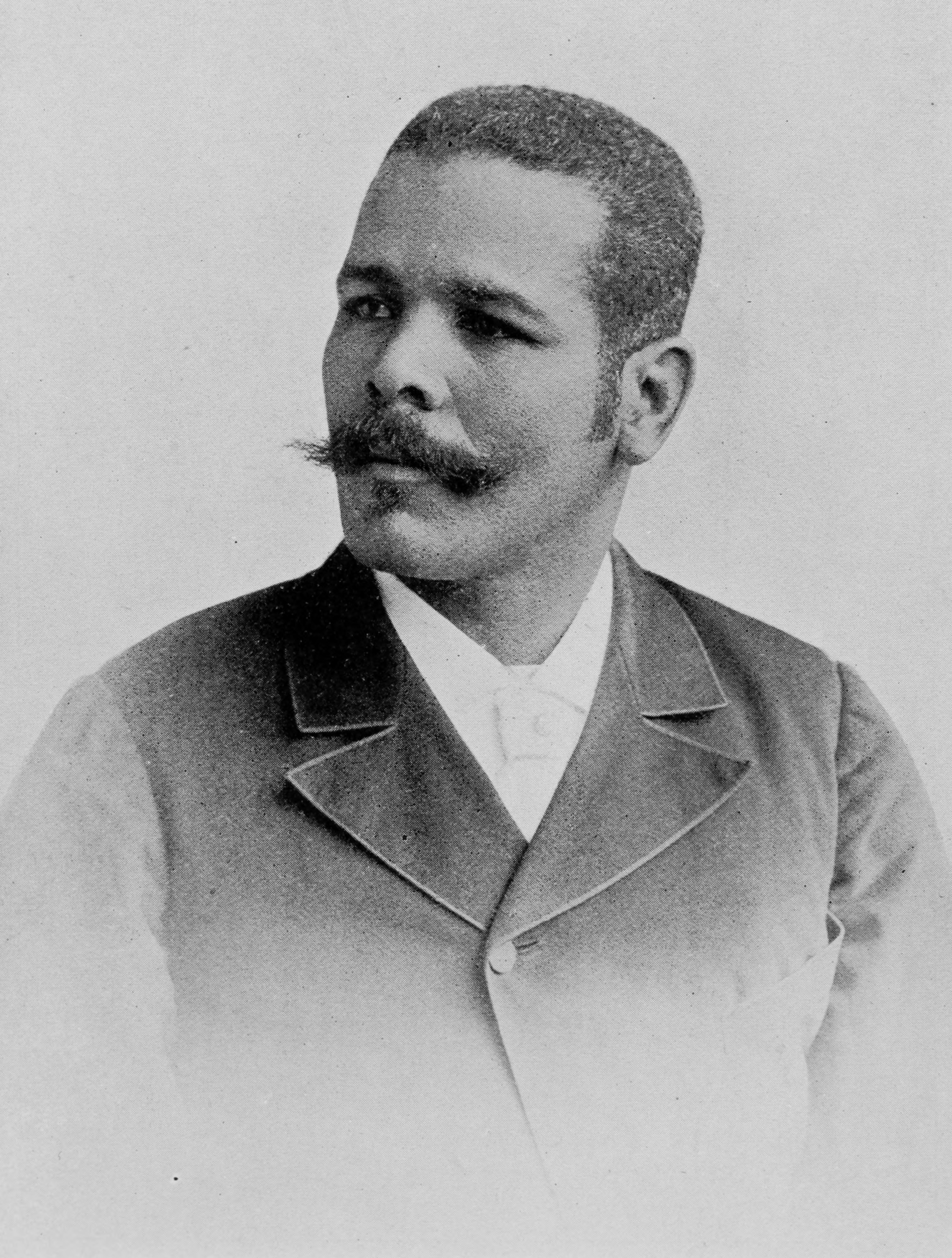
Afro-Cubans were central participants in the struggle against Spanish rule. General Antonio Maceo, an Afro-descendant from Santiago de Cuba, became one of the independence movement’s most prominent military leaders. His career connected Black leadership to the making of the nation itself. At the 1878 Protest of Baraguá, he rejected a settlement that failed to deliver independence and complete abolition. [3, 4]

Military service gave particular force to subsequent demands for equality. Black Cubans had fought for a country in which they expected to participate fully. Yet independence in 1902 did not remove the barriers they faced in employment, politics, and social life.
Historian Aline Helg’s research traces how those frustrated expectations helped produce an independent Black political movement. The Partido Independiente de Color challenged the distance between the republic’s language of equality and Afro-Cubans’ experience of exclusion. Its challenge encountered fierce opposition, culminating in the massacre of thousands of Afro-Cubans in 1912. [5]
The significance reaches beyond the violence itself. The massacre sharply constrained independent political organization around Black interests. It also exposed a recurring problem: claims of national unity could make demands to address racial inequality appear divisive, even when those demands arose from exclusion.
For the wider diaspora, this history raises a familiar question. What does equal citizenship mean when a community’s contribution to national freedom is celebrated, but its efforts to organize for equal treatment encounter resistance?
The institutions that carried African heritage
African traditions survived in Cuba through institutions and relationships that people built under difficult conditions. Among these were cabildos, mutual aid societies that preserved religious practices, music, and dance associated with peoples from West and Central Africa. The Smithsonian identifies Lucumí, Carabalí, Arará, and Kongo traditions among those sustained through these associations. [6]
The mutual aid function matters. These were places where cultural continuity accompanied practical community support. They provided a setting in which people could maintain shared practices and transmit knowledge across generations despite the disruptions of enslavement and displacement.
Religious life remains an especially important expression of that continuity. Regla de Ocha, widely known as Santería, draws on Yoruba traditions carried to Cuba by enslaved people from areas including present-day Nigeria and Benin. In Cuba, these traditions developed through encounters with Catholicism and the particular conditions of island life. [7]
Their preservation depends on practitioners: elders who teach, families who maintain religious relationships, and musicians and dancers who learn demanding ceremonial repertoires. Smithsonian recordings made in Matanzas in 1957 document sacred music linking twentieth-century practice to the religious life of earlier African generations. Those recordings offer evidence of knowledge maintained through performance and instruction. [8]
Rumba tells a related story in public cultural life. It developed in marginalized communities, including neighborhoods in Havana and Matanzas, drawing chiefly on African traditions alongside other Caribbean and Spanish influences. UNESCO’s recognition of rumba in 2016 acknowledged music, dance, and the surrounding social practices together. [9]
That distinction helps explain what cultural preservation involves. A performance seen by visitors is one visible moment in a much larger system of learning, participation, and community memory. The people who sustain that system deserve attention alongside the art itself.
Afro-Cuban traditions also continue to develop beyond the island. The Smithsonian’s account of Havana-born dancer Neri Torres documents how her work in the United States carries sacred dance traditions into new teaching and performance settings. Migration has extended the places where this heritage is practiced and renewed. [10]
Revolution, opportunity, and persistent inequality
The 1959 revolution substantially changed the institutions through which Cubans pursued opportunity. Measures against institutional discrimination and expanded public services benefited many Afro-Cubans. Research by Katrin Hansing and Bert Hoffmann describes significant reductions in racial inequality in important areas of social and professional life.
Their analysis also identifies a limitation: the revolutionary expectation that ending class exploitation would ultimately overcome racism left insufficient room to confront racial prejudice directly. Official commitments to equality could make persistent discrimination difficult to discuss.
Economic changes after the Soviet collapse exposed further vulnerabilities. As remittances, tourism, and private enterprise became more important, access to family resources and assets increasingly shaped opportunity. Hansing and Hoffmann’s research, published in 2020, documented substantial racial disparities in savings, remittances, and participation in profitable private businesses. These findings describe the period studied rather than a current statistical snapshot. [2]
The mechanism is significant. Starting a business requires resources: suitable premises, equipment, savings, or financial support. When those resources are unevenly distributed, opening a market does not give every household an equal starting point.
Afro-Cuban advocates have also worked to widen public discussion. At a Harvard gathering, participants described their efforts to make race a legitimate subject of debate and called for greater attention to Black history and experience in education. Their interventions place Afro-Cubans at the center of defining both the problem and the response. [11]
The issue remains current. In its 2026 review, the UN Committee on the Elimination of Racial Discrimination acknowledged Cuba’s National Programme against Racism and Racial Discrimination. It nevertheless expressed concern that people of African descent continued to face racism and structural discrimination rooted in slavery’s historical legacy. [12]
The LexNoir view
Afro-Cuban history brings cultural influence, citizenship, and economic opportunity into the same frame. Its military leaders helped pursue independence. Its communities maintained institutions that carried African knowledge across generations. Its advocates continue to ask how equality should be measured in everyday life.
The question for Cuba—and for much of the African diaspora—is how recognition becomes opportunity. The answer must be sought in people’s ability to learn their history, sustain their communities, build livelihoods, and shape the decisions that affect them.
Sources and further reading
[1] Library of Congress — Cuba in 1898
[2] Katrin Hansing and Bert Hoffmann — When Racial Inequalities Return
[3] Smithsonian — Antonio Maceo
[4] Library of Congress — Cuba: A Country Study
[5] Aline Helg — Our Rightful Share, University of North Carolina Press
[6] Smithsonian National Museum of American History — Latin Jazz Timeline
[7] Smithsonian — History of Santería
[8] Smithsonian Folkways — Matanzas, Cuba, ca. 1957
[10] Smithsonian — Neri Torres: Preserving Afro-Cuban Dance in the United States
[11] Harvard Afro-Latin American Research Institute — Afro-Cuban Movement Symposium