
LEXNOIR ATLAS | AFRICA: DIASPORA RETURN AND RECONNECTION
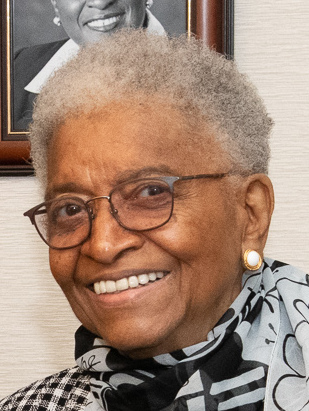
Featured photograph: Ellen Johnson Sirleaf (2022). PMO Barbados, Wikimedia Commons, Public Domain Mark 1.0. Cropped source image; no further intentional alterations.

Liberia occupies a distinctive place in the history of the African diaspora.
Unlike most countries profiled in LexNoir Atlas, where African-descended communities emerged through displacement from Africa, Liberia became a destination for people of African ancestry returning to the continent.
Beginning in the nineteenth century, free-born and formerly enslaved Black Americans crossed the Atlantic to establish new lives on the West African coast. They sought freedom, political autonomy, economic opportunity, and an escape from the racial discrimination they experienced in the United States.
Their migration ultimately contributed to the establishment of the Republic of Liberia in 1847.
But Liberia was not an unoccupied homeland awaiting their arrival. The territory was already home to diverse African peoples with established political institutions, cultural traditions, and claims to ancestral land.
The encounter between settlers and Indigenous communities produced one of the most complicated chapters in African diaspora history.
Liberia became a nation founded in the name of Black freedom, yet its history also reveals how inequality can emerge within a society created to escape racial oppression.
Today, Liberia’s experience offers important lessons about citizenship, national identity, historical memory, land rights, and the continuing relationship between Africa and its global diaspora.
From America to Africa: The Origins of Liberia
The modern Liberian state emerged from efforts to resettle free Black Americans in West Africa during the early nineteenth century.
The American Colonization Society (ACS), established in 1816, brought together supporters with sharply different motivations. Some believed that African Americans should have opportunities to establish an independent society free from American racial discrimination. Others supported colonization because they opposed racial integration in the United States or viewed the removal of free Black people as a means of protecting slavery.
African Americans themselves were divided. Many strongly opposed colonization and asserted that the United States was their rightful home. Others saw settlement in Africa as a path toward independence and self-determination.
In 1822, settlers sponsored by the ACS established a lasting settlement at Cape Mesurado, in what became Monrovia. The settlement expanded through negotiations, purchases, and sometimes coercive arrangements involving local African leaders.
The name Liberia reflected the aspiration toward liberty, while Monrovia was named for U.S. President James Monroe.
Over subsequent decades, additional migrants arrived from the United States. They included formerly enslaved people, free-born African Americans, and families seeking a different political future. The settlers brought religious institutions, educational practices, architectural influences, and legal traditions shaped by their American experiences. Their descendants came to be known collectively as Americo-Liberians.
In 1847, Liberia declared independence, establishing a sovereign republic governed by a constitution influenced by American constitutional traditions.
The achievement was historically significant: people whose ancestors had endured enslavement and exclusion in the Americas had helped establish an independent Black-governed state in Africa. Yet independence also marked the beginning of a struggle over who would possess political power within the new republic.
Americo-Liberians and Indigenous Communities
Liberia’s history cannot be understood solely through the experiences of the returning diaspora.
Long before nineteenth-century settlement, the region was home to numerous Indigenous peoples, including Kpelle, Bassa, Kru, Grebo, Gio (Dan), Mano, Vai, Loma, and other communities. These populations possessed their own languages, systems of governance, trading relationships, and customary land arrangements.
The Americo-Liberian settlers were a comparatively small population, yet they came to exercise disproportionate control over the institutions of the republic. Over time, the governing elite developed a political and social hierarchy that frequently privileged settler families over Indigenous populations.
Access to government employment, formal education, political participation, and economic opportunity often reflected these distinctions.
Liberia’s 1847 constitutional arrangements also linked voting rights to property ownership, disadvantaging many Indigenous communities whose land was held through customary systems. Later administrative arrangements reinforced differences between the coastal settler-dominated state and the interior.
These tensions continued for generations. Although the government gradually expanded its authority and formal institutions across the territory, political power remained concentrated among Americo-Liberian elites. From the late nineteenth century until 1980, the True Whig Party dominated national politics.
The resulting political order demonstrated a central contradiction: a republic founded through the return of Africans from the diaspora developed structures that marginalized many Africans already living on the land.
The Congo People: Another Atlantic Connection
Liberia’s population also includes descendants of Africans rescued from ships involved in the transatlantic slave trade.
During the nineteenth century, Africans liberated from intercepted slave vessels were resettled in Liberia, where they became known collectively as Congo people or recaptives.
The designation did not mean that all originated in the territory of today’s Democratic Republic of the Congo or Republic of the Congo. These individuals came from different parts of Africa and had distinct languages, cultural traditions, and experiences.
Over time, many became integrated into the settler-associated social and cultural communities.
Their history adds another dimension to Liberia’s place in the African diaspora. Some African-descended people returned after generations in the Americas. Others were intercepted before reaching the Americas and subsequently resettled along the West African coast.
Liberia therefore became a meeting place for multiple histories of enslavement, displacement, liberation, and return.
The Struggle for Political Equality
The concentration of political and economic power among Americo-Liberian elites contributed to longstanding grievances. Indigenous communities frequently experienced limited representation and unequal access to state institutions.
These divisions became part of the political tensions that culminated in the military coup of April 12, 1980. President William R. Tolbert Jr. was overthrown and killed, ending more than a century of political dominance by the settler-associated elite.
The coup brought Samuel K. Doe to power but did not resolve Liberia’s underlying political divisions.
The country subsequently experienced authoritarian rule, violent conflict, and two devastating civil wars, from 1989 to 1997 and from 1999 to 2003. The wars caused extensive civilian suffering, displacement, destruction of institutions, and long-lasting damage to national development.
Their causes were complex, involving political repression, ethnic grievances, regional interference, competition for resources, and struggles for political power. They cannot be explained simply as a conflict between Americo-Liberians and Indigenous Liberians.
Following the 2003 peace agreement, Liberia began rebuilding its democratic institutions. The election of Ellen Johnson Sirleaf in 2005 marked another milestone. She became Africa’s first elected female head of state.
Subsequent elections strengthened the country’s democratic transition. In November 2023, President George Weah accepted defeat in a closely contested election, allowing a peaceful transfer of power to Joseph Boakai in January 2024. This transition demonstrated the continued development of electoral institutions after decades of conflict.
Citizenship and the Meaning of African Descent
Liberia’s nationality laws reveal another distinctive feature of its relationship with the African diaspora.
Article 27(b) of the 1986 Constitution restricts eligibility for Liberian citizenship by birth or naturalization to people described in the constitutional text as “Negroes or of Negro descent.”
The provision reflects Liberia’s historical conception as a homeland for people of African ancestry. Nevertheless, it raises difficult questions under contemporary principles of racial equality and nondiscrimination.
A constitutional system created partly to protect a population historically subjected to racial exclusion continues to impose an express racial qualification for citizenship.
The 2022 Dual Citizenship Reform
Liberia’s relationship with its diaspora underwent a significant legal change in 2022.
On July 25, 2022, Liberia enacted amendments to its Aliens and Nationality Law that permitted dual citizenship and expanded the ability of Liberian women to transmit citizenship to children born abroad.
Previously, Liberians acquiring another nationality faced restrictions that could result in the loss of Liberian citizenship. The reform recognized the reality that many Liberians live, work, study, and maintain family connections outside their country of origin.
It also removed a discriminatory statutory distinction concerning citizenship transmission through mothers and fathers.
The reform has particular importance for Liberians in the United States, Canada, Europe, and other parts of Africa. It offers greater opportunities to maintain legal connections with Liberia while participating in the economic and civic life of other countries.
However, certain public-office restrictions and constitutional questions remain relevant, and dual nationality should not be confused with an unrestricted right to hold every constitutional office.
Liberia’s citizenship framework thus illustrates two different approaches to diaspora identity: maintaining ancestral connections through legal membership while continuing to define eligibility for that membership in racial terms.
Land Rights and Indigenous Recognition
Land ownership is another important dimension of Liberia’s historical divisions.
For generations, customary land arrangements coexisted uneasily with statutory property systems. Indigenous communities often held land collectively under customary practices, while formal legal institutions sometimes privileged documented title and individualized ownership.
These differences contributed to disputes over agricultural concessions, forestry, mining, and community control over ancestral territory.
Liberia’s Land Rights Act of 2018 represented an important reform. The legislation recognizes customary land as a legally protected category and seeks to provide it with protections comparable to private land. It also recognizes community ownership and establishes processes for identifying and governing customary land.
The law provides a foundation for addressing historical inequalities involving land tenure and community participation. Implementation, however, remains essential.
Legal recognition alone cannot resolve disputes over boundaries, concessions, governance, and the distribution of economic benefits.
For Liberia, land rights connect historical justice with contemporary questions of economic development and the authority of local communities.
Liberia and the Global African Diaspora
Liberia’s connections with African-descended populations extend beyond its nineteenth-century founding.
Successive generations of Liberians have established communities in the United States, Canada, the United Kingdom, Ghana, and elsewhere. Many left because of civil conflict, economic hardship, educational opportunities, or family connections.
These communities maintain relationships with Liberia through remittances, professional networks, cultural institutions, business investment, and family ties.
The country’s American historical influences also remain visible in elements of its political institutions, religious traditions, and public culture.
Yet contemporary Liberian identity is much broader than its Americo-Liberian heritage. It encompasses Indigenous languages and traditions, regional histories, urban culture, and new generations whose experiences reflect both African and global influences.
Liberia is therefore best understood not simply as a destination for return migration, but as a country shaped by the interaction of several histories.
Its identity reflects the cultures of its Indigenous peoples, the experiences of the returning African diaspora, and the continuing movement of Liberians across international borders.

LexNoir Perspective
Liberia presents one of the African diaspora’s most consequential historical paradoxes.
It was founded in the name of liberty by people whose lives had been shaped by racial oppression. Yet the new republic developed structures that frequently excluded Indigenous Africans from meaningful political and economic participation.
This history does not diminish the extraordinary achievement of establishing an independent Black-governed republic in the nineteenth century. Rather, it demonstrates that liberation from oppression does not automatically produce equality within newly established institutions.
For LexNoir, Liberia offers four important lessons.
First, the African diaspora is not defined solely by movement away from Africa. Return migration, reconnection, and the building of new institutions on the continent are also central parts of diaspora history.
Second, shared African ancestry does not eliminate differences in political power, culture, or historical experience. The relationship between Americo-Liberians and Indigenous communities illustrates the importance of examining those differences rather than treating African identity as homogeneous.
Third, citizenship and land ownership remain fundamental instruments of belonging. Liberia’s nationality laws and land reforms show how legal institutions can both preserve historical identities and confront inherited inequalities.
Finally, diaspora engagement offers opportunities for contemporary development. Professional exchanges, investment, education, entrepreneurship, and cultural connections can strengthen the relationship between Liberia and its international communities.
Liberia’s enduring significance lies in the unfinished work of translating the promise of freedom into equal citizenship, shared political power, and economic opportunity for all its people.
For the global African diaspora, Liberia is more than a historic experiment in return. It is a continuing reminder that freedom is not simply the ability to establish a homeland. It is the obligation to ensure that everyone who belongs to that homeland can participate equally in its future.