
LEXNOIR ATLAS
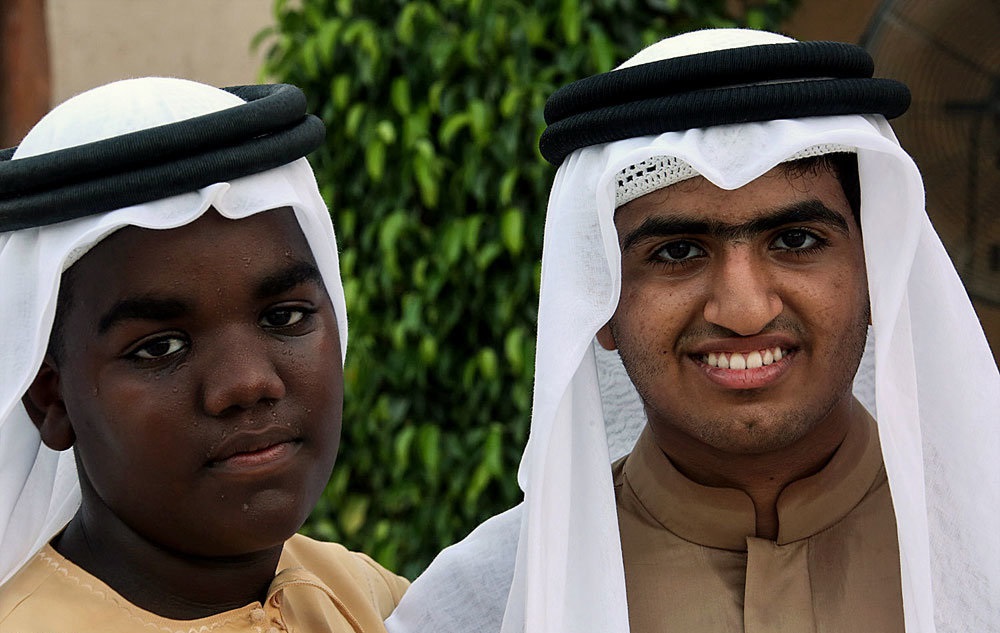
Featured photograph: Kish Native Anthropology House, Kish Island, Iran. Mohsen Rezaei / Mehr News Agency, Wikimedia Commons, CC BY 4.0. No alterations.

Along Iran’s southern coastline, from the Persian Gulf to the Gulf of Oman, live communities whose histories connect the country to East Africa and the wider Indian Ocean world.
Among the residents of Hormozgan, Bushehr, and other southern provinces are Iranians of African descent whose ancestors arrived through trade, migration, and the forced movement of enslaved people.
Their presence challenges the conventional geography of the African diaspora, which is often understood principally through the transatlantic slave trade and the histories of the Americas.
The Afro-Iranian story instead follows maritime routes connecting East Africa, the Arabian Peninsula, South Asia, and Persia.
It is a history of displacement, cultural exchange, adaptation, and belonging. It is also a history that has received relatively little attention, both internationally and within Iran itself.
Africa and Persia: An Indian Ocean History
Connections between East Africa and the Persian Gulf long predate the modern nation-state of Iran.
For centuries, merchants and seafarers traveled between the East African coast, southern Arabia, Persia, and the Indian subcontinent. These networks carried goods, religious traditions, languages, and people across the Indian Ocean.
Some Africans traveled within these commercial and maritime networks as free individuals. Others were transported through systems of slavery that operated over many centuries.
During the nineteenth century, enslaved Africans were brought to Iranian ports and households through trading networks involving East Africa and the Arabian Peninsula.
Historical research identifies the East African coast, including areas associated with Zanzibar and present-day Tanzania, as particularly important to these movements.
Enslaved people in Iran performed various forms of labor, including domestic service, agricultural work, and occupations associated with elite households.
Their experiences differed considerably according to location, gender, occupation, and social circumstances.
The history is therefore more complex than a single account of plantation slavery. African enslavement in Iran intersected with domestic labor, household institutions, maritime commerce, and existing systems of social hierarchy.
Southern Iranian ports became especially important points of settlement.
Over generations, African-descended families established themselves in coastal communities in what are now Hormozgan, Bushehr, Khuzestan, and Sistan and Baluchestan.
Places such as Bandar Abbas, Minab, and Qeshm Island became part of the geography of Afro-Iranian history.
Some descendants retained cultural practices associated with African ancestry. Others became integrated into broader Iranian communities through marriage, language, religion, and everyday social life.
Their descendants were Iranian, but their family histories also connected them to the wider African diaspora.
Abolition in 1929—and the Problem of Historical Erasure
Iran formally abolished slavery in 1929, following earlier restrictions on the slave trade.
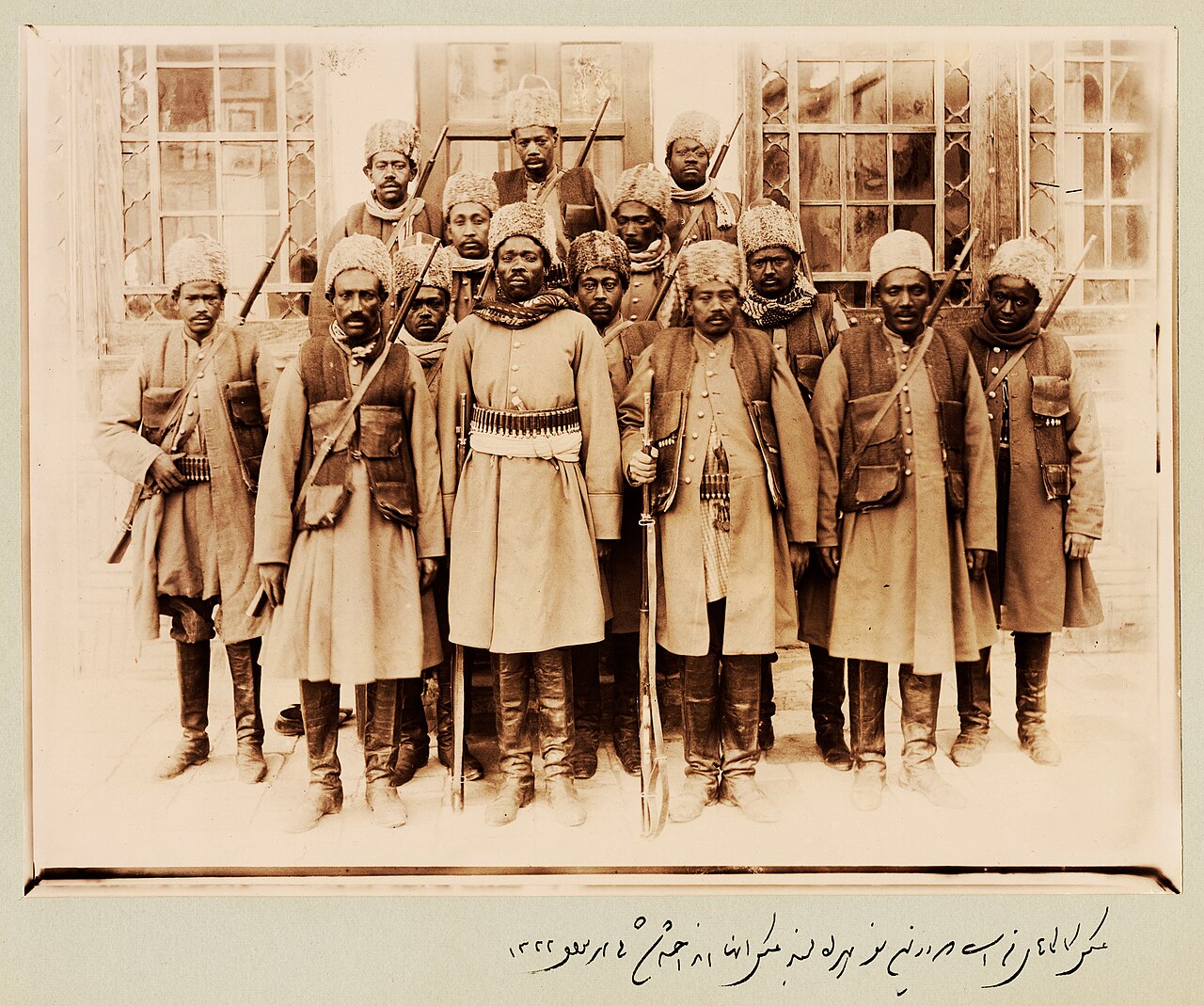

The abolition marked an important legal transformation, but it did not necessarily produce a corresponding public reckoning with the history of enslavement.
In many countries, the abolition of slavery was followed by disputes over compensation, labor arrangements, political rights, and the status of formerly enslaved populations.
In Iran, a different problem also emerged: the gradual disappearance of slavery and African-descended people from dominant accounts of national history.
Historian Beeta Baghoolizadeh examines this process in her 2024 book, The Color Black: Enslavement and Erasure in Iran.
Her research argues that the development of modern Iranian national identity involved not only the legal abolition of slavery but also the marginalization of Black Iranian histories in the country’s collective memory.
The distinction is significant.
Ending a legal institution does not necessarily mean acknowledging the people who experienced it or recognizing their descendants as part of the national story.
This is especially important in a country whose identity has often been presented through Persian language, culture, and historical continuity.
Iran has always contained considerable ethnic, linguistic, and regional diversity. Its African-descended communities form part of that diversity, even though their experiences have not occupied a prominent place in conventional historical narratives.
The resulting challenge is not simply to recover information about slavery. It is to recognize Afro-Iranians as participants in the development of Iranian society rather than treating African ancestry as something foreign to it.
Music, Ritual, and Cultural Memory
African connections remain visible in aspects of southern Iran’s cultural life, particularly through music, percussion, dance, and ritual traditions.
The coastal provinces of southern Iran have long participated in a shared cultural environment extending across the Persian Gulf and Indian Ocean.
Within that environment, African, Iranian, Arab, and South Asian influences have interacted over generations.
One tradition receiving particular scholarly attention is zār, a complex set of healing and spirit-related practices found in parts of northeastern Africa, the Arabian Peninsula, and the Persian Gulf region.
In southern Iran, zār ceremonies have historically involved drumming, singing, rhythmic movement, and collective participation.
The ceremonies are associated with local understandings of spiritual affliction and healing and are often conducted under the guidance of experienced ritual specialists.
Researchers have identified important connections between these practices and cultural traditions carried from Africa into the wider Indian Ocean region.
Yet zār should not be understood simply as an unchanged African ceremony transplanted to Iran.
Like many traditions shaped by migration, it has evolved through interaction with local beliefs, religious practices, and social conditions.
Nor is zār practiced exclusively by Afro-Iranians. Its presence across different communities illustrates how cultural exchange can extend beyond the boundaries of ancestral identity.
The importance of these traditions lies partly in their capacity to preserve historical connections that are not always recorded in written archives.
Music and communal ritual can transmit experiences, relationships, and memories across generations, even when the original circumstances of migration have become difficult to reconstruct.
For Afro-Iranian communities, these cultural connections form part of a broader history of adaptation and belonging along Iran’s southern coast.
Making Afro-Iranians Visible
In recent years, scholarship, photography, and cultural research have brought greater international attention to Afro-Iranian communities.
One particularly important project is Afro-Iran, a photographic series by German-born Iranian photographer Mahdi Ehsaei.
Working in Hormozgan, Ehsaei documented Iranian people of African descent through portraits intended to challenge prevailing assumptions about the appearance and cultural identity of Iranians.
The project subsequently became a photobook, presenting individuals whose family histories reflect the African presence in southern Iran.
Its significance lies not only in the images themselves but in the questions they raise.
Who is recognized as Iranian? How are nationality, ancestry, and racial appearance understood? And why have some communities remained largely absent from visual representations of the nation?
Scholarly work has addressed similar questions.
Historian Behnaz A. Mirzai has conducted extensive archival and field research into African enslavement, emancipation, cultural traditions, and identity formation in Iran.
Her work demonstrates that Afro-Iranian history is not merely a matter of isolated communities or unusual customs. It is part of the wider history of Iran’s political economy, social institutions, and connections with Africa.
Reliable estimates of the contemporary Afro-Iranian population remain difficult to establish. National demographic statistics do not provide a straightforward basis for identifying or counting everyone of African descent.
It would therefore be misleading to assign a precise population figure or assume that all Iranians with African ancestry share a single identity.
Some individuals may understand African ancestry as an important component of their identity. Others may identify primarily through their locality, language, religion, family, or Iranian nationality.
This diversity does not diminish their historical significance.
Rather, it reflects the different ways diaspora identities evolve when communities become established across generations.
The visibility of Afro-Iranians has expanded through historical research and artistic documentation, although greater public recognition does not necessarily establish the extent of social inclusion or equality.
The more fundamental objective is to ensure that African-descended people are understood as part of Iran’s own history and contemporary society.
LexNoir Perspective
The Afro-Iranian experience expands the conventional understanding of the global African diaspora.
African history in the Americas is often examined through slavery, emancipation, civil rights, and the development of Black political institutions.
In Iran, the historical trajectory was different.
African-descended populations became established through Indian Ocean networks linking Africa, Persia, Arabia, and South Asia. Their descendants participated in Iranian society while preserving, transforming, or sometimes losing identifiable connections to African ancestry.
The country’s 1929 abolition of slavery also raises an important question about the relationship between legal reform and historical memory.
A society may abolish enslavement without fully acknowledging its history or the continuing presence of those descended from enslaved populations.
Recognition therefore requires more than recovering archival records. It also requires examining how national histories are constructed, whose experiences are included, and whose contributions remain overlooked.
The scholarly and photographic documentation of Afro-Iranian communities represents an important development in that process.
For LexNoir, Iran demonstrates that the African diaspora cannot be adequately understood through the Atlantic world alone.
The Indian Ocean was also a major arena of African migration, cultural exchange, enslavement, and community formation.
The Afro-Iranian story reminds us that African heritage is not foreign to Iranian history. It is part of that history—and part of the much larger story of Africa’s enduring presence across the world.
Sources and Further Reading
- Behnaz A. Mirzai, A History of Slavery and Emancipation in Iran, 1800–1929. University of Texas Press, 2017.
- Behnaz A. Mirzai, “African Presence in Iran: Identity and Its Reconstruction in the 19th and 20th Centuries”, Outre-mers, 2002.
- Beeta Baghoolizadeh, The Color Black: Enslavement and Erasure in Iran. Duke University Press, 2024.
- Mahdi Ehsaei, Afro-Iran, photographic series and photobook.
- Encyclopaedia Iranica, “Barda and Barda-Dāri iv. From the Mongols to the Abolition of Slavery”, by Willem M. Floor.