
LEXNOIR ATLAS
African Roots, Dominican Identity and the Right to Belong
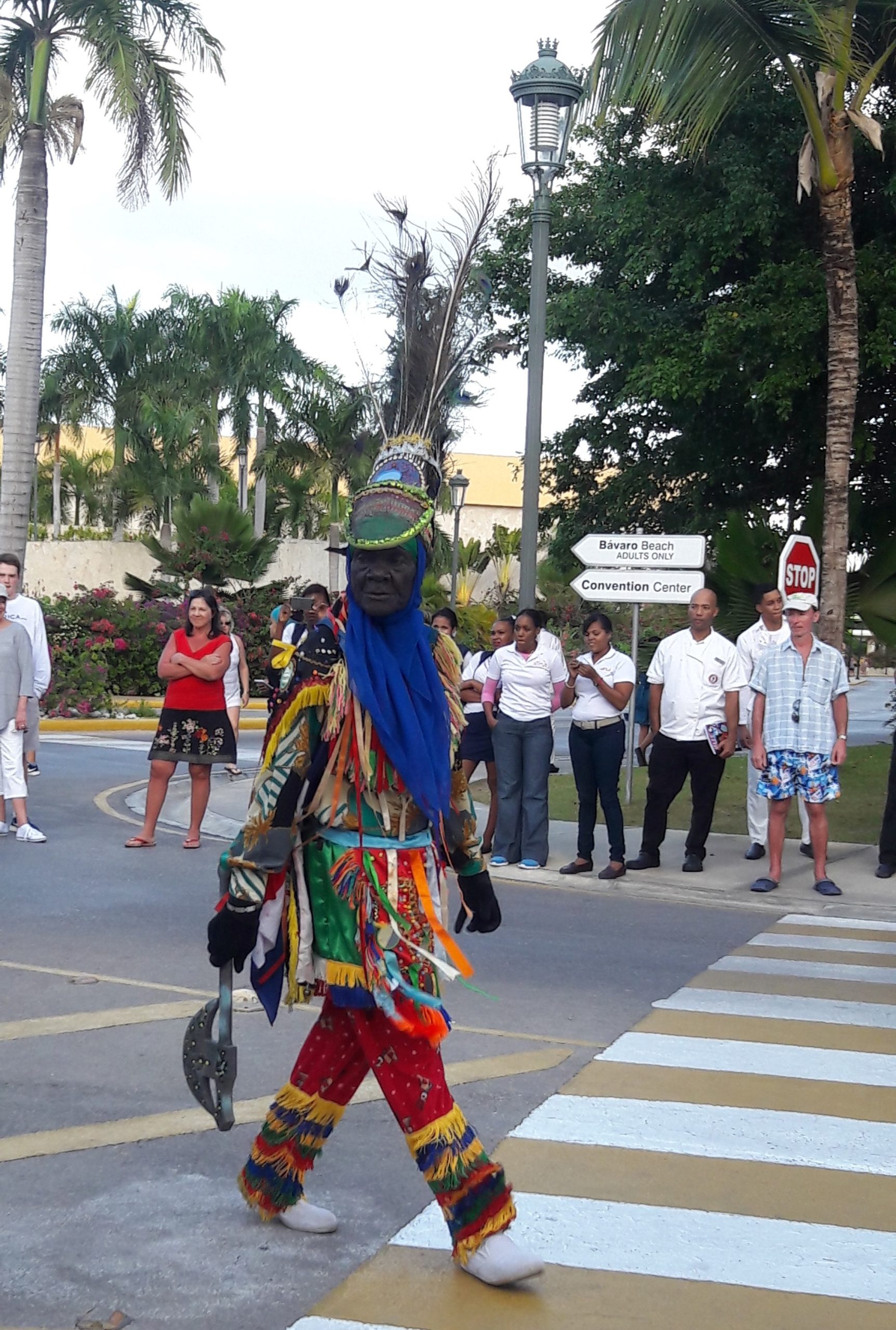
Featured photograph: A Guloya performer in San Pedro de Macorís, where Cocolo traditions preserve connections with the English-speaking Caribbean. MarieDiaz / Wikimedia Commons; CC BY-SA 4.0. Resized for display.

African heritage runs through the Dominican Republic’s history. It connects the resistance of enslaved people in colonial Santo Domingo, the religious communities of Villa Mella and the performance traditions of Caribbean migrants in San Pedro de Macorís. These histories also provide a frame for understanding a consequential legal struggle: whose Dominican nationality the state recognizes, and on what terms.
The country’s African diaspora story deserves attention in its own right. The experience of Dominicans of Haitian descent is an essential part of that story, alongside other communities whose histories reveal different routes through slavery, migration and cultural survival.
A foundational history of resistance
The territory now comprising the Dominican Republic was an early center of African enslavement in the Americas—and of resistance to it. Research by the CUNY Dominican Studies Institute documents the Santo Domingo slave revolt of 1521 and the restrictive slave ordinances issued in its aftermath in January 1522. Enslaved Africans challenged the colonial order near the beginning of Spain’s American plantation enterprise. [1, 2]
That history changes where the Dominican story begins. African people appear as participants in the making of colonial society, including through organized resistance to their captivity. The surviving records also show law operating as an instrument of control: colonial authorities responded to rebellion by tightening the rules governing Black lives.
CUNY’s work recovering and translating these documents makes that struggle more accessible. It places early Santo Domingo within the wider history of Black resistance across the Americas and gives Dominican African heritage a documentary foundation extending back five centuries. [1, 2]
Communities that carry the history forward
In Villa Mella, north of central Santo Domingo, the Brotherhood of the Holy Spirit of the Congos preserves a tradition of music, dance and religious observance recognized by UNESCO. Its significance lies in the community relationships through which the tradition continues: people gathering, performing and transmitting knowledge across generations. [3]
A different migration history shaped Cocolo culture. Its practitioners descend from English-speaking Caribbean migrants who came to the Dominican Republic to work in the sugar economy. Their dance drama tradition combines music and dance of African origin with stories and characters drawn from biblical and European literary traditions. UNESCO inscribed the Cocolo tradition on its Representative List in 2008. [4]
Together, Villa Mella and Cocolo traditions reveal the variety within Dominican African heritage. One country contains communities shaped by different languages, religious practices and movements across the Caribbean. “Afro-Dominican” can help make those connections visible, while leaving room for the particular histories and identities of the people concerned.
Preservation therefore involves more than presenting performances to outside audiences. It requires supporting the communities that teach, organize and sustain them. UNESCO has identified both the Congos of Villa Mella and the Guloyas of San Pedro de Macorís as representative Afro-descendant cultural expressions in a project devoted to strengthening their capacity to safeguard their heritage. [5]

When belonging becomes a question of documents
The nationality controversy exposes another dimension of Dominican identity: the power of official records to determine whether a person can exercise the rights of citizenship.
In September 2013, Constitutional Court judgment TC/0168/13 interpreted the nationality rules affecting people born in the country to foreign parents classified as being “in transit.” The Inter-American Commission on Human Rights concluded that its retroactive application arbitrarily deprived many people—principally Dominicans of Haitian descent—of Dominican nationality and left some stateless. People previously recognized as Dominican through state-issued documents were among those affected. [6]
Law 169-14, adopted the following year, created different procedures for people whose births had already been registered and those whose births had not. For the first group, it provided a route to recognition and documentation. For the second, it required registration as foreigners followed by a possible naturalization process. The Commission criticized that distinction because it treated people claiming nationality from birth as foreigners seeking to acquire it. [7]
The consequences reach into ordinary life. Without secure nationality and usable identity documents, education, formal employment and other essential activities can become difficult to access. In its 2023 assessment marking the judgment’s tenth anniversary, the Commission continued to call for effective restoration of nationality for those left stateless. [8, 9]
Precision matters here. Haitian migrants, Dominican citizens of Haitian descent and people left stateless have different legal positions. African ancestry or appearance establishes none of those statuses.
The LexNoir view
The Dominican Republic brings two questions into sharp focus: how a nation recognizes its African inheritance, and how its institutions recognize the people who belong to it.
Cultural recognition gives visibility to histories preserved by communities over generations. Legal recognition determines whether individuals can participate fully in national life. The Dominican experience shows why both belong in a serious account of the global African diaspora.
Sources and further reading
[1] CUNY Dominican Studies Institute — The Santo Domingo Slave Revolt of 1521 and the Slave Laws of 1522
[2] City College of New York — Exhibit to Trace First Black Presence in the Americas
[3] UNESCO — Cultural space of the Brotherhood of the Holy Spirit of the Congos of Villa Mella
[4] UNESCO — Cocolo dance drama tradition
[5] UNESCO — Strengthening community capacities to safeguard Congos and Guloya heritage
[6] IACHR — Preliminary Observations from the Visit to the Dominican Republic, 2013
[7] IACHR — Report on the Situation of Human Rights in the Dominican Republic, 2015
[8] IACHR — Dominican Republic: State Urged to Eradicate Statelessness, 2023
[9] U.S. Department of State — 2023 Country Report on Human Rights Practices: Dominican Republic