
LEXNOIR ATLAS
In Belize, African heritage has helped shape the nation itself. Its Creole and Garifuna communities reveal distinct histories of enslavement, resistance, displacement and cultural survival.
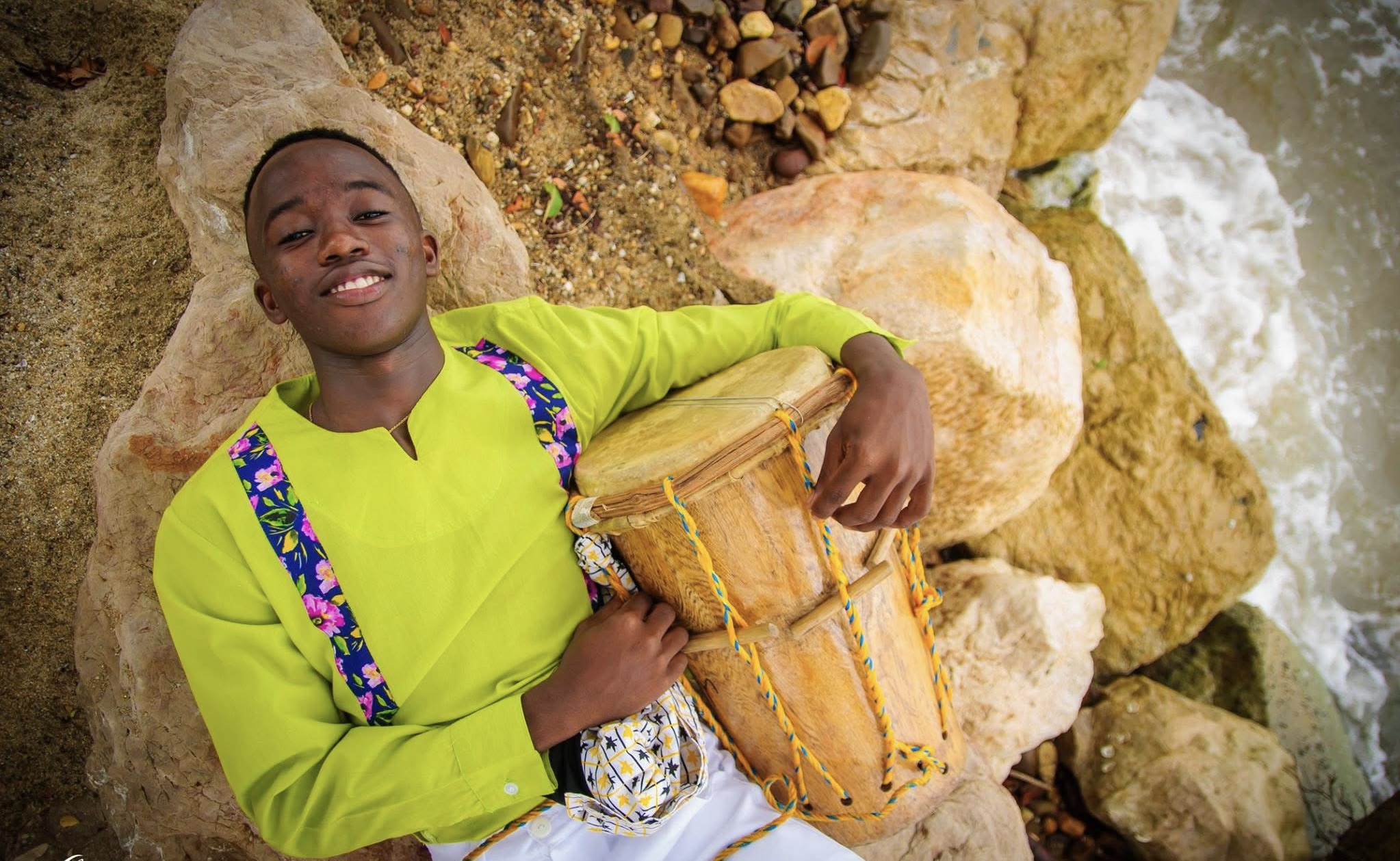
Featured photograph: Garifuna teenager holding traditional drums beside the sea in Dangriga, Belize. Garinagu Melivn, 2018, via Wikimedia Commons; CC BY 4.0. Resized for display.

Belize brings together histories often treated separately: the African diaspora in the English-speaking Caribbean, Indigenous identity in Central America, and the movement of peoples across borders that came later.
Two communities are central to that story. Belizean Creoles developed through the colonial society built around enslaved African labor and the timber trade. The Garifuna, whose heritage combines African and Indigenous Caribbean origins, arrived through a different history of resistance, exile and migration. Their experiences intersect, but each deserves to be understood on its own terms.
The 2022 census reported that 25.2 percent of Belize’s population identified as Creole and 4 percent as Garifuna. These are ethnic categories, rather than a comprehensive count of everyone with African ancestry. They offer a starting point for understanding Belize’s diversity, rather than a complete definition of Black belonging. [1]
The deeper story concerns how these communities helped build Belize—and how language, public memory and community institutions sustain their place within it.
Creole Belize: African labor and the foundations of colonial wealth
Belize’s history of enslavement was closely tied to its forests. British settlers sought wealth through logwood and, later, mahogany. Enslaved Africans supplied the labor that made extraction possible, working in dangerous conditions in timber camps. The National Institute of Culture and History identifies forced migration through Caribbean trading networks, including Jamaica, as part of that history. Full legal emancipation came on August 1, 1838. [2]
This setting matters. Accounts of Caribbean slavery frequently center sugar plantations. Belize broadens that picture: forests, rivers and timber exports also formed part of the economy of enslavement. Understanding the colony requires attention to the workers who generated its wealth, alongside the merchants and officials who controlled it.
Emancipation marked a fundamental legal transformation. It also leaves a further historical question: how far did freedom change access to land, capital, education and authority? Ending ownership of human beings and distributing economic power are separate processes. An account that ends in 1838 leaves much of the meaning of freedom unexplored.
Belize’s recent public-history work has brought the geography of enslavement into clearer view. A NICH heritage tour connected sites in Belize City with slavery and emancipation, including Government House, the Swing Bridge and Queen Street Baptist Church. Its accompanying archival work involved university students learning to read historical manuscripts. These initiatives connect national memory with identifiable places and documentary evidence. [3]
Creole cultural influence also extends beyond ethnic identification. The census found that 49 percent of residents aged four and older could speak Creole, or Kriol—considerably more than the share identifying as ethnically Creole. The distinction illustrates how a language associated with a particular community can become a wider means of national communication. [4]
That reach raises an important question of recognition: how can Belize acknowledge Kriol’s broad national role while preserving public understanding of the African-descended communities and historical experiences that shaped it?
Garifuna Belize: a people whose history crosses national borders
Garifuna history follows another route into Belize.
The Garifuna emerged in St. Vincent through the interaction of African and Indigenous Caribbean peoples. Following resistance to British colonial expansion, they were forcibly removed from the island. Survivors reached Roatán, off Honduras, in 1797, and Garifuna communities subsequently developed along the Caribbean coast of Central America. Exile and the preservation of collective identity are foundational to this history. [5, 6]
For that reason, describing the Garifuna solely as descendants of enslaved Africans misses a central part of their experience. Their identity also encompasses Indigenous ancestry, a Caribbean homeland, resistance to dispossession and a continuing sense of peoplehood across national boundaries.
Belize’s Garifuna Settlement Day, observed on November 19, places this history within the national calendar. Belize’s Living Heritage inventory records migration beginning as early as 1802 and traces the campaign for official recognition to Thomas Vincent Ramos and fellow organizers, who petitioned colonial authorities in 1941. Recognition developed through local observances and later efforts to establish a national holiday. [7]
The significance lies in that organizing. A community worked to make its history part of the country’s public understanding of itself. The holiday is therefore also a story about civic agency: who can secure recognition, whose arrival is commemorated, and whose contribution becomes part of national memory.
Garifuna heritage has received international recognition as well. UNESCO proclaimed Garifuna language, dance and music a Masterpiece of the Oral and Intangible Heritage of Humanity in 2001; it was incorporated into the Representative List in 2008. The recognition encompasses Belize, Guatemala, Honduras and Nicaragua, reflecting a cultural community that extends across state borders. [8]
That regional dimension gives Belize a distinctive place in the African diaspora. National citizenship and transnational peoplehood coexist. Garifuna belonging can be firmly Belizean while remaining connected to communities and historical memory elsewhere.
Living heritage: recognition depends on transmission
Belize’s African heritage continues through practices that people teach, perform and adapt.
Gales Point Manatee offers a particularly revealing example. NICH describes the village as likely emerging from a secondary Maroon settlement, with a population that included formerly enslaved Africans and disbanded soldiers of the West India Regiment. Its Christmas Bram involves drumming, singing and movement from house to house, with hosts offering refreshments. Sambai brings participants together through drumming and dance around a bonfire. [9]

These practices preserve more than performance. They organize relationships: between households, between generations, and between people who carry different forms of knowledge. A song requires singers; a rhythm requires someone who can teach it; a community celebration requires places and people willing to receive it.
In December 2025, UNESCO inscribed Christmas Bram and Sambai of Gales Point Manatee on its Representative List of the Intangible Cultural Heritage of Humanity. Its decision describes the celebrations as deeply rooted in African heritage and as strengthening unity and shared identity within the practicing community. [10]
Recognition creates an opportunity to support the people who sustain these traditions. The practical questions concern resources and authority: who teaches, who decides how a tradition is presented, and whether practitioners share in the benefits generated by public attention.
Language makes the challenge especially clear. Belize’s report to UNESCO identifies pressures on Garifuna arising from the demand for English and Spanish, alongside funding constraints affecting safeguarding activities. It also documents educational and musical efforts to maintain transmission. [11]
The policy implication is straightforward: cultural visibility and cultural continuity require different kinds of support. A festival can attract an audience for a day. Maintaining a language requires sustained opportunities to hear it, speak it and pass it on.
Community participation is therefore essential. Belize’s team for a regional African-descendant heritage safeguarding project included representatives of both the National Garifuna Council and the National Kriol Council, alongside cultural professionals. That structure recognizes communities as participants in determining how their heritage is preserved. [12]
Equality, citizenship and the space for difference
Belize’s constitutional framework provides another way to understand belonging.
Section 6 guarantees equality before the law and equal protection without discrimination. Section 16 addresses discriminatory laws and treatment, including distinctions based on race, color and place of origin, subject to specified exceptions. These provisions establish legal standards against which exercises of power can be assessed. [13]
For an Atlas account, the important distinction is between constitutional protection and demonstrated outcomes. The existence of equality guarantees does not, by itself, establish equal access to education, employment, property or public influence. Nor should a community’s cultural prominence be treated as evidence that every member enjoys economic security.
Belize also illustrates why equality must leave room for distinct identities. Creole and Garifuna communities can share interests in confronting racial discrimination while maintaining different languages, institutions and historical claims. A useful African-diaspora framework should make those connections visible without dissolving the differences.
This is a broader lesson for countries where African heritage is foundational to national culture. Celebrating that heritage creates responsibilities: to teach its history accurately, sustain community participation and examine whether public recognition is accompanied by meaningful opportunity.
The LexNoir view
Belize shows how African-descended communities can shape a country through different historical paths.
Creole history brings the timber economy, enslavement, emancipation and the national reach of Kriol into view. Garifuna history connects Belize to Indigenous Caribbean resistance, forced displacement and a people whose identity crosses borders. Gales Point adds a closely observed account of how African-rooted traditions survive through community practice.
Together, these histories invite a fuller understanding of belonging—one that connects citizenship with memory, cultural recognition with community authority, and legal equality with the conditions needed to exercise it.
Belize’s African heritage is part of the country’s foundation. Its future depends, in part, on the people and institutions able to carry that heritage forward.
Sources and further reading
[1] Statistical Institute of Belize — 2022 census key findings
[2] NICH — African Roots and Resilience
[3] NICH — Emancipation Day 2023
[4] Statistical Institute of Belize — Census Key Findings Report, 2022
[6] National Garifuna Council — Garifuna history and organization
[7] Belize Living Heritage — Garifuna Settlement Day and Yurumein
[8] UNESCO — Language, dance and music of the Garifuna
[9] NICH — Gales Point: African Resistance, Resilience and Heritage
[10] UNESCO — 2025 decision on Christmas Bram and Sambai
[11] Belize — Periodic report to UNESCO on intangible cultural heritage
[12] NICH — Living African-descendant Heritage
[13] Constitution of Belize, revised through 2022 — Sections 6 and 16