
Region: Europe | Community: Afro-Dutch communities
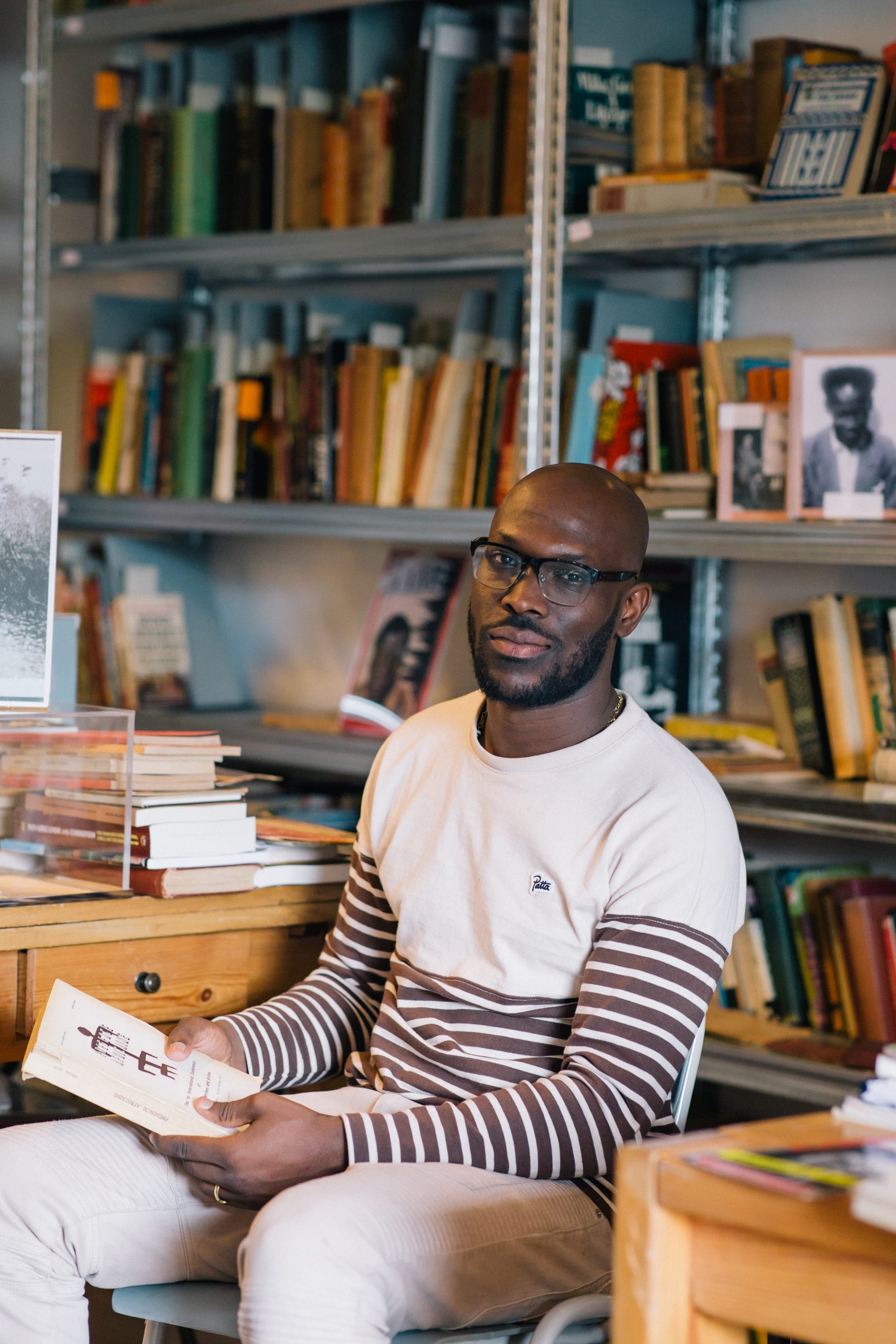
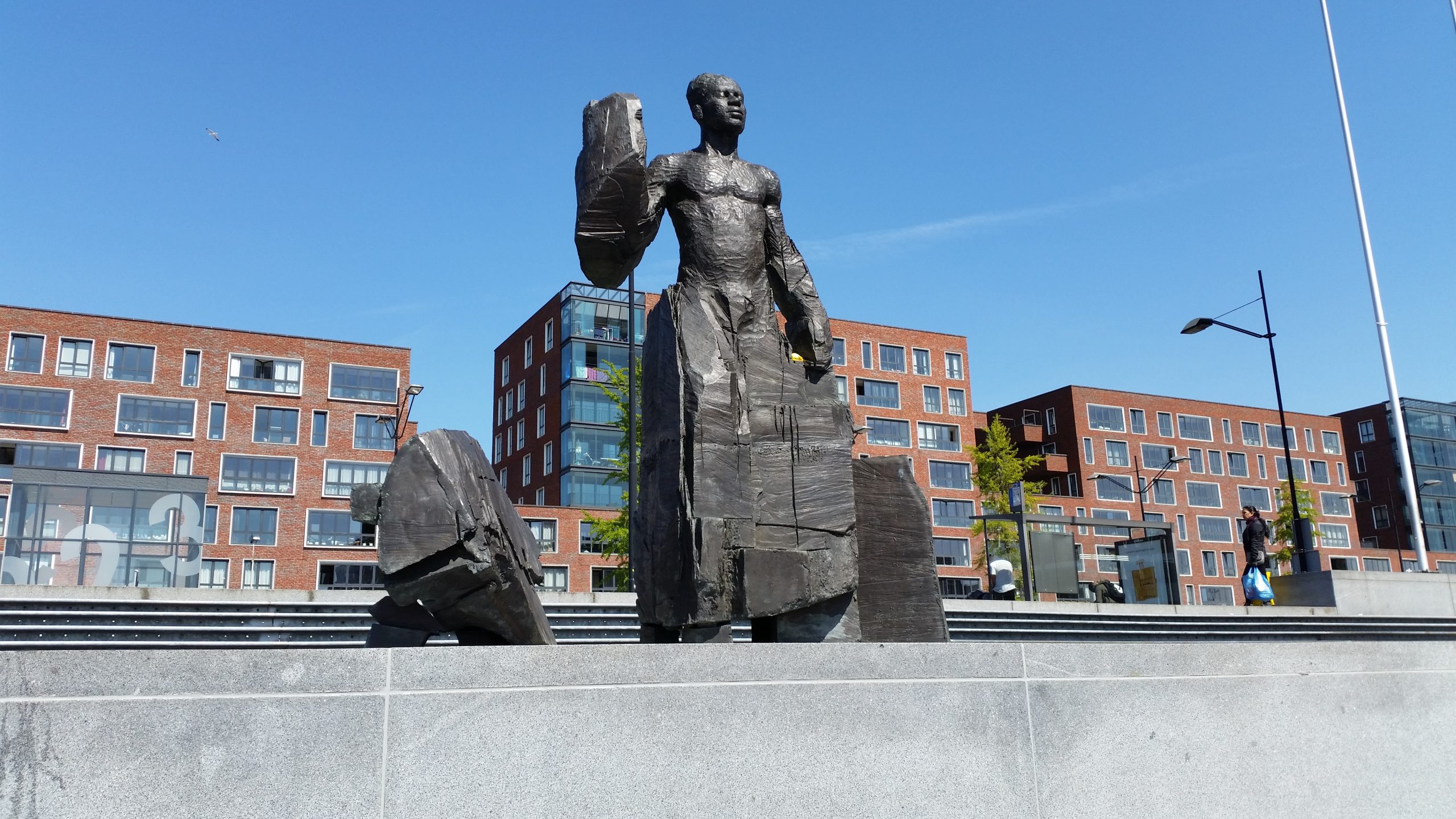
Featured photograph: Mitchell Esajas at The Black Archives, Amsterdam. Amie Galbraith / Wikimedia Commons (CC BY-SA 4.0; no edits to the photograph). Secondary photograph: Anton de Kom monument, Amsterdam Zuidoost, Ceescamel / Wikimedia Commons (CC BY-SA 4.0). Photographs displayed without editorial alteration.


The Netherlands has become an important center of the African diaspora in Europe. From Dutch colonial rule in Suriname and the Caribbean to migration from Africa, Afro-Dutch communities have shaped Dutch culture and national identity. Government apologies for slavery mark a turning point, but questions of equality, accountability and belonging remain.
A Diverse African Diaspora
Afro-Dutch communities include descendants of enslaved Africans from Suriname and the Dutch Caribbean; Dutch citizens whose families have lived in the Netherlands for generations; and immigrants and descendants from Ghana, Nigeria, Somalia, Eritrea, Cape Verde and other African countries. Their languages, family histories and cultural traditions vary considerably.
Amsterdam, Rotterdam, The Hague and other cities host important Afro-Dutch communities. Official Dutch demographic statistics generally identify country of origin and parental birthplace rather than Black racial identity. Accordingly, figures for people of Surinamese or Dutch Caribbean origin cannot be treated as counts of Black residents. Statistics Netherlands recorded approximately 370,000 residents with Surinamese origin and 199,000 with Dutch Caribbean origin in 2025, including people of diverse ethnic backgrounds.
1. The Dutch Atlantic Slave Trade
Dutch merchants and trading companies played a substantial role in the transatlantic trafficking of enslaved Africans and in plantation economies in Suriname, the Caribbean and parts of Brazil. Colonial slavery contributed to trade and accumulated wealth in the Netherlands while imposing suffering and dispossession on generations of Africans and their descendants.
Scholarly estimates suggest Dutch involvement in transporting more than half a million Africans across the Atlantic. The precise measure depends on the historical period and definition of Dutch involvement. This history is essential to understanding the formation of Afro-Surinamese and Dutch Caribbean communities.
2. Emancipation in 1863—and the Limits of Freedom
On July 1, 1863, the Netherlands formally abolished slavery in Suriname and its Caribbean colonies. In Suriname, many formerly enslaved people then remained subject to ten years of state supervision and compulsory labor arrangements until 1873. Slave owners received financial compensation; enslaved people were not similarly compensated for their forced labor.
The distinction between legal emancipation in 1863 and the ending of state supervision in 1873 remains a central part of Afro-Dutch historical memory.
3. Surinamese Migration and Dutch Society
In the decades surrounding Suriname’s independence in 1975, migration to the European Netherlands accelerated. Political concerns, economic opportunities, education and family connections all contributed. Statistics Netherlands reports that approximately 256,000 people migrated from Suriname to the Netherlands between 1975 and 2024.
The Surinamese-Dutch population is ethnically diverse, including people of African, Indian, Javanese, Indigenous, Chinese and mixed ancestry. Afro-Surinamese Creole and Maroon communities are important parts of this history. Surinamese-Dutch people have contributed to Dutch literature, education, medicine, sport, politics, business and cultural life.
4. Dutch Caribbean Communities and Kingdom Citizenship
Aruba, Curaçao and Sint Maarten are constituent countries of the Kingdom of the Netherlands. Bonaire, Sint Eustatius and Saba are special municipalities of the Netherlands. Their residents share constitutional and citizenship connections with the European Netherlands, although legal arrangements differ among the islands.
Caribbean Dutch communities have brought Papiamentu, music, cuisine, religious and family traditions into Dutch civic life. Shared nationality has not always guaranteed equal opportunity or the absence of discrimination.
5. African Migration Beyond Colonial Connections
Contemporary Afro-Dutch society also includes people from Ghana, Nigeria, Somalia, Eritrea, Cape Verde and other African states who arrived for education, employment, family reunification, refuge or other reasons. Their descendants have established businesses, associations, religious institutions and households. Their histories demonstrate that the African diaspora in the Netherlands is broader than the country’s former colonial relationships.
6. Anton de Kom: Resistance and National Memory
Anton de Kom (1898–1945), born in Suriname, became one of the most important critics of Dutch colonialism. His 1934 book Wij slaven van Suriname (We Slaves of Suriname) challenged colonial oppression and placed enslaved people and their descendants at the center of historical narrative.
During the Second World War he participated in resistance against Nazi occupation. He died in 1945 after imprisonment within the Nazi concentration camp system. Long marginalized within mainstream historical accounts, De Kom entered the Canon of the Netherlands in 2020. In 2023, the Dutch government formally rehabilitated him and apologized to his family.
7. Keti Koti: Remembering Emancipation
Every July 1, Keti Koti—often translated as ‘broken chains’—commemorates emancipation from slavery in Suriname and the Dutch Caribbean. In the Netherlands it is an occasion for remembrance, cultural celebration and reflection on the legacies of slavery. Amsterdam’s Oosterpark has become a significant location for commemorations.
Some advocates have called for July 1 to become a national public holiday. As of 2026, Keti Koti is not a nationwide statutory public holiday.
8. Historic Government Apologies
On December 19, 2022, Prime Minister Mark Rutte formally apologized on behalf of the Dutch state for its historical role in slavery. On July 1, 2023, King Willem-Alexander personally apologized during a national commemoration in Amsterdam. These statements accompanied a Slavery Memorial Year running from July 2023 to June 2024.
The government supported historical, educational and heritage initiatives. Advocates have continued to debate how apologies should relate to remedies, institutional investment, reparations and present-day racial inequality. A public apology does not, by itself, establish a reparations framework.
9. Equal Treatment and Racial Discrimination
Article 1 of the Dutch Constitution guarantees equal treatment and prohibits discrimination, including on grounds of race. The General Equal Treatment Act provides additional legal protections in fields including employment and access to goods and services.
Afro-Dutch organizations have raised concerns about discriminatory hiring, unequal opportunities, racial profiling, housing and public representation. The longstanding controversy around Zwarte Piet (Black Pete) illustrates tensions between defenders of customary representations and critics who regard blackface and racial caricature as discriminatory. Many public celebrations have adopted altered portrayals.
The Netherlands established a National Coordinator against Discrimination and Racism to advise government policy. Changes to the coordinator’s role announced in 2025, taking effect in 2026, prompted questions about how antidiscrimination initiatives will be coordinated and evaluated.
10. Culture, Influence and Belonging
Afro-Dutch contributions are evident in literature, music, fashion, education, sport, politics, religious life and entrepreneurship. Amsterdam Zuidoost, including the Bijlmer, is a center of Surinamese, Caribbean and African culture; Rotterdam has important Cape Verdean, Caribbean and African communities.
For many Dutch citizens of African descent, African heritage and Dutch nationality are complementary parts of a shared identity. Their experiences challenge simplistic divisions between Europe and Africa.
LexNoir Perspective
The Netherlands illustrates a transition in European historical consciousness: a former colonial power has begun formally acknowledging slavery’s importance to its national history and the lives of African-descended communities. The apologies, renewed recognition of Anton de Kom and visibility of Keti Koti are important milestones.
Recognition, however, is only one dimension of equality. The continuing question is how historical responsibility translates into enforceable rights, educational opportunity, economic participation and effective institutional accountability. Afro-Dutch experiences also show that a diaspora community can include colonial descendants alongside newer African migrants without sharing a single historical narrative.
The Netherlands has begun to acknowledge the African diaspora’s place in its past. The continuing challenge is ensuring that recognition is reflected in the rights, opportunities and everyday experiences of Afro-Dutch communities today.
Sources and Further Reading
- Statistics Netherlands — Population by Origin
- Statistics Netherlands — Surinamese Migration
- African Studies Centre Leiden — Slave Trade and Abolition
- National Archives — Emancipation Records
- Rijksmuseum — Anton de Kom
- Dutch Government — 2022 Slavery Apology
- Dutch Government — Slavery Memorial Year
- National Coordinator against Discrimination and Racism