
LEXNOIR ATLAS
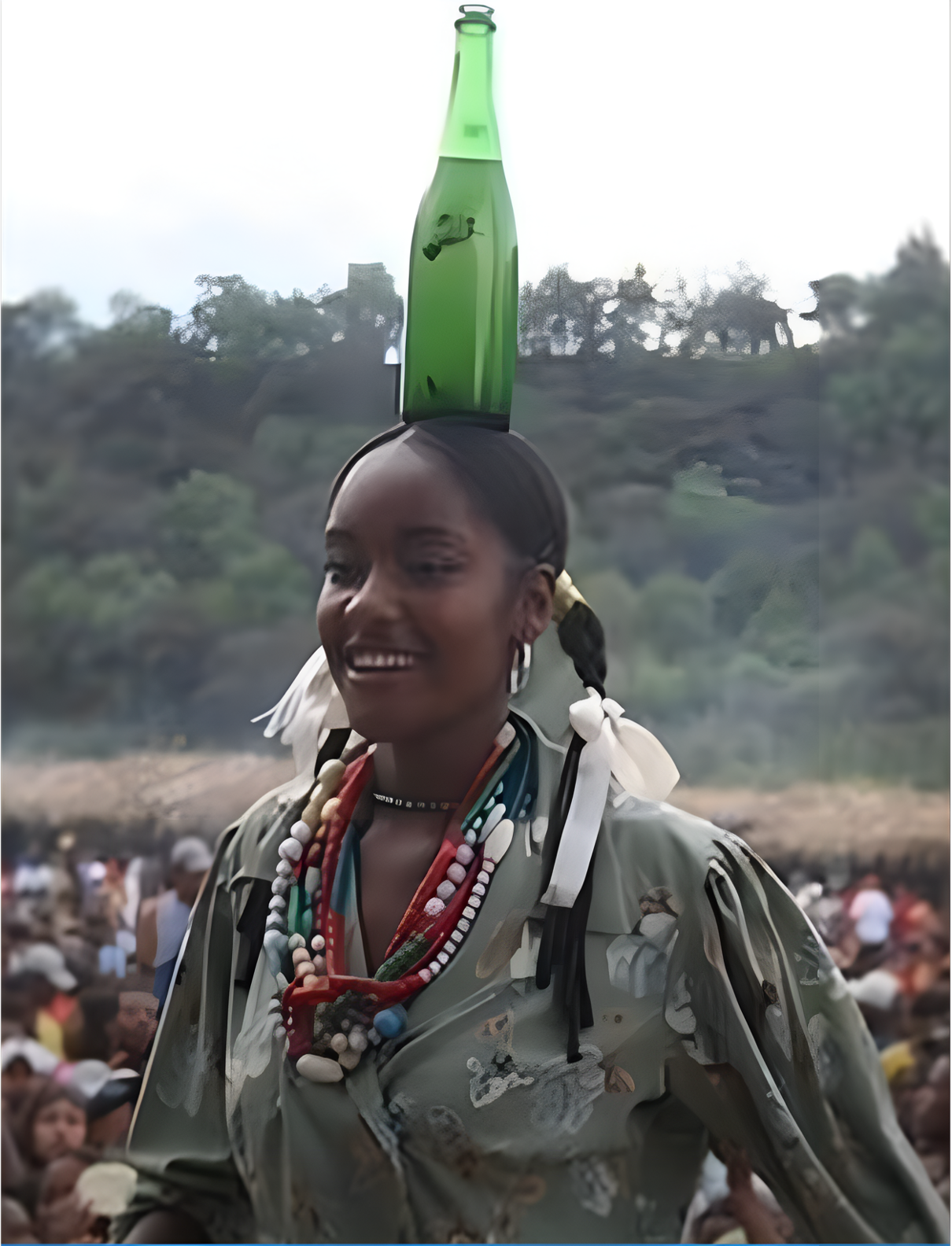
Featured photograph: Woman dancing Ecuadorian bomba. Donrembe, Wikimedia Commons, CC0 1.0.

Along Ecuador’s northern Pacific coast and in the valleys of its Andean highlands live two African-descended communities whose histories developed under remarkably different circumstances.
In Esmeraldas, Africans who escaped enslavement helped establish autonomous settlements that challenged Spanish colonial authority. Hundreds of miles away, in the Chota Valley, enslaved Africans labored on agricultural estates and developed communities that preserved distinctive musical and cultural traditions.
Today, both populations form part of Ecuador’s Afro-descended community, whose history reflects resistance, cultural creativity, and an enduring struggle for recognition.
Their experiences reveal how profoundly geography and historical circumstances shaped the African diaspora, even within a single country.
Esmeraldas: A Community Built on Freedom
The African history of Esmeraldas, on Ecuador’s northern Pacific coast, begins with one of the most remarkable episodes of resistance in colonial South America.
In the sixteenth century, Africans who escaped enslavement established settlements in the coastal forests of what is now northern Ecuador.
Historical accounts describe a group of enslaved Africans who escaped following a shipwreck along the Pacific coast in the 1550s. Among the most prominent figures associated with these early settlements was Alonso de Illescas, an African-born leader who became an important political and military figure in the region.
Illescas and other African leaders developed relationships with Indigenous communities, sometimes through alliances and sometimes through conflict. Over time, African and Indigenous populations established settlements that operated with considerable independence from Spanish colonial control.
The resulting political communities challenged the assumption that Africans in the Americas were necessarily confined to subordinate positions within colonial society.
Spanish authorities attempted to extend control over Esmeraldas through military expeditions, religious missions, and negotiations. Yet the region’s difficult terrain and the strength of its local communities made complete colonial domination elusive.
The historical record also documents another influential family associated with Francisco de Arobe, whose image survives in a celebrated sixteenth-century portrait depicting three Afro-Indigenous leaders of Esmeraldas.
That portrait is an extraordinary visual record of African-descended political leadership in the early colonial Americas.
The history of Esmeraldas is therefore not simply a story of escape from enslavement. It is also a history of diplomacy, territorial autonomy, and the formation of new political identities.
For the broader African diaspora, it offers an important example of African-descended communities exercising power and negotiating with European authorities centuries before the abolition of slavery.
The Chota Valley: African Heritage in the Andes
The experience of Afro-Ecuadorians in the Chota Valley followed a different historical trajectory.
Located in the northern Andean highlands, principally within today’s Imbabura and Carchi provinces, the Chota Valley became an important center of enslaved African labor during the colonial period.
Beginning in the seventeenth century, Jesuit estates expanded agricultural production in the region, particularly sugarcane cultivation.
Enslaved Africans were brought to work on these estates, where plantation labor and restrictive social hierarchies shaped everyday life.
When the Spanish Crown expelled the Jesuits from its territories in 1767, the estates changed administration, but the underlying system of forced labor continued.
Ecuador’s formal abolition of slavery in 1852 marked a decisive legal transformation. Nevertheless, emancipation did not immediately provide former enslaved workers and their descendants with equal access to land or economic independence.
Many remained tied to large agricultural estates through arrangements that perpetuated dependency and inequality.
Over generations, Afro-Ecuadorian families established enduring communities in settlements including Chota, Salinas, La Concepción, and Carpuela.
Their identity became deeply connected to the landscape of the northern Andes, even as they preserved traditions reflecting their African ancestry.
The contrast with Esmeraldas is striking.
One community emerged partly through resistance and relative autonomy in coastal forests. The other developed under plantation labor systems in the highlands.
Yet both created cultural institutions that enabled African-descended populations to maintain collective identities across centuries.
Bomba and Marimba: Two Musical Traditions
The cultural distinction between the Chota Valley and Esmeraldas is particularly evident in their musical traditions.
In the Chota Valley, bomba developed as a distinctive Afro-Ecuadorian musical and dance form.
The tradition takes its name from a drum central to its performance. Bomba combines African-derived rhythmic elements with influences from the wider Andean and Hispanic musical environment.
Performances frequently incorporate singing, dancing, percussion, and string instruments.
Bomba is closely associated with celebrations, family gatherings, and community events. Its songs can express humor, affection, historical memory, and commentary on everyday life.
The tradition also demonstrates how cultural forms change over time. Contemporary bomba musicians have incorporated new instruments and styles while retaining a recognizable connection to the music of earlier generations.
Along the Pacific coast, particularly in Esmeraldas, another musical tradition developed around the marimba.
Marimba music combines wooden-key percussion instruments, drums, singing, and dance. It forms part of a broader Afro-Pacific cultural tradition shared across the border with Colombia.
In 2015, UNESCO inscribed the traditional marimba music, songs, and dances of Colombia’s South Pacific region and Ecuador’s Esmeraldas province on the Representative List of the Intangible Cultural Heritage of Humanity.


The recognition acknowledged the importance of these practices as expressions of community identity and cultural transmission.
Bomba and marimba are not interchangeable traditions. They emerged in different geographical and historical environments, and each carries its own cultural meanings.
Together, however, they demonstrate the remarkable diversity of African-descended cultural expression within Ecuador.
They also show that cultural preservation need not mean resisting change. Both traditions remain living practices, sustained and reinterpreted by contemporary musicians and communities.
From Historical Exclusion to Constitutional Recognition
For much of Ecuador’s history, Afro-Ecuadorian communities received limited recognition within official accounts of national identity.
Although African-descended people contributed to the country’s agriculture, political development, military history, and cultural life, their experiences were frequently marginalized.
Afro-Ecuadorian organizations responded through political advocacy, cultural movements, and demands for greater representation.
A significant legal development came with Ecuador’s 2008 Constitution.
Article 58 expressly recognizes the collective rights of the Afro-Ecuadorian people, including rights relating to identity, culture, traditions, and protections established under national and international law.
Article 60 also recognizes the possibility of territorial arrangements intended to preserve the cultures of ancestral, Indigenous, Afro-Ecuadorian, and Montubio peoples.
These provisions place Afro-Ecuadorian identity within the country’s constitutional framework rather than treating it merely as an aspect of cultural diversity.
The Constitution’s recognition has important implications for education, cultural preservation, public policy, and community participation.
The demographic significance of Afro-Ecuadorians is also substantial.
According to Ecuador’s 2022 census, approximately 814,495 people, representing 4.8% of the population, identified as Afro-Ecuadorian, Afro-descended, Black, or mulatto.
The results generated controversy. Afro-Ecuadorian organizations questioned the decline in the recorded population compared with the 2010 census, arguing that problems involving enumeration and self-identification may have affected the figures.
Ecuador’s national statistical agency defended the methodology and results.
The dispute illustrates why census recognition matters beyond demographic reporting. Population data can influence public understanding, policy priorities, and the visibility of historically marginalized communities.
Constitutional recognition has not eliminated inequalities involving employment, education, economic opportunity, or access to public services.
Nevertheless, Afro-Ecuadorian organizations have increasingly asserted their rights through the language of collective identity, constitutional protections, and participation in national institutions.
LexNoir Perspective
The Afro-Ecuadorian experience demonstrates that the African diaspora cannot be understood as a single historical journey.
In Esmeraldas, African-descended communities developed political autonomy and negotiated with colonial authorities. In the Chota Valley, communities emerged from plantation labor systems and maintained their identities despite generations of economic dependency.
These histories produced different cultural expressions, including marimba and bomba, yet both became essential parts of Ecuador’s national heritage.
The constitutional recognition of Afro-Ecuadorians provides another important dimension.
Ecuador has moved beyond acknowledging African contributions to expressly recognizing Afro-descended people as holders of collective rights.
That distinction matters. Cultural celebration alone does not necessarily provide communities with legal protections, political representation, or meaningful participation in decisions affecting their futures.
For LexNoir, Ecuador offers a compelling example of the relationship between historical memory, cultural preservation, and legal recognition.
It also presents an important challenge: ensuring that constitutional rights and cultural recognition translate into tangible improvements in economic opportunity, education, and community development.
The history of Afro-Ecuadorians is not simply a story of African survival in South America. It is a history of African-descended people helping shape the political, cultural, and constitutional identity of a nation.
Sources and Further Reading
- Constitution of the Republic of Ecuador (2008), Articles 58 and 60.
- Instituto Nacional de Estadística y Censos (INEC), 2022 Population and Housing Census and subsequent reporting.
- UNESCO Intangible Cultural Heritage: Traditional marimba music, songs and dances from Colombia’s South Pacific region and Ecuador’s Esmeraldas province (2015).
- Instituto Nacional de Patrimonio Cultural del Ecuador, Afro-Ecuadorian cultural heritage and historical territories.
- United Nations human rights reporting on Ecuador.
- Organization of American States, Electoral Observation Mission (2025).