

Region: Central America | Community: Afro-Panamanians
Featured photograph: Young Panamanian woman. PalomaCarreño / Wikimedia Commons, CC BY-SA 4.0. Secondary photograph: Congo traditions of Portobelo. JoaPérez22 / Wikimedia Commons, CC BY-SA 4.0. Photographs displayed without editorial alteration.


From the colonial ports of the Caribbean coast to the construction of the Panama Canal, Afro-Panamanians have shaped the country’s economy, culture, and national identity. Yet their struggle for equal recognition and protection continues.
A Nation Shaped by African Heritage
Panama occupies a distinctive place in the history of the African diaspora. Its position between two oceans made it a center of colonial commerce, forced migration, railroad construction, and canal building. Afro-Panamanians have been central to these developments for centuries.
The population reflects two major historical experiences: descendants of Africans enslaved under Spanish colonial rule and descendants of Caribbean migrants who arrived in substantial numbers during the nineteenth and early twentieth centuries. These communities helped build modern Panama while sustaining distinctive traditions and institutions.
Panama’s 2023 population census recorded approximately 1.29 million people identifying as Afro-descendant, about 31.7% of the national population. The result demonstrates the significance of how identity is counted and recognized in national data.
1. Afro-Colonial Communities: Enslavement and Resistance
Africans were forcibly brought to the isthmus during Spanish colonial rule. Some escaped enslavement and organized resistance as cimarrones, creating autonomous communities associated with the palenque tradition. Their descendants contributed to the history and culture of communities along Panama’s Caribbean coast, particularly in Colón and Portobelo.
The Congo tradition of Portobelo preserves stories of enslavement, struggle, liberation, and collective identity through music, dance, costume, and ceremonial performance. In 2018, UNESCO inscribed the ritual and festive expressions of Congo culture on its Representative List of the Intangible Cultural Heritage of Humanity.
2. Afro-Antillean Migration and the Building of a Crossroads
Another major chapter began with migrants from Jamaica, Barbados, Martinique, Saint Lucia, and other Caribbean islands. Workers came during the Panama Railroad project of the 1850s and in larger numbers during French and U.S. canal construction. Their labor helped establish a key artery of world commerce.
Many workers and their families remained in Panama, building communities and institutions in Colón, Panama City, Bocas del Toro, and areas historically associated with the Canal Zone. They carried Caribbean languages, religious traditions, educational initiatives, music, and foodways. But the history of the canal also includes racial hierarchies and unequal treatment of laborers.
3. A Living Cultural Heritage
Afro-Panamanian culture encompasses Congo traditions, Caribbean music and cuisine, churches, festivals, and local systems of memory. The Congo celebrations are especially important because they transmit community interpretations of slavery and resistance between generations. Women have important ceremonial and cultural leadership roles, including the figure of the Congo queen.
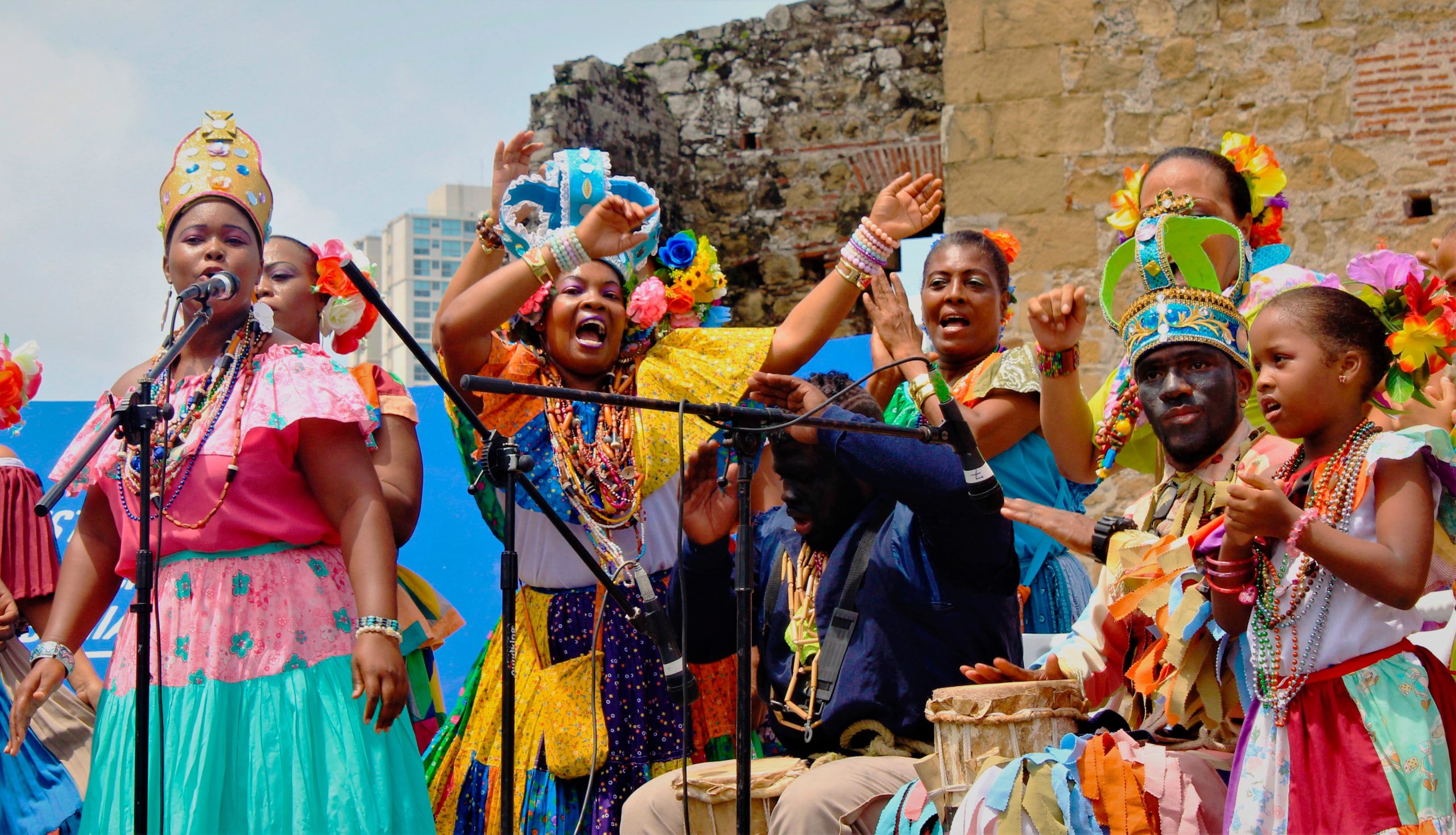
UNESCO recognition offers international visibility, but preservation depends above all on the communities that practice and transmit the traditions. Cultural visibility should not be mistaken for the full achievement of social or economic equality.
4. Where Afro-Panamanians Live
Afro-Panamanians live throughout the country. Colón is especially significant, alongside Panama City, Panamá Oeste, Coclé, Darién, and Bocas del Toro. Communities include both long-established coastal settlements and urban neighborhoods such as Río Abajo and El Chorrillo. Their varied histories of migration, land, language, and labor make a single cultural narrative inadequate.
Recent demographic research shows that ethnic identity, geography, and access to public services intersect. Disaggregated census information matters for understanding those differences and measuring whether public policy reaches affected communities.
5. Legal Recognition and Public Policy
A significant institutional development was Law 379 of May 26, 2023, which established the Secretaría Nacional de Políticas y Desarrollo para los Afropanameños (SENADAP), an autonomous public institution tasked with advancing policies concerning Afro-Panamanian inclusion. Panama also adopted a national development plan for the Afro-Panamanian population for 2022–2030.
These initiatives provide a framework for greater participation and accountability. Yet institutional recognition does not itself establish that discrimination has ended or that every legal protection is effectively enforced.
6. Natural Hair, Education, and Equal Treatment
The treatment of Afro-descendant students’ natural hair provides a concrete example of the gap between formal protection and practice. Panama’s Ministry of Education issued Resolution No. 887-AL in March 2023, addressing ethnic and cultural discrimination in schools, including objections to Afro hairstyles.
In March 2026, Panama’s Ombudsman reported intervening after students in Colón complained about objections to their natural hair. The matter illustrates why effective implementation and access to remedies remain necessary even when anti-discrimination standards exist.
7. Land, Opportunity, and Participation
Other concerns include economic opportunity, political representation, education, and the preservation of lands linked to Afro-descendant communities. In some rural and coastal locations, tourism and property development sharpen disputes over community interests. Organizations have called attention to gaps in recognition of collective territorial rights, including in Darién.
Those debates ask who benefits from development, who has a voice in decisions affecting a community, and how a legal system protects historical ties to place.
LexNoir Perspective
Panama demonstrates that African diaspora history cannot be reduced to the story of enslavement or contemporary discrimination. Afro-Panamanians helped build the railroad and the canal, shaped communities across the isthmus, and preserved cultural traditions that define the nation.
The 2023 census and the establishment of SENADAP are milestones in visibility and institutional recognition. But continuing disputes over natural hair, land, and participation show why recognition must be matched by enforceable rights and practical accountability.
The enduring question is not whether Afro-Panamanians belong to Panama’s history. It is how fully the country’s laws, institutions, and economic opportunities reflect the central role they have always played.
Sources and Further Reading
- Government of Panama — Afro-Panamanian Development Plan and 2023 census data
- Law 379 of 2023 — SENADAP
- UNESCO — Congo Cultural Expressions
- National Library of Panama — Afro-Antillean Migration
- Minority Rights Group — Afro-Panamanians
- Panama Ombudsman — 2026 Hair Discrimination Complaint
- UNFPA — Panama Population Analysis